
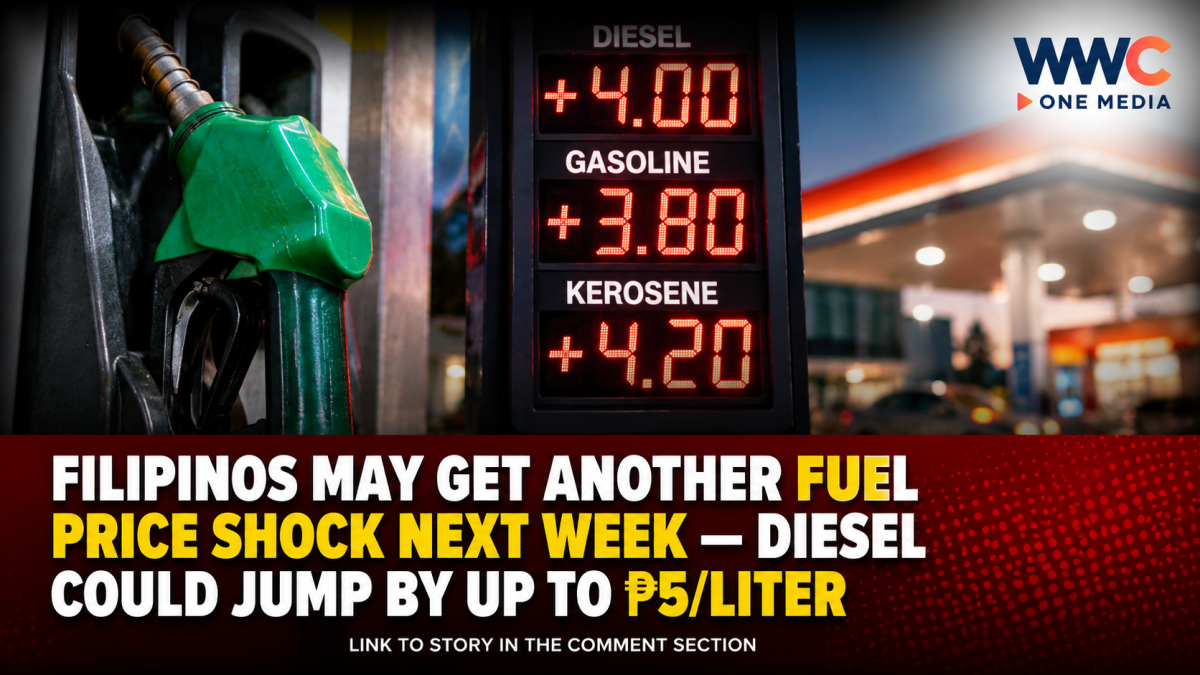
MANILA, Philippines — Filipino motorists could be facing another painful trip to the gas station next week, with diesel and gasoline prices seen posting substantial increases after global oil prices climbed amid renewed tensions in the Middle East.
The latest industry estimates point to a possible ₱4 to ₱5-per-liter increase for diesel, while gasoline could also become significantly more expensive. However, these figures remain preliminary estimates and could still change depending on the final movement of international oil prices before local oil companies announce their official adjustments.
GMA News reported Friday that, based on three trading days, diesel could rise by around ₱4.00 to ₱4.50 per liter, while gasoline may increase by ₱3.50 to ₱4.00 per liter.
Business Inquirer, meanwhile, reported that the potential adjustment could reach as much as ₱5 per liter, underscoring how quickly the market has turned after motorists received substantial rollbacks at the start of September.
Relief at the pump could be short-lived
The possible increase comes only days after motorists enjoyed a significant rollback at the beginning of the month.
For September 1 to 7, the Department of Energy recorded decreases of ₱3.83 per liter for diesel, ₱3.84 for kerosene and ₱0.32 for gasoline. Major oil companies implemented similar reductions.
That relief, however, may prove temporary.
Oil prices have moved higher again as renewed fighting and tensions involving the United States and Iran raised concerns about disruptions to crude supplies and shipping through the Strait of Hormuz, one of the world’s most important oil transit routes.
A Philippine Canadian Inquirer report said global oil prices had climbed for a fourth consecutive trading day as geopolitical tensions intensified, with preliminary Philippine estimates already pointing to a diesel increase of around ₱4.60 per liter based on early trading.
Why the Strait of Hormuz matters
The Strait of Hormuz is particularly important to the global energy market because a large share of internationally traded oil passes through the waterway.
Any prolonged disruption or threat to shipping in the area can push crude prices higher as traders price in the possibility of tighter supply.
Reuters reported earlier this week that analysts continued to expect oil prices to remain elevated in 2026 because of Middle East supply risks. Its latest survey of 31 analysts placed the average 2026 Brent crude forecast at $85.08 per barrel, with US crude projected at $80.20 per barrel.
Philippines remains vulnerable to global oil swings
The developments are particularly important for the Philippines because movements in international petroleum prices quickly feed into domestic pump prices.
The country imports much of the fuel it consumes, leaving local prices exposed to changes in global crude prices, regional petroleum markets, the peso-dollar exchange rate and geopolitical developments.
The impact also extends well beyond motorists.
Higher diesel prices can raise transportation and logistics costs, while increased fuel expenses can eventually put pressure on the prices of food and other basic goods as businesses pass higher operating costs down the supply chain.
Another adjustment is not final yet
Despite the alarming projections, motorists should not treat the ₱4-to-₱5 increase as a confirmed price hike just yet.
Oil companies typically finalize their weekly adjustments after the relevant international trading period ends. The final amount can therefore be higher or lower than the initial industry estimate.
The Department of Energy’s official weekly fuel-price monitoring remains the key reference for the finalized adjustment.
For motorists, the message is simple: the fuel-price relief at the beginning of September may be short-lived.
After substantial rollbacks this week, another sharp increase could arrive as early as September 8, depending on where global oil prices settle and how oil companies calculate their final adjustments.
And if the current international oil-price trend continues, the pain at the pump may not end with just one week of increases.

Leave a Reply