
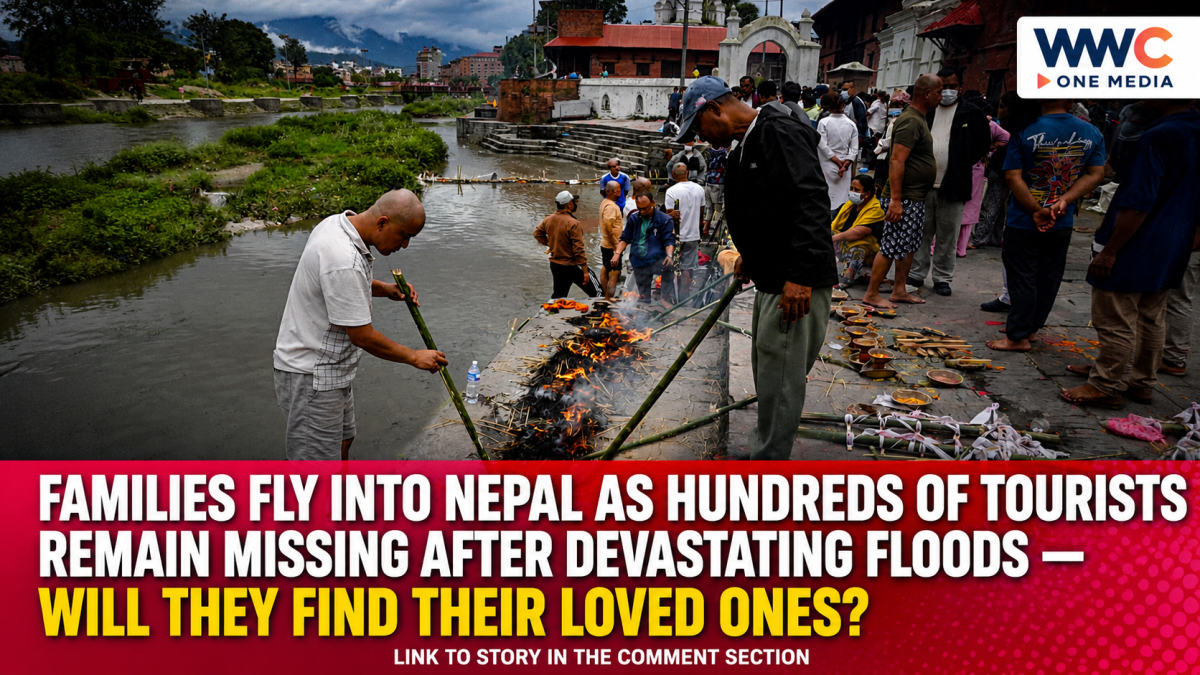
KATHMANDU, Nepal — Desperate relatives are arriving in Nepal and searching hospitals, morgues and official records for missing loved ones, more than a week after catastrophic floods devastated communities along the Nepal-China border.
The Aug. 26 disaster unleashed enormous volumes of water and debris across parts of Nepal and China’s Tibet region, destroying roads, bridges, homes and infrastructure and leaving a trail of devastation across the Himalayan border area.
More than 1,200 people have been reported dead across the affected region, while thousands remain unaccounted for. Nepali police said 583 foreign nationals were still missing, although the number is continuing to change as authorities establish contact with people previously reported missing.
For families who have received no word from relatives, the wait has become agonizing.
One of those searching is Sanjeev Rai, a 53-year-old American who traveled to Nepal after his wife, Jiwan Jyoti, disappeared while returning from a pilgrimage to Mount Kailash.
Rai told AFP that he initially hoped to reach the disaster zone by helicopter and search for his wife himself. But the village of Timure in Rasuwa district, where she was last known to be, remains difficult and dangerous to access.
With each passing day, the family’s focus has shifted from finding survivors to identifying those who may have died.
Nepalese authorities have begun collecting DNA samples from relatives to help identify bodies recovered from the disaster. Families living overseas are also expected to have options for submitting DNA samples through authorities in their home countries.
Hundreds of foreign tourists remain unaccounted for
The missing include pilgrims who had traveled to the region for journeys connected to Mount Kailash, one of the world’s most revered religious sites.
Among them are 77 pilgrims associated with Sadhguru’s Isha Foundation, according to AFP. Relatives and volunteers have been traveling between police offices and hospitals, examining photographs and lists of people who have been rescued or identified.
Other groups of foreign travelers have also been caught up in the disaster.
An Australian Broadcasting Corporation investigation reported that relatives of missing Australians have traveled to Kathmandu themselves, attempting to reconstruct the final known movements of their family members through photographs, videos, immigration records and survivor accounts.
One Australian family searching for Bhavinkumar Raval said he had been traveling toward the Kailash Mansarovar pilgrimage with fellow Australians when the disaster struck.
His relatives say the group was last known to be in the Timure area, close to the Gyirong immigration crossing, one of the locations badly affected by the flooding.
Some missing tourists have made contact
Despite the enormous scale of the disaster, there have been glimmers of hope.
Several tourists previously reported missing have managed to contact authorities, according to the Associated Press. The development has raised hopes that some people may have survived but remained unreachable because of destroyed communications networks and blocked roads.
The situation remains fluid, however, with authorities still working to reconcile lists of missing, rescued and unidentified people.
CBS News also reported that at least one American previously listed among those missing had made contact with authorities, offering a rare piece of good news amid the continuing uncertainty.
Search teams face a race against time
The search has been complicated by the destruction of roads and bridges, dangerous terrain and the possibility that people remain trapped in remote areas or inside hydropower facilities.
Reuters reported that rescuers have been concentrating on hydropower tunnels where around 900 workers were believed to be trapped, with teams attempting to reach areas that may still contain air, food and water. International assistance has also been arriving, including support from India, China and the United States.
In Kathmandu, relatives have gathered around a growing collection of photographs and information about missing people. The so-called “wall of the missing” at Tribhuvan University Teaching Hospital has become a painful meeting point for families looking for any clue about what happened to their loved ones.
Some families have already begun symbolic funeral rituals for relatives whose bodies have not been recovered, reflecting the growing fear that many of those missing may never be found.
But others refuse to give up.
For families arriving from the United States, Australia, Russia and elsewhere, the mission remains painfully simple: find their relatives, establish what happened and, if they are dead, bring them home.
The disaster is also threatening Nepal’s tourism industry, a crucial source of income for the country. Although the worst destruction has been concentrated in several districts, the images of destroyed roads, stranded travelers and missing pilgrims could have lasting consequences for international tourism.
For now, however, the immediate priority remains the search.
Every photograph, DNA sample, hospital record and survivor report could provide the clue that families have been waiting for.
And as rescuers continue working through the devastated Himalayan landscape, hundreds of families are still waiting for one answer: where are their loved ones?
WWC ONE MEDIA MJE




Leave a Reply