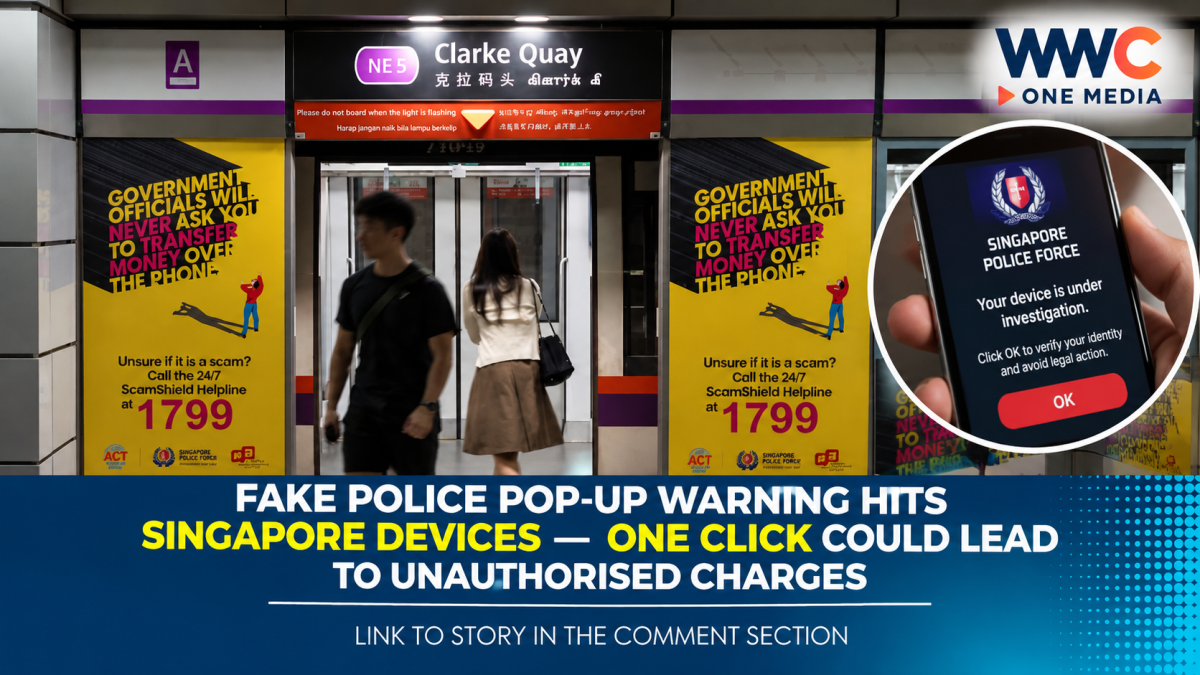
Singapore police are warning the public about a phishing scam that uses fake pop-up alerts bearing the Singapore Police Force logo to trick victims into handing over their bank card details.
The scam begins when users encounter a pop-up claiming their computer or other personal device has been “locked” because they repeatedly accessed websites containing illegal content. The fake alert then demands payment of an alleged outstanding fine within a few hours.
To make the warning appear more convincing, the pop-up threatens that the device could remain permanently locked and that the user could face prosecution if the supposed fine is not paid.
A countdown timer is also displayed to create a sense of urgency, pressuring victims into entering their bank card information before they have time to verify the claim.
Victims may only discover that something is wrong after unauthorised foreign-currency transactions appear on their bank cards. Police said these transactions can amount to more than the supposed fine demanded by the fake alert.
The Singapore Police Force stressed that it does not remotely lock personal devices such as computers or laptops and does not demand payment through pop-up alerts.
The latest warning comes as phishing and impersonation scams continue to use increasingly realistic messages, websites and pop-ups to create pressure and exploit fear. Singapore’s ScamShield bulletins have also documented other government- and technology-related impersonation tactics used to convince victims to make payments or reveal information.
Police advise members of the public not to click on suspicious pop-ups or provide bank card details in response to such warnings. Users can check suspicious messages, numbers and links through the ScamShield app or official ScamShield resources.
Anyone who is unsure whether a suspected scam is genuine can call the 24/7 ScamShield Helpline at 1799. People who have already made an unauthorised transaction should contact their bank immediately and report the incident.
The warning is a reminder that a frightening message appearing on a device does not necessarily mean the threat is real. In this case, the countdown and police branding are part of the deception — and the moment a victim enters their payment details could be when the real damage begins.