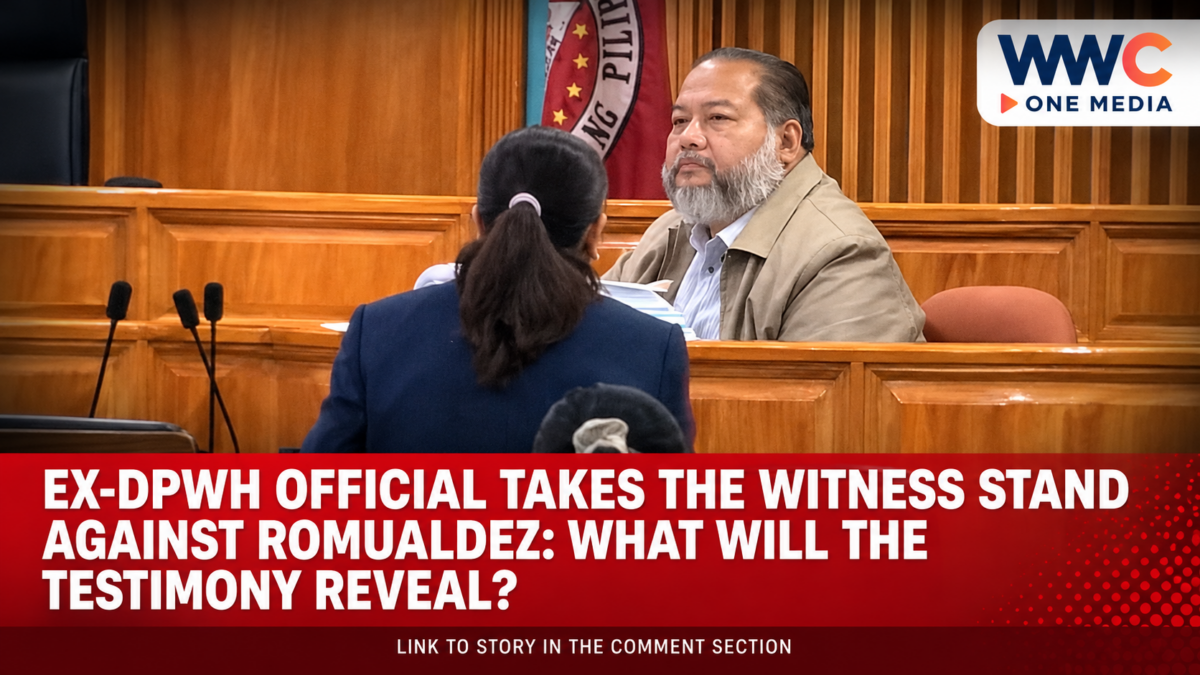
MANILA, Philippines — A former official of the Department of Public Works and Highways (DPWH) has become a key figure in the government’s case against former House Speaker and Leyte Rep. Martin Romualdez, as authorities pursue allegations of a multibillion-peso kickback scheme involving government infrastructure projects.
The testimony adds another development to the controversy surrounding the country’s flood control program, which has come under intense scrutiny over alleged irregularities, questionable project implementation and the possible misuse of public funds.
The Office of the Ombudsman has filed a plunder case against Romualdez and several co-accused over alleged kickbacks totaling at least ₱7.44 billion linked to flood control, infrastructure and other government projects funded from 2022 to 2025.
The allegations remain subject to judicial proceedings, and the prosecution must establish the accused’s criminal liability through evidence presented in court.
State witness becomes central to the investigation
The government’s use of former public works officials as witnesses is part of a broader effort to establish how alleged irregularities occurred and identify the individuals who may have benefited from them.
In a separate development reported by the Philippine Daily Inquirer on June 30, 2026, former DPWH Secretary Manuel Bonoan was accepted as a state witness by the Ombudsman. Authorities said his cooperation was intended to strengthen the case against Romualdez in connection with the flood control controversy.
The decision was significant because testimony from former officials with knowledge of government operations could help investigators examine the relationship between infrastructure projects, budget decisions and alleged kickback arrangements.
However, a witness’s designation does not automatically establish the truth of every allegation. The court must assess the witness’s credibility, the consistency of the testimony and its supporting evidence.
The ₱7.4-billion case and the flood control controversy
On September 7, 2026, the Ombudsman filed a plunder case before the Sandiganbayan against Romualdez, former Ako Bicol party-list representative Elizaldy “Zaldy” Co, Romualdez’s former personal assistant Joselyn Tragua Sereño, and Felicito Cristobal Guevarra, president of Samchan Foreign Exchange Corporation.
According to the criminal information, the accused allegedly received commissions, shares, kickbacks or other financial benefits on at least 15 occasions. Prosecutors alleged that the money came from contractors and other entities with interests in government-funded projects.
Romualdez has denied wrongdoing and said he would face the allegations through the legal process. His camp has disputed the evidence linking him to the alleged scheme.
Co, meanwhile, has also been implicated in the broader controversy surrounding flood control projects and alleged financial transactions.
Suitcase-delivery allegations face courtroom scrutiny
Recent hearings have also focused on allegations that suitcases were delivered to properties associated with Romualdez and Co.
In an October 19 report, GMA News said two prosecution witnesses testified that they had seen suitcases delivered to Co’s residence in Taguig. However, the witnesses said they did not personally see money inside the suitcases.
The distinction is important: observing a delivery is not the same as personally verifying what a container held or establishing who owned its contents.
The testimony forms part of the ongoing proceedings in Romualdez’s bail petition, where the court is examining evidence and witness accounts relevant to the case.
The prosecution’s allegations, the defense’s challenges and the witnesses’ statements will all need to be evaluated under the applicable rules of evidence.
What happens next?
The case places renewed attention on how public infrastructure funds are allocated, how projects are implemented and how alleged wrongdoing can be traced through official records and testimony.
For investigators, the challenge is to connect witness accounts with documentary evidence, financial records and specific transactions. For the defense, the proceedings provide an opportunity to challenge the credibility and reliability of the prosecution’s evidence.
Ultimately, the Sandiganbayan will determine the legal consequences based on the evidence and applicable law.
As the hearings continue, the central questions remain: What evidence can be independently corroborated, which allegations can be established in court, and who, if anyone, will be held criminally responsible for the alleged misuse of public funds?