
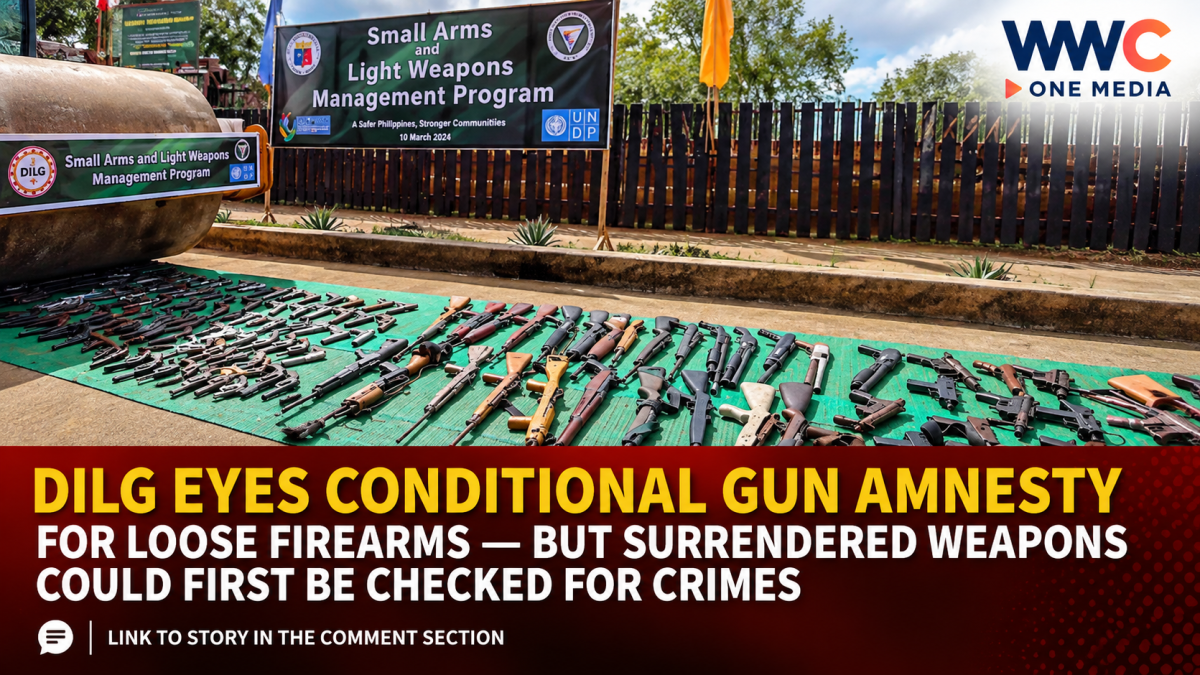
MANILA, Philippines — The Department of the Interior and Local Government (DILG) is considering a conditional amnesty for owners of loose or unregistered firearms, opening a possible path for gun owners to surrender their weapons without immediately facing prosecution — but only after authorities determine that the firearms were not used in criminal activity.
Interior Secretary Jonvic Remulla raised the proposal during the DILG’s presentation before the Senate Committee on Finance on September 10, as lawmakers discussed the department’s proposed 2027 budget.
The proposal is part of the government’s broader campaign against the proliferation of loose firearms, which authorities have increasingly linked to violent crimes and recent shooting incidents involving young people.
Amnesty Would Come With a Major Condition
Under the proposal, firearm owners would have to voluntarily surrender their loose weapons to authorities.
But the surrender would not automatically clear the owner.
Remulla said the firearms would first need to undergo examination and verification to determine whether they had been used in the commission of crimes. Weapons potentially linked to criminal activity could therefore trigger further investigation rather than qualify for amnesty.
The DILG chief said the proposal could give the government a better opportunity to identify unregistered weapons circulating in communities while separating ordinary gun owners from firearms connected to criminal activity.
Remulla told senators that authorities are dealing with a potentially massive number of loose firearms and argued that an amnesty program could help bring these weapons out of hiding and into government custody.
DILG Says Loose Firearms Remain a Major Crime Concern
The proposed amnesty comes as the DILG intensifies its campaign for stricter firearm regulations.
In previous statements following recent school shooting incidents, Remulla said the government wanted Congress to revisit existing gun laws and impose greater accountability on firearm owners.
The DILG has cited its position that a large majority of gun-related crimes involve loose firearms. The department has also raised concerns over how legally owned or government-issued weapons can end up in the hands of unauthorized individuals, particularly minors.
The department has also identified several channels through which loose firearms continue to circulate, including:
- Locally manufactured weapons
- Illegal firearm trafficking
- Smuggling through vulnerable coastal areas
- Firearms that are no longer properly registered or licensed
These concerns have pushed the DILG to pursue a combination of tougher enforcement and possible incentives for voluntary surrender.
From Amnesty to Tougher Punishment?
While the DILG is considering a possible path for voluntary surrender, Remulla is simultaneously pushing for much tougher penalties against those illegally carrying or possessing firearms.
The Interior Secretary has urged Congress to revisit provisions affecting illegal possession of firearms and has proposed making the offense non-bailable, with penalties that could reach up to 20 years in prison under the tougher framework he wants lawmakers to consider.
Remulla has argued that the current system does not provide enough deterrence because suspects arrested for illegal possession may still be able to post bail while their cases are pending.
That creates a striking two-track approach:
Surrender a weapon and cooperate with authorities — and an owner could potentially qualify for amnesty.
Keep an illegal firearm and get caught — and the DILG wants significantly harsher consequences.
Philippines Has Used Firearm Amnesty Programs Before
The idea of providing an amnesty or surrender window for loose firearms is not entirely new in the Philippines.
Previous government policies have allowed people possessing unregistered firearms to surrender or legalize their weapons under specific conditions. Republic Act No. 10591, or the Comprehensive Firearms and Ammunition Regulation Act, previously provided for a Final General Amnesty covering certain unregistered firearms and expired licenses, subject to implementing rules and conditions.
Earlier executive orders also provided mechanisms for the surrender of loose firearms while making clear that amnesty would not necessarily protect individuals who used those weapons to commit other crimes.
This distinction could become crucial if the DILG’s latest proposal moves forward: the weapon itself may be surrendered, but any criminal act connected to it could still remain subject to investigation and prosecution.
What Happens Next?
For now, the proposal remains under consideration and details of how a new conditional amnesty program would work — including the application period, eligibility requirements and treatment of firearms found to have criminal links — have yet to be finalized.
Any new nationwide policy would also need a clear legal and operational framework involving the DILG, Philippine National Police and other relevant agencies.
The proposal comes as the government faces increasing pressure to address gun violence while balancing enforcement against the practical challenge of recovering potentially large numbers of loose firearms already circulating across the country.
The biggest question now is whether a conditional amnesty will convince gun owners to voluntarily surrender unregistered weapons — or whether the government’s simultaneous push for tougher penalties will drive the debate toward a major overhaul of Philippine gun laws.
For the DILG, the message appears clear: surrender the firearm now, or risk facing much tougher consequences later.




Leave a Reply