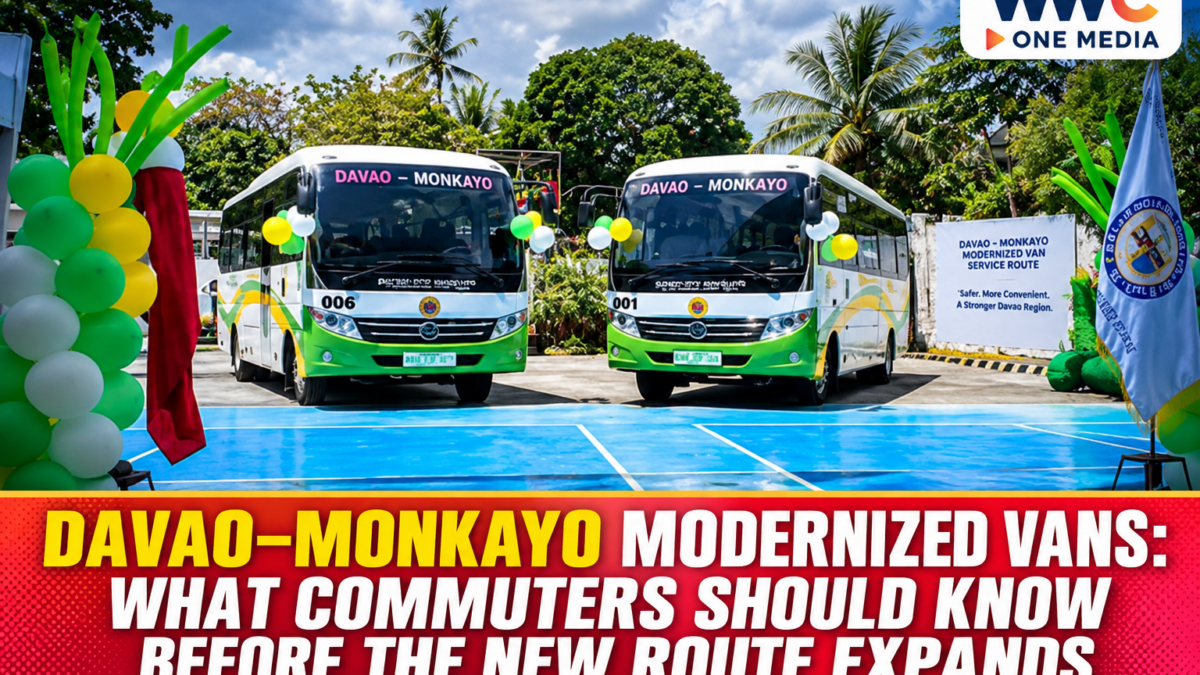
The reported addition of modernized UV Express vans on the Davao City–Monkayo route raises an important question for commuters: will newer vehicles translate into more reliable, safer and more accessible journeys between Davao City and Davao de Oro?
The route matters to passengers travelling between Davao City and Monkayo, including people making trips for work, education, business and essential services. But before publishing a full report, the details of the new service need to be established through official transport records.
The Land Transportation Franchising and Regulatory Board (LTFRB) Region XI is identified as the agency involved in the reported launch. However, I could not independently retrieve an accessible official LTFRB announcement or franchise document confirming the specific turnover, the number of authorized units, the cooperative operating them, and the approved route details.
Those details matter. A vehicle turnover or substitution order does not, by itself, establish the full operating conditions commuters need to know, including authorized stops, schedules, passenger capacity and applicable fares.
Davao City’s broader public transport plans provide useful context. The Asian Development Bank’s Davao Public Transport Modernization Project is designed to establish a city-wide bus system, with about 670 kilometres of rationalized routes, approximately 1,100 more energy-efficient buses, and infrastructure that includes terminals, depots and bus stops. The project is separate from the reported UV Express service to Monkayo. Asian Development Bank+1
There is also an existing public-safety responsibility at Davao City’s transport terminals. In a Nov. 9, 2026, city government release, the City Information Office reported that surprise drug testing on Oct. 29 covered 130 drivers and conductors at the Davao City Overland Transport Terminal and the Bajada Van Terminal. All those screened tested negative. City Government of Davao
That result is relevant to the wider discussion about passenger safety, but it should not be interpreted as proof that the drivers assigned to the Davao City–Monkayo vans were among those tested.
What commuters still need confirmed
Before this story can be published as a complete report, the following information should be obtained from LTFRB Region XI or the transport cooperative:
- The official authorization and effective date for the Davao City–Monkayo service.
- The number of modernized vans approved to operate and whether the reported units have already begun regular trips.
- The authorized route via Tagum City, including stops and terminal locations.
- Daily departure schedules, passenger capacity and approved fares.
- Whether additional units or service improvements are planned.
These are not minor details. They determine what passengers can actually expect from the service and help distinguish an official operating arrangement from a launch or turnover announcement.
Editorial status: HOLD FOR PRIMARY CONFIRMATION. The broader transport context is supported by official records, but the central development—the new vans and their operating authorization—still needs an accessible LTFRB or cooperative primary record. I would not recommend publishing this as an 800–1,200-word original news report until that document is secured.