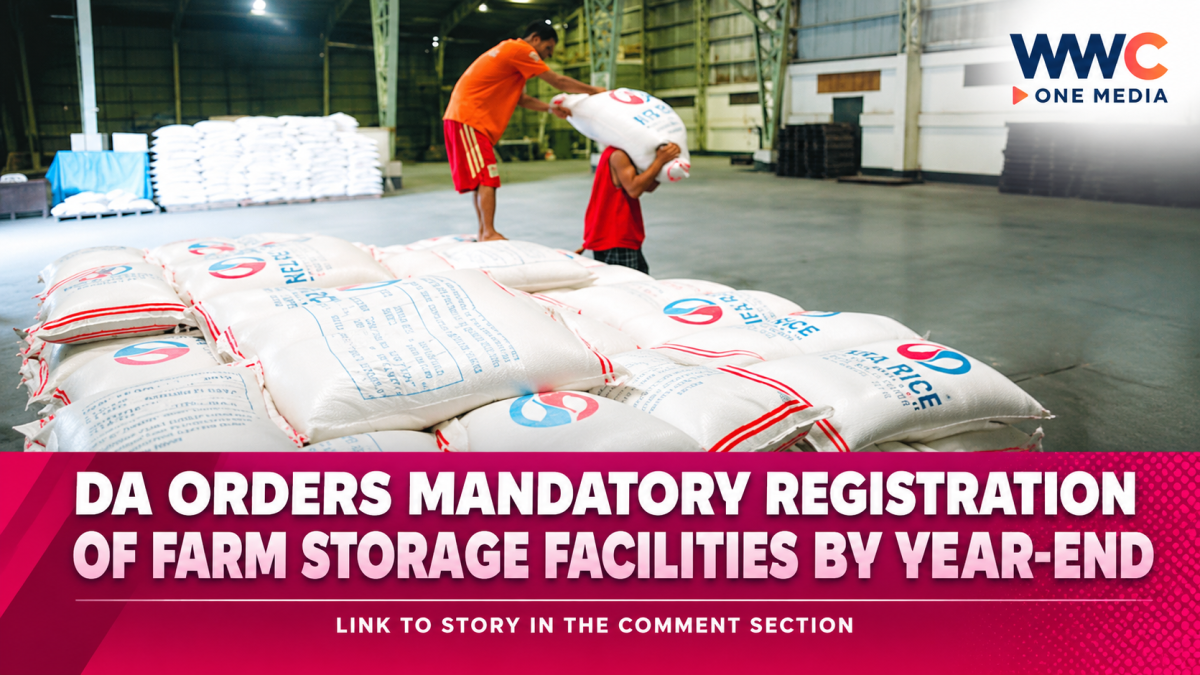
The Department of Agriculture has ordered the mandatory registration of warehouses, cold storage facilities and other facilities used to store agricultural and fishery products, with operators required to complete registration by the end of the year.
The measure is intended to give the government clearer visibility over agricultural inventories and supply chains as it steps up efforts against smuggling, hoarding, price manipulation and other forms of market abuse.
The registration requirement covers facilities storing commodities such as rice, corn, meat, poultry, garlic, onions, vegetables, fruits, fish, sugar, tobacco and other products covered by the Anti-Agricultural Economic Sabotage Act. It applies whether the facilities are owned, leased or maintained through third parties.
Operators are required to register through the DA’s online system and provide information on their storage capacity and the commodities they handle. Businesses covered by the law must also maintain complete and auditable records for five years and submit required operational and inventory reports.
The registry is designed to help authorities monitor unusual stock accumulation that could contribute to artificial shortages or price manipulation. It will also improve traceability and allow regulators to identify facilities involved in the movement and storage of agricultural commodities.
The DA said the registration system does not replace existing licenses, registrations or accreditations required by agencies overseeing specific commodities. These include the Bureau of Plant Industry, Bureau of Animal Industry, Bureau of Fisheries and Aquatic Resources, National Meat Inspection Service, Sugar Regulatory Administration and National Tobacco Administration.
Failure to comply with record-keeping and reporting requirements may expose operators to enforcement action under the Anti-Agricultural Economic Sabotage Act. Authorities may also suspend or revoke licenses, registrations or accreditations, subject to due process, in cases covered by the law.
The registration drive forms part of the government’s broader effort to strengthen oversight of the agricultural supply chain. By requiring storage facilities to become part of a unified registry, authorities expect to improve monitoring of stocks and respond more quickly to suspected smuggling, hoarding and other supply-related violations.