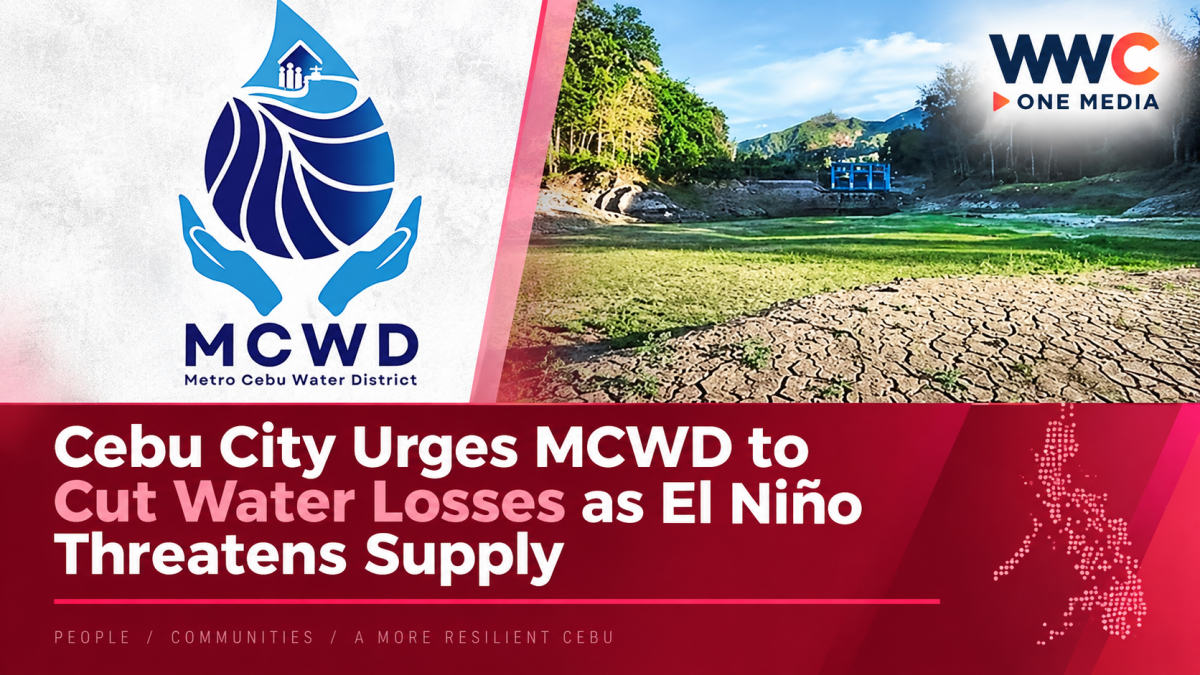
Cebu City officials are urging the Metropolitan Cebu Water District (MCWD) to reduce water losses as the utility prepares for possible supply declines linked to the strengthening El Niño phenomenon.
Mayor Nestor Archival directed MCWD to lower its non-revenue water (NRW) rate from 29 per cent to 27 per cent during the Cebu City Disaster Risk Reduction and Management Council’s meeting on September 15. The request comes as some households continue to experience water interruptions and the utility prepares for reduced production from vulnerable sources.
Non-revenue water refers to water that enters a distribution system but does not generate revenue because it is lost through leaking pipes, illegal connections, inaccurate meters or authorised but unbilled consumption.
At MCWD’s current rate, nearly three out of every 10 litres entering the system do not generate revenue. City officials said reducing these losses could make more water available to consumers without requiring the immediate development of new sources. However, the amount recovered would depend on how much of the NRW comes from physical leaks.
Archival instructed the disaster council secretariat to prepare a resolution directing MCWD to pursue the 27 per cent target. He also recommended hiring a third-party contractor to speed up repairs to leaking pipelines.
MCWD chairman Ruben Almendras said the concerns had already been discussed with the mayor. The water district serves Cebu City, Mandaue, Lapu-Lapu and Talisay, as well as the municipalities of Consolacion, Liloan, Compostela and Cordova.
El Niño raises supply concerns
The push to reduce water losses comes as MCWD anticipates lower production from some of its major sources during prolonged dry conditions.
In an advisory issued on September 7, the Philippine weather bureau said the ongoing moderate to strong El Niño could intensify to a very strong event before peaking toward the end of 2026 and potentially continuing into the first half of 2027. El Niño can increase the likelihood of below-normal rainfall, dry spells and drought in affected areas.
MCWD expects production from Buhisan Dam and the Jaclupan wellfield to decline during the event. The two sources currently provide about 30,000 cubic metres of water per day, or roughly 10 per cent of MCWD’s total output.
The utility estimates that combined production from the two sources could fall by around 18,000 cubic metres daily during El Niño, leaving approximately 12,000 cubic metres per day.
Additional water sources planned
To help compensate for the projected decline, MCWD expects to add about 20,000 cubic metres, or 20 million litres, of water per day by December.
The additional supply is expected to come from eight in-house groundwater wells and increased deliveries from existing bulk-water suppliers.
Separately, JE Hydro & Bio-Energy Corp. has committed to provide an additional five million litres of water per day for areas including Barangays Pulangbato, Pit-os, Bacayan and Talamban following complaints from residents about supply interruptions.
MCWD has also been working on leak detection and pipeline repairs. Earlier this year, the utility launched a pressure and flow monitoring programme aimed at reducing NRW, while adding leak-detection equipment, hiring plumbers and planning the replacement of ageing pipelines.
The combination of reducing water losses and developing additional sources is intended to help MCWD maintain supplies as Cebu prepares for potentially drier conditions.
For city officials, cutting water losses offers a way to recover part of the existing supply while longer-term measures to strengthen Cebu’s water system continue.