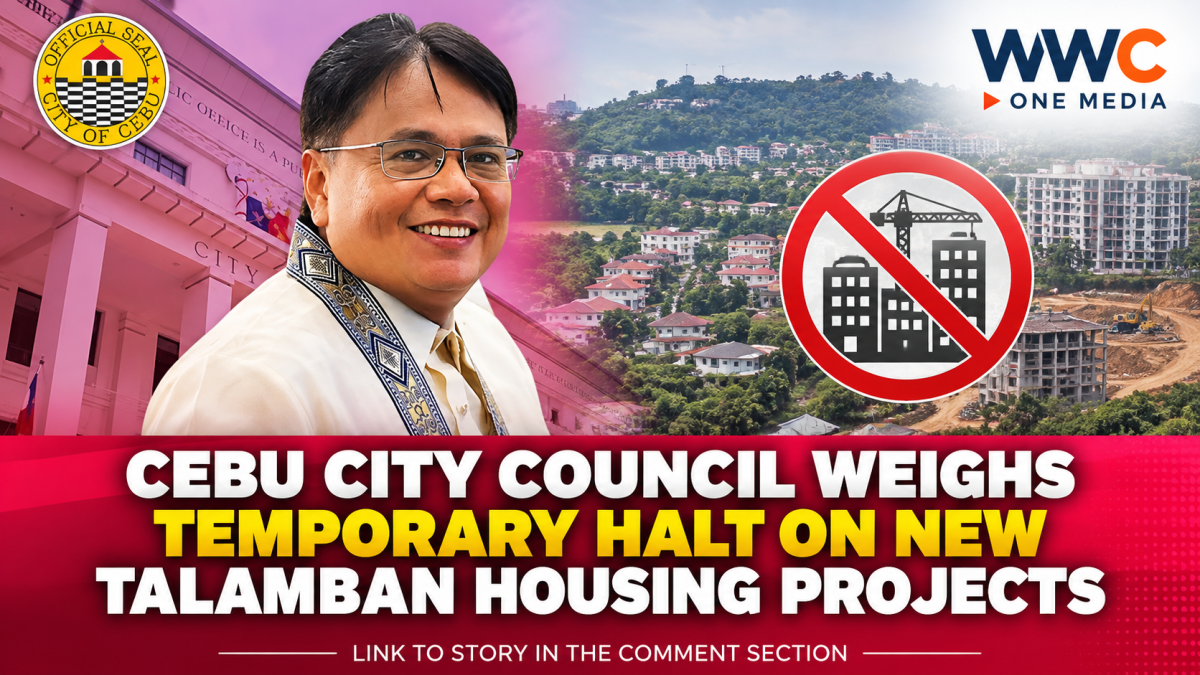
The Cebu City Council has referred a proposal to temporarily halt new high-density residential developments in Talamban and nearby upland areas as officials confront worsening concerns over traffic congestion, water shortages and the capacity of existing infrastructure.
The proposal, introduced by Councilor Alvin Arcilla, would cover new condominiums, subdivisions and similar high-density residential projects in northern and upland parts of Cebu City. The matter was referred to the council’s urban planning committee after several councilors questioned its scope, legal basis and supporting technical data.
Arcilla said a temporary suspension would give the city time to address water-supply problems and traffic congestion before additional large residential projects are approved. He also asked city offices to determine how many residential units have already been approved but remain undeveloped, estimating that more than 1,000 additional units could eventually be added.
Water availability has become a major concern in Talamban and surrounding communities. Arcilla cited an instance in which residents experienced a prolonged interruption in service, while recent city discussions have focused on improving supply and preparing for potential reductions in water production associated with El Niño.
Traffic is another major issue. Talamban has experienced congestion along roads serving residential communities and schools, while the city is also pursuing mass-transportation and traffic-decongestion measures. The proposed Cebu Bus Rapid Transit system remains part of the broader discussion over how transportation infrastructure should keep pace with development.
However, several councilors questioned whether the proposed suspension is sufficiently defined. Councilor Winston Pepito asked what would constitute a “high-density” residential project, while Councilor Dave Tumulak questioned why the proposal covers broader northern and upland areas when much of the discussion has focused on Talamban.
Councilors also raised questions about whether residential projects should be treated differently from other developments such as schools, malls, offices and warehouses, which can likewise increase demand for water and road capacity. They called for technical studies covering traffic volumes, projected water demand and existing infrastructure capacity.
Councilor Mikel Rama also questioned whether a temporary halt would be legally appropriate, noting that some government offices have ministerial duties to process development applications. Councilor Harry Eran likewise called for documentation supporting the proposed moratorium and a review of existing zoning classifications.
The latest proposal comes amid a broader debate over development in Cebu City’s upland areas. A separate proposed moratorium on new upland development has been under discussion since 2025, with officials examining its possible effects on watersheds, flooding and stormwater runoff.
At the same time, city officials are pursuing additional water sources and infrastructure. The Metropolitan Cebu Water District has been preparing additional groundwater wells and bulk-water supplies, while a proposed water-storage facility in Barangay Lusaran is also being considered as part of longer-term supply planning.
For now, the Talamban proposal is not yet a blanket development ban. The council still needs to define the projects and areas that would be covered, establish the technical basis for a suspension and determine the conditions that would allow development applications to resume.
The debate is therefore moving beyond whether Talamban should continue developing and toward a larger question of whether Cebu City’s water, roads and public infrastructure can keep pace with the next wave of residential growth.