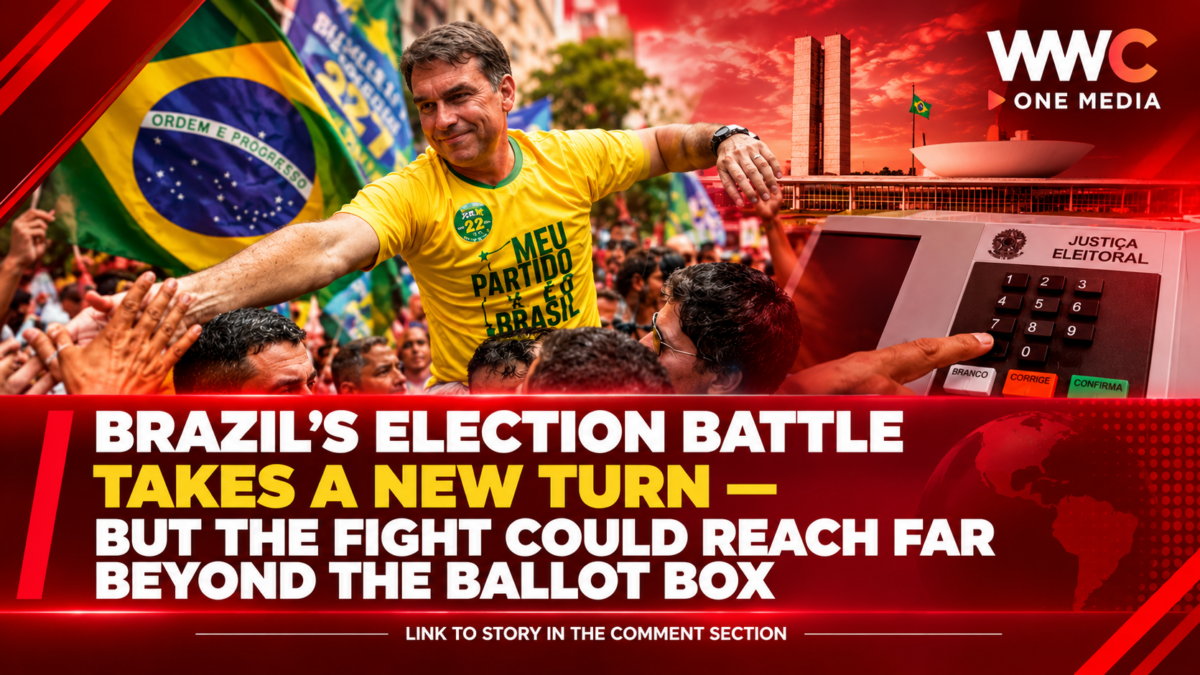
Brazil’s approaching election is becoming a closely watched political contest, with competing forces seeking to shape the country’s direction and its relationship with the wider world.
A major focus is the role of Flávio Bolsonaro, who is identified in the Korea Times guest column as a candidate backed by U.S. President Donald Trump. The column presents the election as part of a broader struggle over Brazil’s sovereignty, natural resources and political future.
The article also raises concerns about the influence of foreign political interests in Brazil’s electoral process. Those arguments are presented by the guest columnist and should be distinguished from independently established facts about the election.
At the center of the debate is a larger question: how much influence should outside political figures have over Brazil’s domestic political choices?
Brazil is one of the world’s largest democracies and an important economic power, making its elections significant not only for voters at home but also for international relations, trade and regional politics.
The contest is therefore being framed around more than individual candidates. It also reflects competing views about national sovereignty, international alliances and the country’s economic future.
With the election approaching, attention is likely to remain focused on the candidates, their supporters and the issues shaping voter debate.
And as the political battle intensifies, one question will continue to dominate the discussion: how will Brazil’s voters respond when the country’s future goes on the ballot?
WWC ONE MEDIA G,A