
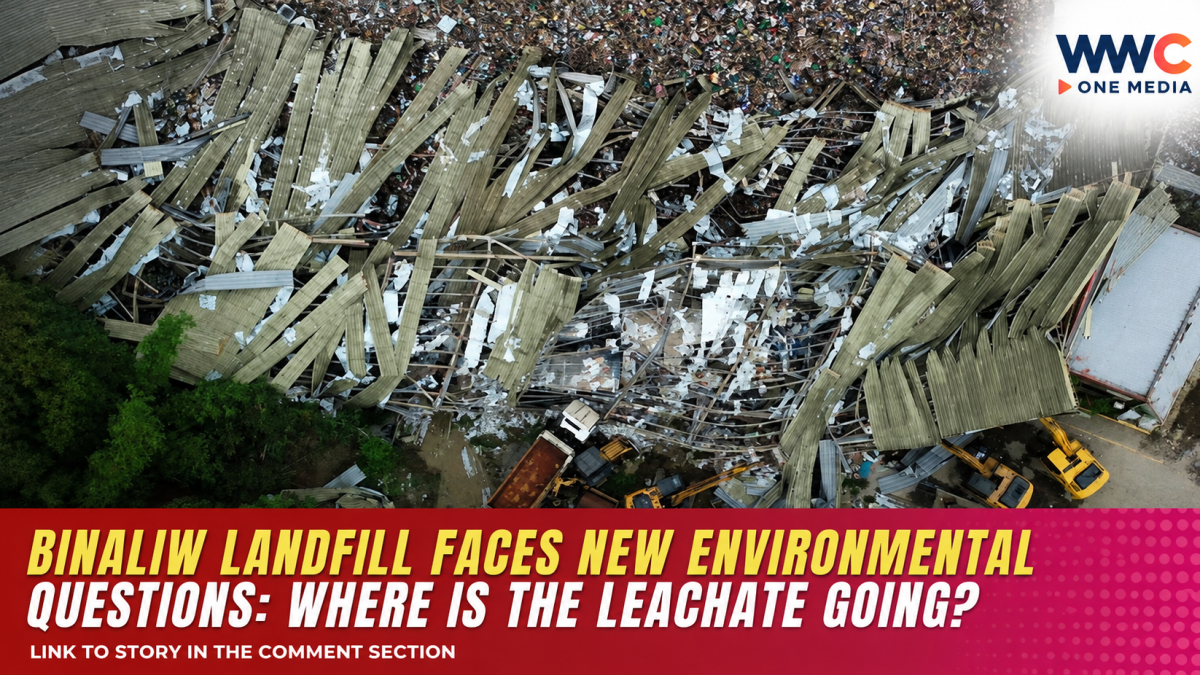
CEBU CITY — The Binaliw landfill is facing renewed scrutiny as Cebu City officials question how contaminated wastewater, known as leachate, is being handled while the facility’s wastewater treatment system remains out of operation.
The concern surfaced during a Cebu City Council inspection of the landfill on September 2, with Environment Committee chairperson Joel Garganera saying officials need to establish exactly where the collected leachate is being transported, how it is treated, and where it ultimately ends up.
A private service provider has reportedly been collecting leachate from the landfill. But for city officials, the key question is whether the liquid is being properly treated and disposed of without simply transferring a potential environmental problem somewhere else.
Leachate is liquid that passes through accumulated waste and can contain pollutants. Proper collection, treatment and disposal are therefore critical components of sanitary-landfill operations.
Binaliw’s safety is under renewed review
The latest concerns come months after a devastating trash-slide at the Binaliw facility on January 8, 2026, which killed 36 people.
The disaster prompted the Department of Environment and Natural Resources to issue a cease-and-desist order against the landfill operator, Prime Integrated Waste Solutions Inc. The facility subsequently underwent rehabilitation and environmental remediation.
By May, DENR’s Environmental Management Bureau Region 7 had allowed limited operations after reporting the installation of leachate liners and pipes and other mitigation measures.
In August, DENR-EMB 7 fully lifted the cease-and-desist order after saying the operator had complied with environmental requirements and rehabilitation targets. However, the landfill remained subject to operational restrictions, including a maximum of 500 metric tons of residual waste per day in designated areas.
That regulatory decision is now being examined more closely by the Cebu City Council.
Garganera has questioned the basis for fully lifting the order while rehabilitation and remediation activities remain ongoing. EMB 7 representatives were invited to the September 2 inspection but did not attend, according to SunStar.
The bigger question: Is Binaliw really ready?
The leachate issue is only one part of the council’s broader review.
Officials are also assessing the landfill’s structural stability, remaining capacity and environmental compliance before Cebu City considers sending its garbage there again.
The amended Environmental Compliance Certificate cited by the operator reportedly allows approximately 150,000 metric tons of waste. But Garganera said rehabilitation work involving the movement of waste within the facility could affect the landfill’s actual remaining capacity.
The Freeman separately reported that Garganera and Councilor Harry Eran believe PrimeWaste has yet to present a concrete long-term plan for the continued safe operation of the landfill.
Among the issues raised are the lack of a clear plan for rebuilding the collapsed materials recovery facility, developing supporting facilities and pursuing longer-term waste-management technologies such as waste-to-energy.
Cebu’s garbage crisis adds pressure
The controversy comes as Cebu City continues to struggle with a serious garbage-disposal problem.
The city has been transporting waste to alternative disposal facilities, including Aloguinsan, after Binaliw’s closure. Earlier reports placed the city’s daily garbage generation at roughly 600 to 700 tons, while hauling to the alternative site significantly increased disposal and transportation costs.
That pressure explains why reopening Binaliw remains an important option for the city — but officials say the landfill cannot simply be brought back into regular service without resolving safety and environmental questions.
The situation also exposes a larger problem: Cebu City remains heavily dependent on landfill disposal despite efforts to expand segregation, recycling and composting.
A previous Commission on Audit-related report cited by SunStar found weaknesses in Cebu City’s waste-diversion system, including inadequate enforcement of segregation policies and underused composting facilities. It also raised earlier concerns about conditions at Binaliw, including drainage, possible leachate leaks and other environmental safeguards.
What happens next?
The Cebu City Council has ordered several offices — including the Office of the Building Official, City Disaster Risk Reduction and Management Office, City Health Department and City Environment and Natural Resources Office — to prepare assessments covering structural safety, environmental conditions and compliance.
Those findings are expected to be discussed during an executive session on September 8.
Until then, the crucial question remains unanswered: Is Binaliw ready to safely receive Cebu City’s garbage again — and can officials verify that the landfill’s leachate is being properly contained and treated?
For Garganera, the standard is clear: when public safety is involved, there can be no halfway measure.
The decision on whether Cebu City can return to Binaliw is therefore no longer simply a question of where to put the city’s garbage. It is a test of whether the landfill can operate without repeating the environmental and safety concerns that have surrounded it since the January disaster.
WWC ONE MEDIA J.M.D

Leave a Reply