
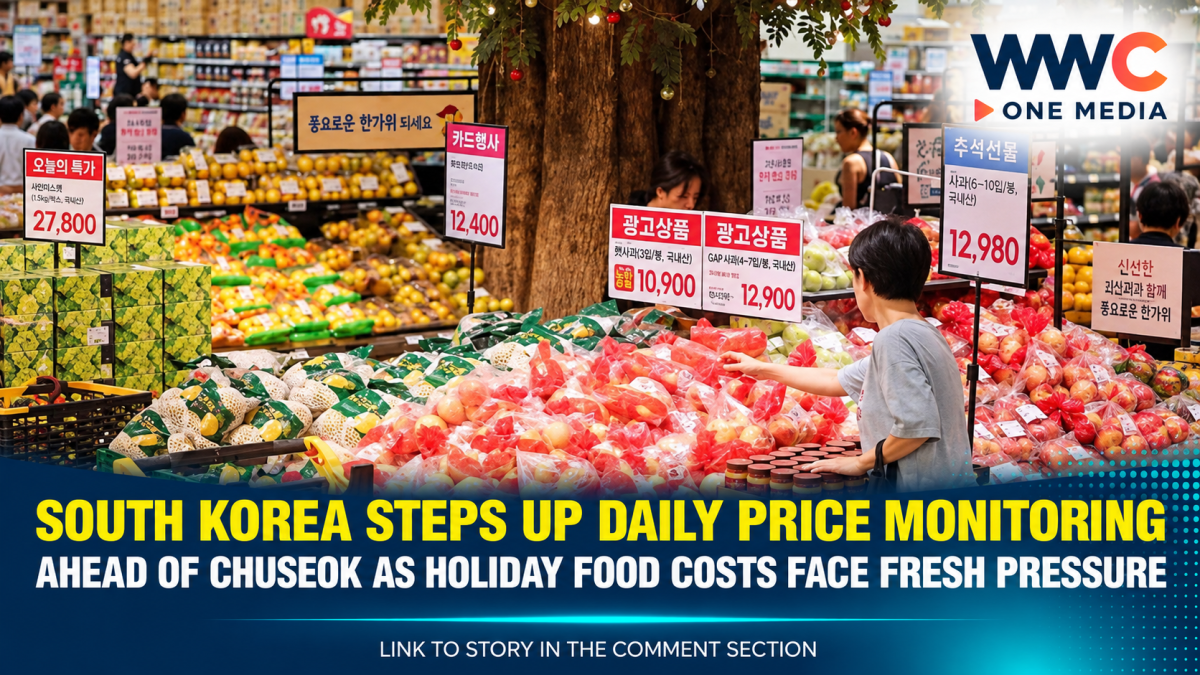
SEOUL — South Korea is stepping up its monitoring of consumer prices ahead of Chuseok, the country’s major harvest festival, as authorities seek a clearer day-to-day picture of the cost of holiday food and other essentials.
The move comes as Korean consumers prepare for one of the year’s biggest shopping periods while inflationary pressure remains a concern.
The Ministry of Data and Statistics is responsible for South Korea’s official consumer-price statistics, but its regular Consumer Price Index is released monthly—not daily. The ministry’s latest official release showed that consumer prices rose 3.1% year on year in August 2026, up from 2.8% in July.
That backdrop makes more frequent monitoring particularly important as Chuseok approaches.
Why Chuseok Prices Matter
Chuseok traditionally brings increased demand for fruit, vegetables, meat, seafood and other foods used in family gatherings and ancestral rites.
Price changes during this period can therefore have an immediate impact on household budgets.
South Korean authorities have previously used a dedicated daily Chuseok price survey to monitor major holiday goods and provide updated information to government agencies. The program has covered agricultural, livestock and fishery products as well as processed foods, fuel and restaurant items.
The 2025 program, for example, monitored 36 key items across seven major cities, including Seoul and Busan, using in-person and online surveys. Results were supplied daily to relevant government ministries to support price and supply-stabilization policies.
Inflation Is Still Above 3%
The latest inflation figures underline why officials are keeping a close eye on prices.
According to the Ministry of Data and Statistics, South Korea’s Consumer Price Index reached 120.05 in August, representing a 3.1% increase from a year earlier. Yonhap reported that higher oil prices and a base effect linked to last year’s mobile-service discounts contributed to the acceleration.
Core inflation, which excludes volatile food and energy prices, also increased, reaching 3.4%, according to reporting on the ministry’s August data.
The headline inflation figure does not necessarily mean every grocery item is becoming more expensive at the same rate. Food prices can move sharply because of weather, harvest conditions, transportation costs and seasonal demand.
That is precisely why daily monitoring can provide a more useful short-term picture during the Chuseok shopping season.
Fruit Prices Show the Uneven Picture
Recent market data already show that consumers may see very different price trends depending on the product.
A Sept. 8 report citing Korea’s agricultural and food distribution price information found that Hongro apples were selling below their year-earlier level, while Shingo pears remained significantly more expensive than normal.
The report said the retail price of 10 premium Hongro apples was about 23,255 won as of Sept. 7, down 25.1% from the same period a year earlier. By contrast, Shingo pears were reported to be more than 45% above the normal level.
That divergence highlights why simply saying that “food prices are rising” can be misleading.
Some Chuseok staples may become cheaper because supplies improve, while others can remain expensive because of production or distribution conditions.
What Daily Monitoring Could Reveal
A more frequent price-monitoring system can help officials identify sudden changes before they become reflected in broader monthly statistics.
The information can also support decisions on supplies, discounts and market stabilization measures, particularly for products that experience sharp seasonal demand.
Previous Chuseok monitoring has covered categories including:
- Fruit and vegetables
- Beef and other livestock products
- Eggs
- Fish and other seafood
- Flour and tofu
- Cooking oil
- Gasoline, diesel and kerosene
- Restaurant meals such as samgyeopsal and fried chicken
The purpose is not simply to publish a number. The data can help policymakers understand where price pressure is developing and where intervention may be needed.
A Closer Watch as Chuseok Nears
For Korean households, the timing is significant.
Chuseok is one of the country’s biggest annual family holidays, and households often purchase large quantities of food for gatherings, gifts and traditional ceremonies.
Even relatively modest price increases can therefore become noticeable when several items are purchased at once.
At the same time, strong supplies can produce the opposite effect. Increased shipments of agricultural and seafood products, promotional discounts and improved harvests can help bring prices down.
The government’s challenge is to distinguish temporary fluctuations from sustained price pressure.
The Bigger Economic Picture
The Chuseok price watch comes as South Korea navigates an inflation environment that remains more complicated than the headline number suggests.
August’s 3.1% inflation rate was partly affected by a one-off base effect from last year’s temporary mobile-phone discounts, meaning the figure does not necessarily indicate that underlying price pressure suddenly accelerated by the same amount.
Still, elevated fuel prices and movements in food and other household expenses remain important concerns for consumers.
That makes the coming weeks particularly important.
As Chuseok approaches, daily price information could give policymakers and consumers a clearer view of which foods are becoming more expensive, which are stabilizing—and where holiday shopping pressure may be heading next.
For millions of Korean households preparing for Chuseok, the next price update could matter more than the last one.
WWC ONE MEDIA G.A




Leave a Reply