
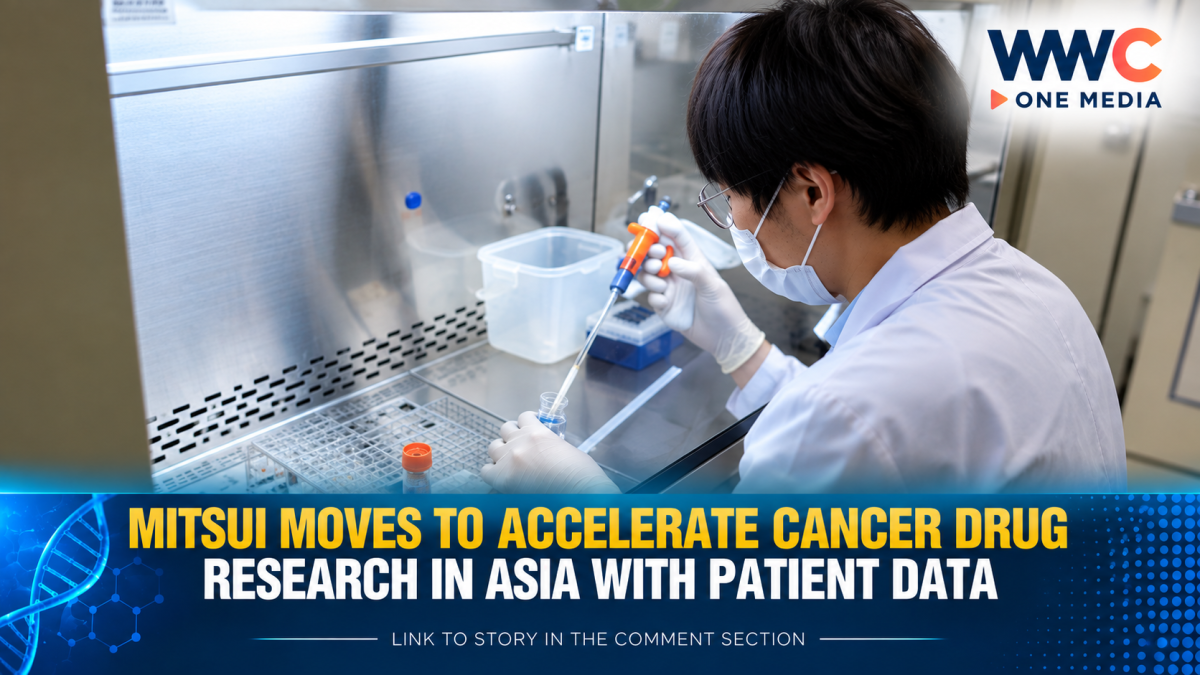
TOKYO — Japanese trading and investment giant Mitsui is stepping deeper into Asia’s fast-growing precision-medicine sector, backing efforts to make cancer patient data more useful for research and drug development.
The initiative reflects a broader shift in oncology: researchers and pharmaceutical companies are increasingly turning to large, carefully managed datasets—including clinical, genomic and treatment information—to identify potential drug targets, understand which patients may benefit from particular therapies and improve the design of clinical studies.
Mitsui has previously been involved in cancer-related data and diagnostic initiatives, including collaborations involving genetic testing and cancer information. Its work with RIKEN Genesis, for example, has focused on cancer genetic analysis and expanding access to sequencing-based testing services.
Why patient data is becoming so important
Developing a new cancer treatment can take years, and one of the biggest challenges in precision medicine is finding enough patients who share the specific biological characteristics required for a study.
Real-world patient databases can help researchers identify patterns across diseases, treatments and genetic characteristics. Mitsui’s own research on healthcare digitalization has highlighted how medical and genomic data can support more personalized approaches to cancer treatment and research.
Japan already has a major national example of this approach.
The Center for Cancer Genomics and Advanced Therapeutics (C-CAT) maintains a national database containing cancer genomic information and links it with information on biomarkers, drugs, clinical evidence and clinical data. The system is designed to help physicians and researchers make better use of genomic information in cancer care.
Asia offers a huge research opportunity
The importance of regional data is particularly significant in Asia, where cancer populations can have different genetic, demographic and clinical characteristics.
The National Cancer Center Japan has also been involved in international projects designed to improve cancer clinical research across Asia. Its initiatives include ARCAD-Asia, which has brought together large amounts of colorectal-cancer clinical-trial data, and newer efforts aimed at building broader clinical-trial networks.
Such databases can potentially make it easier for researchers to identify suitable participants, compare treatment outcomes and investigate differences among patient populations.
That could ultimately help pharmaceutical companies develop therapies that are better matched to specific cancer types and patient groups.
Mitsui is also expanding into cancer diagnostics
The company’s healthcare strategy extends beyond databases.
Mitsui Chemicals acquired DNA Chip Research in 2025 and has been expanding its cancer-diagnostics business, including a lung-cancer multiplex gene-testing panel. The company says the technology can simultaneously detect multiple genetic mutations relevant to treatment selection and is being considered for overseas expansion, including markets elsewhere in Asia.
Mitsui has also partnered with RIKEN Genesis on cancer genetic testing services, combining genetic measurement and data-analysis capabilities to support cancer-related clinical testing.
The bigger race: data-driven cancer medicine
The development points to a much larger transformation underway in cancer research.
Instead of treating cancer solely according to where a tumor appears in the body, researchers increasingly examine its molecular and genetic characteristics. That makes high-quality patient data essential.
But bigger databases do not automatically mean faster or better drug development. Data must be collected consistently, protected appropriately and analyzed using reliable scientific methods. Patient privacy and governance are also critical when medical and genomic information is shared across institutions or countries.
For Mitsui, the opportunity is potentially much broader than another healthcare investment.
By connecting patient data, genetic testing, clinical research and pharmaceutical development, Japanese companies could position themselves closer to the center of Asia’s emerging precision-medicine ecosystem.
And if regional cancer databases become larger and more connected, the next major breakthrough in cancer drug development may depend not only on discovering a new molecule—but on having the right patient data to know where that treatment can work best.
WWC ONE MEDIA G.A




Leave a Reply