
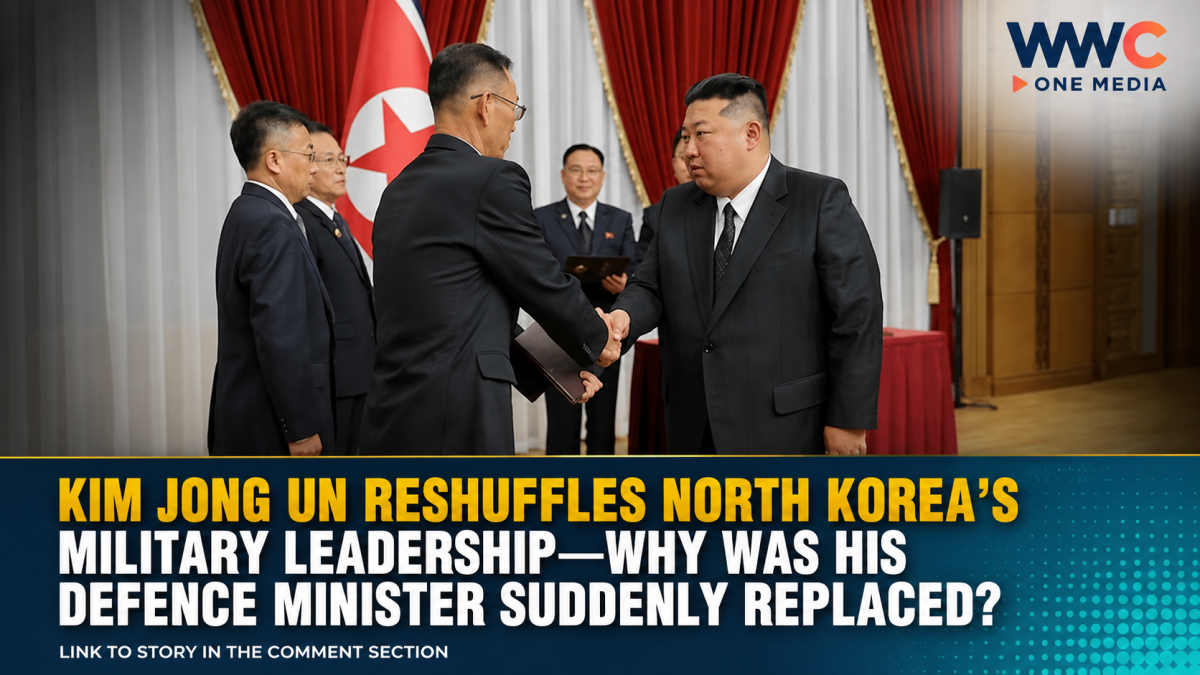
SEOUL, South Korea — North Korean leader Kim Jong Un has overseen a significant reshuffle of the country’s military leadership, replacing Defence Minister No Kwang Chol and appointing Kim Song Gi to the powerful position, according to reports from North Korean state media.
The leadership shake-up was decided during a meeting of the ruling Workers’ Party’s Central Military Commission led by Kim Jong Un, the Korean Central News Agency (KCNA) reported on Sunday, August 30.
Kim Song Gi, who previously served as director of the General Political Bureau of the Korean People’s Army, was named the country’s new defence minister. Meanwhile, No Kwang Chol was removed from the defence post and reassigned as first vice-director of the Workers’ Party’s Munitions Industry Department.
State media did not publicly explain why No was replaced, leaving the reasons behind the sudden reshuffle unclear.
The changes also included the promotion of senior military official Pak Jong Chon, who was named vice-chairman of the Central Military Commission and elevated within the ruling party’s Political Bureau, according to state media reports.
A Reshuffle Amid Growing Military Pressure
The changes come at a sensitive moment for North Korea, as Pyongyang continues to accelerate its weapons development and confront growing military cooperation among the United States, South Korea and Japan.
KCNA separately reported that Kim Jong Un recently praised scientists and officials involved in advances in defence technology, claiming they had contributed to the development of new combat weapon systems. North Korea did not disclose the specific technologies or weapons involved.
The announcement follows recent missile activity and heightened tensions surrounding military exercises on the Korean Peninsula. North Korea has repeatedly condemned joint U.S.-South Korean drills as hostile, even after Washington and Seoul reduced the scale of recent exercises.
At the same time, the United States, South Korea and Japan are preparing to continue trilateral military cooperation, including the planned Freedom Edge exercises.
North Korea’s Military Modernisation Continues
The reshuffle also comes as South Korean intelligence assessments point to continued advances in North Korea’s military capabilities.
According to a recent South Korean Defence Ministry assessment reported by Reuters, North Korea is continuing preparations linked to potential additional troop deployments to Russia, although Seoul said it had seen no indication that another deployment was imminent. The assessment also said Pyongyang has continued supplying Russia with military equipment, while some North Korean missile and rocket systems are approaching operational readiness. These assessments are based on South Korean government and intelligence information.
North Korea and Russia have significantly expanded their military relationship since Moscow’s invasion of Ukraine, adding another layer of concern for governments monitoring Pyongyang’s rapidly evolving weapons programmes.
Meanwhile, North Korea recently condemned U.S. arms sales to South Korea, including a proposed package involving AIM-9X air-to-air missiles. Pyongyang described the growing military cooperation between Washington and its allies as a threat and vowed a strong response to what it considers hostile actions.
What Does Kim Jong Un’s Latest Move Mean?
For now, there is no official indication that No Kwang Chol’s reassignment signals a purge or disciplinary action. His transfer to the Workers’ Party’s Munitions Industry Department—a key sector connected to North Korea’s defence industry—means he remains in a significant position within the country’s power structure.
But the timing of the reshuffle is likely to draw close attention.
With North Korea pursuing new weapons technologies, strengthening military ties with Russia and facing renewed pressure from the United States and its regional allies, Kim Jong Un’s decision to reorganise his military leadership could signal a renewed focus on military modernisation and weapons production.
The biggest question remains unanswered: What prompted the leadership shake-up—and what comes next for North Korea’s military strategy?



Leave a Reply