
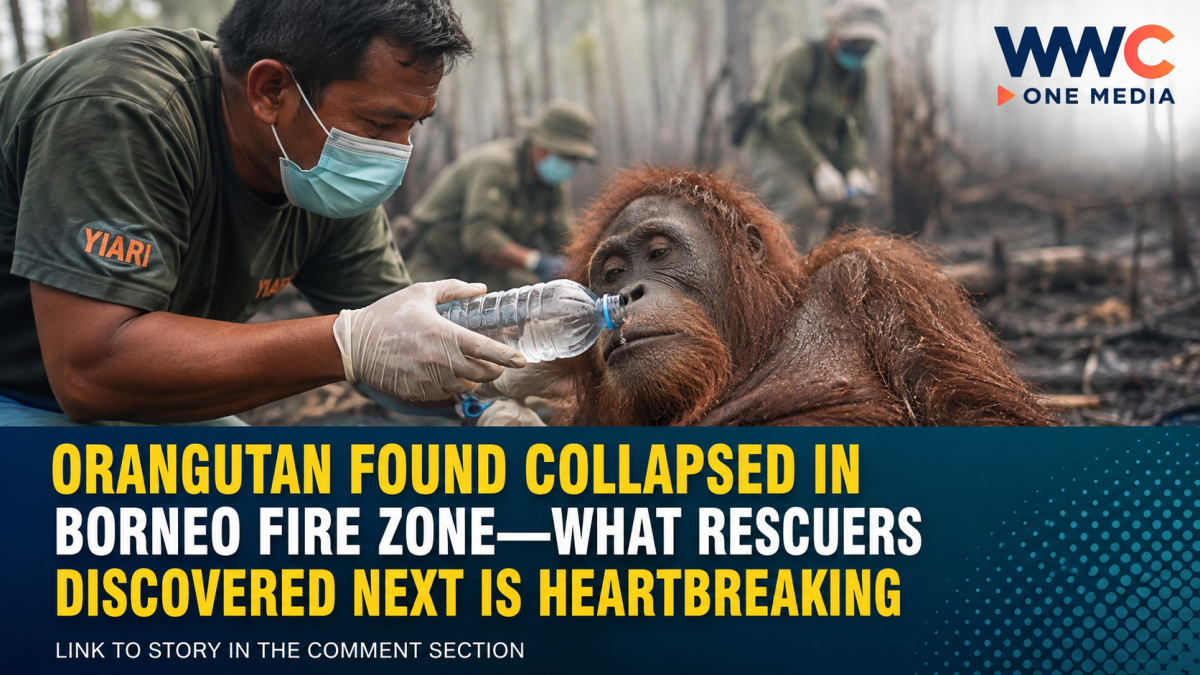
KETAPANG, Indonesia — A critically endangered Bornean orangutan was found weak and struggling to breathe near a wildfire zone in Indonesian Borneo, offering a heartbreaking glimpse into the growing toll of Southeast Asia’s worsening forest-fire crisis on wildlife.
The orangutan, later named Sampurna, was discovered on Sunday by a farmer on a palm-oil plantation near a fire-affected area in Ketapang, West Kalimantan. The animal was severely weakened, prompting the farmer and nearby residents to call for help after giving it water.
Rescuers from the Yayasan Inisiasi Alam Rehabilitasi Indonesia (YIARI) arrived with a veterinarian about two hours later. By then, Sampurna had reportedly fainted.
Veterinary teams said the orangutan—estimated to be around 20 years old—showed signs of breathing difficulties and vomiting. While it did not appear to have severe burn injuries, rescuers suspected an acute respiratory infection and said thick wildfire smoke had caused hypoxia, a dangerous condition in which the body does not receive enough oxygen.
Sampurna was given oxygen and intravenous fluids before being prepared for transfer to a rehabilitation center. Wildlife workers hope the orangutan can eventually return to the wild once it has recovered. According to rescuers, seven orangutans have been rescued in connection with the fires so far.
A Wildlife Emergency Hidden Behind the Haze
Sampurna’s rescue is more than an isolated animal story. It comes as Indonesia battles widespread forest and peatland fires across Borneo and Sumatra, with the resulting haze affecting communities, ecosystems and endangered wildlife.
Indonesia’s Forestry Ministry reported that at least 202,010 hectares of land burned between January and July, according to Reuters. The crisis intensified sharply during the dry season, with fires producing thick smoke that has contributed to respiratory problems and disrupted schools in Indonesia and neighboring Malaysia.
The wider emergency has triggered a massive response. Indonesian authorities have deployed thousands of firefighters and expanded aerial firefighting and cloud-seeding operations as fires continue to burn across several provinces. Police have also taken action against suspected perpetrators, while authorities investigate alleged illegal burning linked to land clearing.
West Kalimantan’s Wildlife Is Under Growing Pressure
The fires are particularly alarming in West Kalimantan, where orangutan habitat and wildlife rehabilitation efforts are increasingly exposed to flames and hazardous smoke.
Earlier this month, fires came dangerously close to YIARI’s orangutan rehabilitation facilities in the Ketapang region, where rescued Bornean orangutans are undergoing care and rehabilitation. Conservation reporting has warned that the fires threaten not only wild populations but also the facilities working to protect animals already displaced by habitat destruction and the illegal wildlife trade.
For orangutans, smoke can be a threat even when flames never reach them. Thick haze can interfere with breathing, while fires can destroy food sources, fragment forest habitat and force animals into unfamiliar or human-dominated areas in search of safety.
A Crisis That Crosses Borders
The disaster is also becoming a regional problem. Smoke from fires in Indonesian Borneo has drifted into neighboring Malaysia, worsening air quality and disrupting daily life. Authorities have stepped up cross-border cooperation as haze threatens public health and education across parts of Southeast Asia.
Indonesia’s wildfire crisis has long been tied to a complex combination of dry conditions, peatland fires and human activity, including land clearing. This year’s severe conditions have added fresh urgency to calls for stronger prevention, faster enforcement and long-term protection of vulnerable forests.
One Rescue, But a Bigger Warning
Sampurna’s survival now depends on continued medical care. But the image of an orangutan collapsing near a fire zone underscores a larger reality: the haze crisis is not affecting people alone.
As firefighters battle flames across Indonesia and conservationists work to save animals caught in their path, the rescue serves as a powerful reminder that the consequences of wildfires can extend far beyond the areas visibly consumed by fire.
For now, Sampurna has been given a second chance. The bigger question is whether enough can be done to protect the forests—and the wildlife that depends on them—before more animals need rescuing.




Leave a Reply