
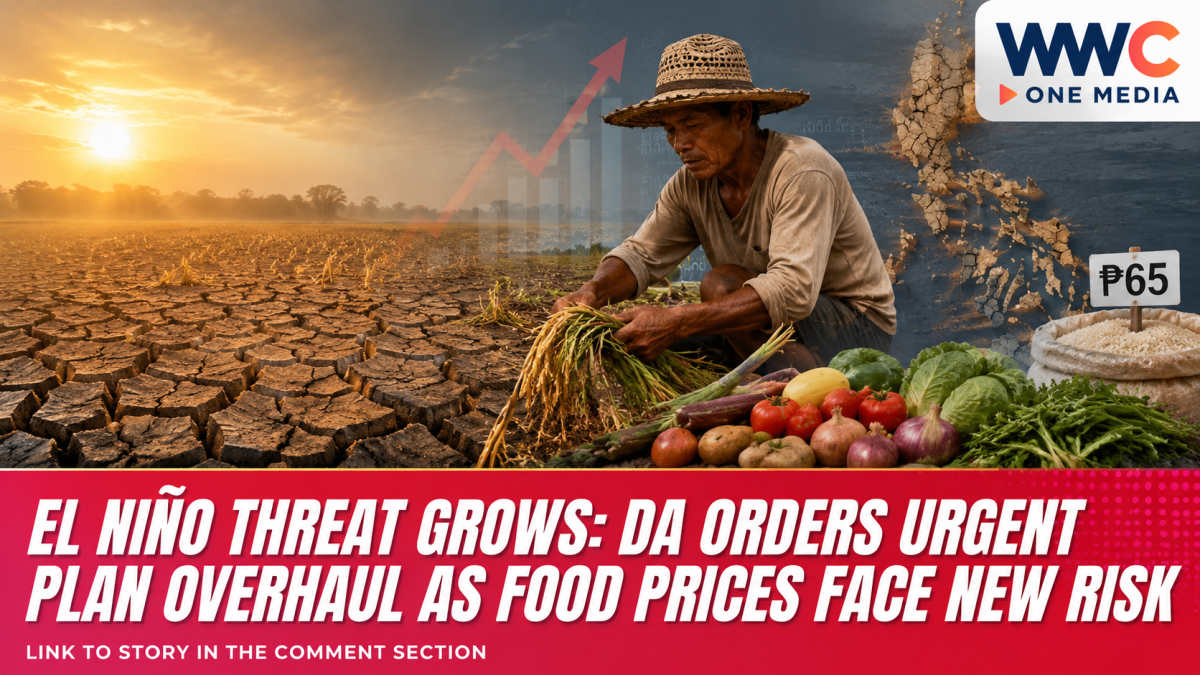
MANILA, Philippines — The Department of Agriculture (DA) has ordered its agencies to revise and strengthen their El Niño response plans as the Philippines braces for a potentially worsening dry spell that could threaten crop production, food supplies and consumer prices.
Agriculture Secretary Francisco Tiu Laurel Jr. said the government is drawing lessons from the powerful El Niño episode that ended in mid-2024, stressing that preparations must move beyond reacting to damage and focus on protecting farmers and food supplies before the worst effects hit.
“The lessons we learned from the powerful El Niño episode that ended in mid-2024 should help us respond better to the climate challenge we now face,” Tiu Laurel said.
The DA’s revised strategy includes strengthening irrigation systems, adjusting planting schedules, securing agricultural inputs and closely monitoring food inventories. Authorities are also preparing possible import and market interventions if needed to prevent supply shortages and sharp price increases.
More Water, Drought-Resistant Crops and Support for Farmers
The Agriculture Department is also looking at relocating production to areas expected to be less severely affected, expanding cloud-seeding operations and solar-powered irrigation, and improving water efficiency on farms.
Other measures include distributing drought-resistant seeds, speeding up crop insurance claims and providing emergency financial assistance to vulnerable farmers.
Tiu Laurel said farmers must maximize available water and consider practices such as alternate wetting and drying, as well as crops that require less water.
The urgency is growing as the DA has already warned that prolonged dry conditions could reduce crop yields in several parts of the country. Palay production is also expected to decline in the third quarter of 2026 as the developing El Niño begins affecting agricultural conditions.
PAGASA: El Niño Could Become Very Strong
The government’s preparations come as the Philippine Atmospheric, Geophysical and Astronomical Services Administration (PAGASA) reported that a moderate to strong El Niño is already present in the Tropical Pacific.
In its latest monitoring update on August 26, PAGASA said climate models indicate the El Niño could continue into the first half of 2027 and may reach a very strong intensity before the end of 2026.
That outlook raises concerns not only for farms but also for water resources, electricity demand and household budgets. El Niño typically brings below-normal rainfall and hotter conditions to many parts of the Philippines, although its effects can vary by location and season.
Food Prices and Inflation Also Under Pressure
The threat extends beyond agricultural production. The Bangko Sentral ng Pilipinas has flagged severe El Niño conditions as one of the risks that could push consumer prices higher, particularly as food production comes under pressure.
According to the latest report, the central bank revised its inflation outlook for 2027 higher, saying the impact of El Niño could become more pronounced in the fourth quarter.
Recent reporting has also highlighted growing concerns about the country’s food security, with agriculture officials facing the challenge of protecting domestic production while keeping essential food supplies affordable for Filipino families. The wider global picture is also worrying, as international agencies are stepping up preparedness efforts amid the risk that El Niño-related droughts and extreme weather could worsen food insecurity in vulnerable countries.
A Race Against Time
The DA’s order to update response plans signals a shift toward a more proactive approach as weather risks become increasingly difficult to ignore.
For farmers, the coming months could determine whether government preparations are enough to soften the impact of another punishing dry spell. For consumers, the bigger question is whether stronger planning can prevent climate-related crop losses from eventually reaching the dinner table through higher food prices.
With PAGASA warning that the current El Niño could intensify further, the race is now on — can the Philippines protect its farms and food supply before the drought takes a heavier toll?




Leave a Reply