
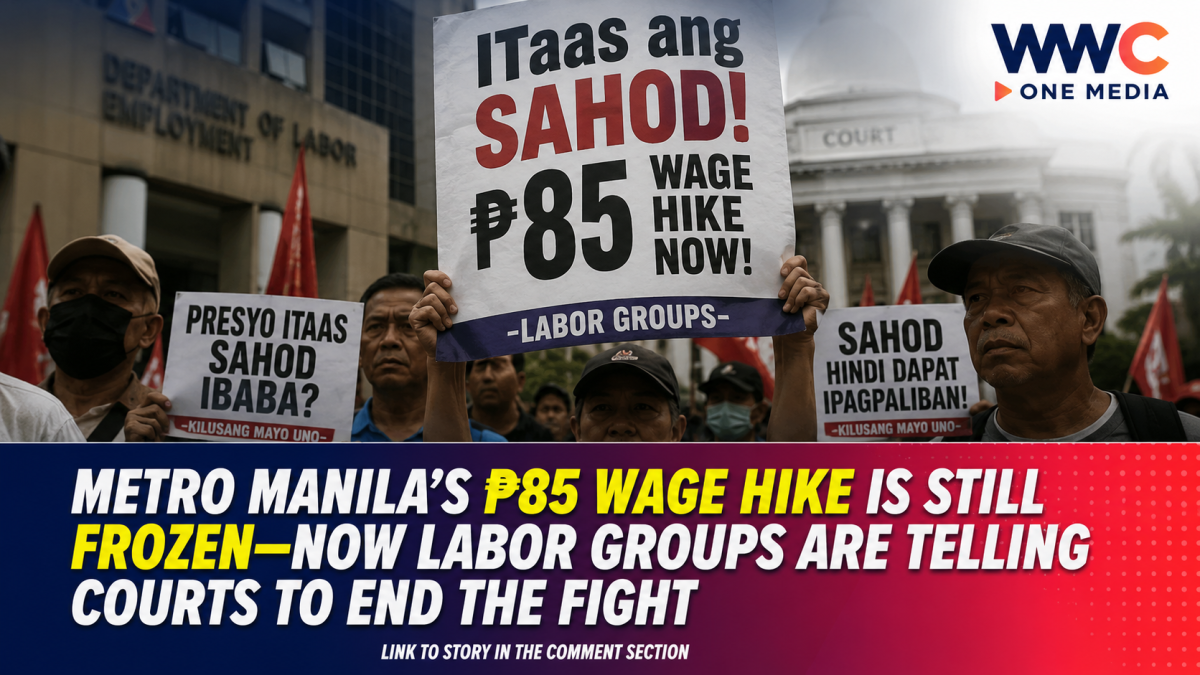
MANILA, Philippines — Labor groups are stepping up pressure on the courts to clear the way for Metro Manila workers to receive their long-delayed wage increase, calling on the Regional Trial Courts (RTCs) in Pasig and Navotas to dismiss petitions challenging the implementation of the ₱85 daily minimum wage hike.
The appeal comes as the legal battle over NCR Wage Order No. 27 continues to leave millions of pesos in expected wage adjustments—and the workers counting on them—in limbo.
Labor leaders argue that the lower courts should dismiss the cases on jurisdictional grounds rather than wait for the Supreme Court to settle the dispute. Their position is that challenges to regional wage orders are governed by a specific process under labor laws and should not be directly used to stop a wage order through the RTCs.
Supreme Court Steps Into the Wage Hike Dispute
The Supreme Court has already ordered Readycon Trading and Construction Corp., R-II Builders Inc., and the Alliance of Philippine Fishing Federations Inc. to submit comments within 10 days on a petition filed by the KAMANGGAGAWA Party-list and labor groups seeking to overturn the lower court actions that halted the wage increase.
The Regional Tripartite Wages and Productivity Board-NCR (RTWPB-NCR) and the National Wages and Productivity Commission (NWPC) were also directed to submit their comments. The High Court’s move does not yet resolve the merits of the case, but it brings the dispute another step closer to judicial review.
How the ₱85 Metro Manila Wage Hike Was Put on Hold
The wage increase was supposed to be implemented in two tranches under NCR Wage Order No. 27. The first ₱60 daily increase took effect under the wage order on July 25, while the remaining ₱25 is scheduled for January 20, 2027, bringing the total adjustment to ₱85 once fully implemented.
For non-agricultural workers, the full increase would raise the daily minimum wage from ₱695 to ₱780, according to the NWPC. However, the implementation of the increase has been caught in a legal dispute and remains suspended under the Pasig court’s preliminary injunction.
The Pasig RTC initially issued a temporary restraining order against the wage increase in July. When the TRO expired, the court issued a preliminary injunction, with the petitioners required to post a ₱10-billion bond, extending the halt while the case proceeds. The court cited the interests of stakeholders and concerns raised about potential job losses in its decision.
Labor Groups: Courts Can Correct Their Own Mistakes
Labor organizations say the Pasig and Navotas courts do not need to wait for the Supreme Court before acting on questions properly raised before them.
Sonny Matula, president of the Federation of Free Workers and chairperson of the Nagkaisa Labor Coalition, said courts should have the courage to recognize and correct errors, particularly when jurisdiction is being questioned.
SENTRO deputy secretary general Nicey Coronacion similarly argued that a court does not have to wait to be overturned before correcting what it considers an error. Labor groups have also asked the Navotas RTC to dismiss a separate challenge to the same wage order.
The broader concern for labor groups is the precedent the cases could set. In their petitions before the Supreme Court, workers’ advocates have warned that allowing court actions to repeatedly halt wage orders could open the door to similar challenges against future regional wage increases.
More Than a Legal Battle for Metro Manila Workers
For workers, the dispute is not simply about legal procedure—it is about money that was expected to help cover everyday necessities amid the high cost of living.
Earlier reports showed workers expressing frustration after the wage increase was suspended, with some saying they had already planned how to use the additional income for food and family expenses. Labor groups have argued that delayed wages cannot fully compensate for immediate needs that workers may be forced to postpone while the legal battle drags on.
The ₱85 adjustment is expected to benefit around 1.1 million minimum-wage earners in Metro Manila once fully implemented, according to labor authorities.
What Happens Next?
The Supreme Court has yet to issue a final ruling on whether the lower courts had the authority to stop the implementation of the NCR wage order. For now, the Pasig injunction remains a major obstacle, while labor groups continue to push for the dismissal of challenges in both Pasig and Navotas.
The outcome could have implications far beyond the current ₱85 Metro Manila wage hike, potentially shaping how future wage orders can be challenged and whether workers must wait for lengthy court battles before government-approved increases reach their paychecks.
For Metro Manila’s minimum-wage earners, the question remains painfully simple: When will the promised raise finally reach their pockets?

Leave a Reply