
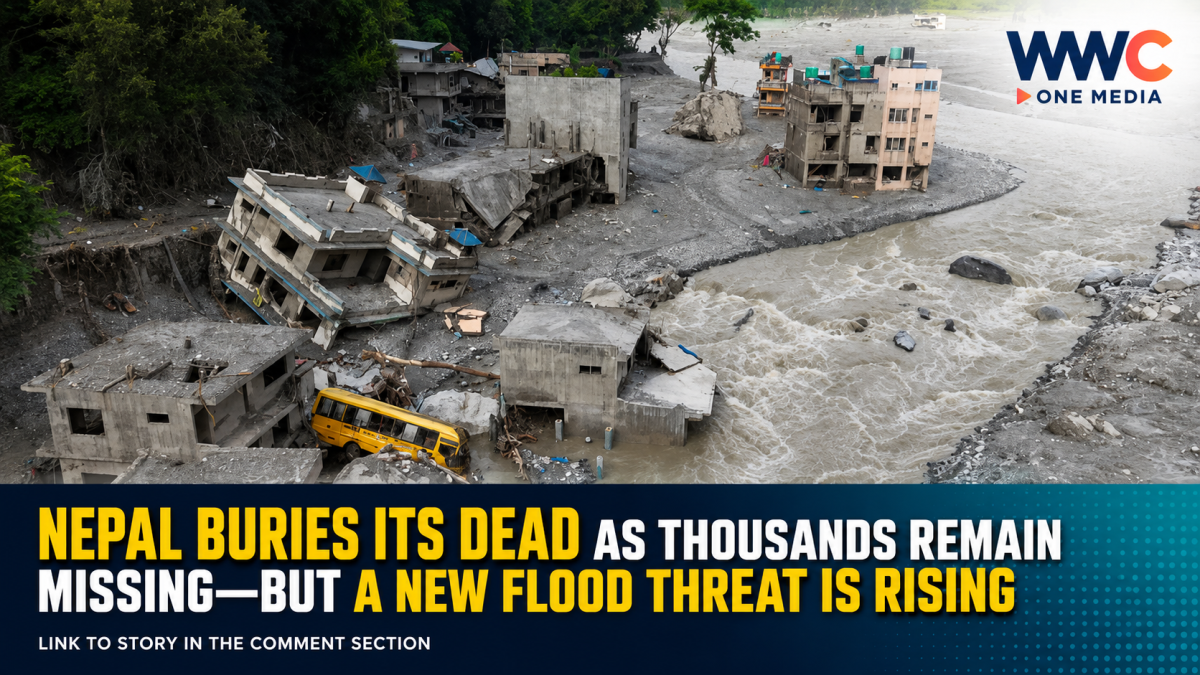
KATHMANDU, Nepal — Nepal has begun burying hundreds of victims from one of the worst disasters to hit the Himalayan region in years, as rescuers continue a desperate search for thousands of people still missing following catastrophic floods triggered by a massive glacial collapse.
The scale of the tragedy continues to grow.
Latest reports indicate that nearly 800 people have been confirmed dead across Nepal and neighboring Tibet, while more than 3,000 people remain missing, although the figures continue to change as rescue teams reach isolated communities and authorities update their lists of victims and survivors.
The disaster began when a collapse involving ice, rock and debris in the Himalayas unleashed a devastating torrent into mountain river systems, sending floodwaters and mud crashing through villages, roads, bridges and major infrastructure.
Families Search for Loved Ones as Morgues Overflow
For many families, the disaster has turned into an agonizing wait.
Relatives have gathered at hospitals, rescue centers and makeshift identification sites, searching lists of survivors and hoping for news of loved ones who disappeared when the floodwaters swept through communities.
Authorities in Nepal have recovered large numbers of bodies, many of them badly decomposed after being carried far downstream. With morgues and hospitals overwhelmed, officials have begun burying unidentified victims while collecting DNA samples, photographs and other identifying information that could help families identify and reclaim their relatives later.
The temporary burials have also sparked emotional debate, particularly because of the importance of traditional funeral rites. Officials have said the measures are being taken because of public health concerns and the limited capacity to store the growing number of recovered bodies.
Rescue Teams Race Against Time
The search for survivors remains underway despite dangerous conditions.
Rescuers are battling thick mud, damaged roads, unstable slopes and continuing rainfall as they attempt to reach devastated areas. Particular concern has focused on workers at hydropower facilities, where hundreds were reported missing after the floods damaged major installations along the river.
Reports from international media also indicate that rescue teams are racing to reach people believed to be trapped in tunnels and isolated areas, where the chances of survival could depend on how quickly access can be restored.
More than 90,000 people may have been affected by the disaster, according to humanitarian assessments cited in international reports, highlighting the enormous challenge facing communities that have lost homes, roads, power and access to essential services.
Fresh Flood Warnings Add to the Fear
Even as recovery operations continue, authorities have warned that the danger may not be over.
Rising water levels and unstable debris blocking mountain rivers have raised fears of additional flooding in areas already devastated by the initial disaster. Fresh rainfall and landslides are further complicating rescue operations and threatening communities downstream.
The Himalayan region is particularly vulnerable to floods, landslides and glacial hazards. Scientists and disaster experts have increasingly warned that warming temperatures are destabilizing glaciers and high-mountain landscapes, potentially increasing the risk of catastrophic events.
While the precise chain of events behind this disaster remains under investigation, the catastrophe has renewed concerns about the growing dangers facing communities living below the rapidly changing Himalayas.
A Disaster Still Unfolding
For Nepal, the immediate priority remains finding survivors, identifying the dead and helping tens of thousands of people whose lives have been disrupted.
But with thousands still unaccounted for and fresh flood threats looming, the full human cost of the Himalayan disaster may not yet be known.
As families wait for answers and rescue teams continue digging through mud and debris, Nepal faces a painful reality: the search is far from over—and neither is the danger.




Leave a Reply