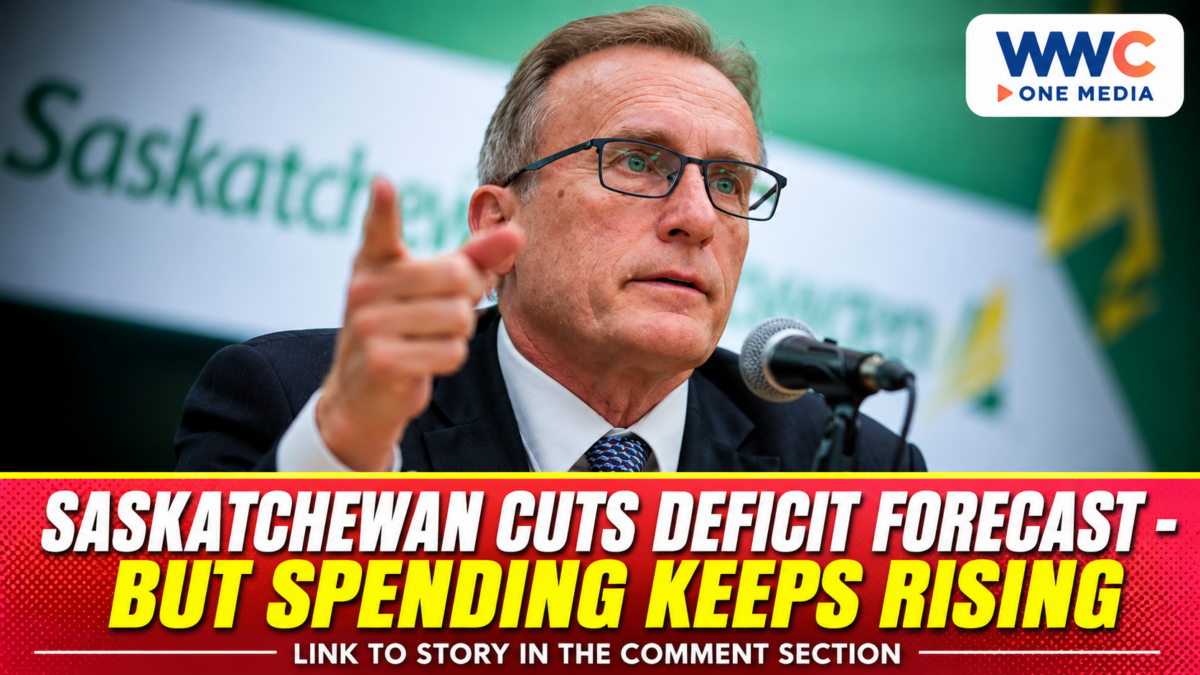
REGINA, Saskatchewan — Saskatchewan has reduced its projected 2026–27 budget deficit to C$783.6 million, but the improvement comes with a warning: the province is still spending substantially more than originally planned, and its stronger revenue outlook depends heavily on natural-resource markets.
The provincial government’s Nov. 25 mid-year financial report puts the projected deficit at C$783.6 million, compared with C$819.4 million in the March budget. The improvement is C$35.8 million, or about 4.4 per cent.
The revised forecast reflects higher expected revenue from oil, potash and uranium. However, the government has also increased its expenditure forecast by C$632.7 million, with additional funding pressures concentrated in healthcare, emergency response and social assistance.
The numbers offer a mixed assessment of Saskatchewan’s finances: commodity revenues are providing relief, but public-service demands remain significant.
Why Saskatchewan’s deficit forecast improved
The province now expects total revenue of C$22.085 billion for the fiscal year ending March 31, 2027, an increase of C$668.5 million from the original budget forecast.
The largest improvement comes from non-renewable resource revenue, which is now forecast at C$3.293 billion. That is C$725 million above the budget estimate.
Oil is a particularly important contributor. Saskatchewan raised its forecast for West Texas Intermediate crude oil from US$59.75 per barrel in the budget to US$86 per barrel in the mid-year update.
The higher oil-price assumption is expected to increase oil royalty revenue by C$511 million compared with the original budget.
Potash and uranium are also contributing to the improved outlook. The government expects stronger potash netback pricing and favourable market conditions, while uranium prices remain above its earlier budget assumptions.
These changes demonstrate how closely provincial finances are connected to the performance of resource markets.
For Saskatchewan, higher commodity prices can improve royalties and other resource-related receipts. But the reverse is also possible: weaker prices could reduce expected revenue and put renewed pressure on the budget.
Healthcare and emergency costs are pushing spending higher
The revenue improvement has not prevented expenditure forecasts from rising.
Saskatchewan now expects total spending of C$22.869 billion in 2026–27, C$632.7 million above the original budget estimate. That represents an increase of 2.8 per cent.
Healthcare accounts for the largest additional allocation. The province has raised its health expenditure forecast by C$350 million to C$8.771 billion, citing operating pressures at the Saskatchewan Health Authority and increased demand across the health system.
The Protection of Persons and Property category is up C$202.4 million, with higher costs associated with flooding, wildfire and emergency-management activities, alongside increased operating expenses at correctional facilities.
Social Services and Assistance spending is forecast to rise by C$56.8 million. The government attributes the increase largely to greater use of the Saskatchewan Income Support programme and higher costs for intensive residential services and support intended to help keep children safely at home.
These increases are partially offset by lower projected community-development spending, including reduced transfers under First Nations Gaming Agreements because casino profits were below expectations.
The spending changes show why a smaller deficit should not automatically be interpreted as a reduction in government expenditure. Saskatchewan’s revised forecast reflects higher revenue alongside higher costs for services and emergency needs.
The province is still forecasting a substantial debt load
The deficit is only one measure of a government’s financial position. Debt provides another view of the obligations that accumulate over time.
Saskatchewan expects gross debt to reach approximately C$43.8 billion by the end of the 2026–27 fiscal year. The detailed mid-year table puts the forecast at C$43.755 billion, C$235.9 million above the original budget projection.
The government says the increase primarily reflects updated borrowing requirements at SaskPower, which affect self-supported debt. Taxpayer-supported debt is forecast to remain relatively unchanged from the budget.
Net debt is forecast at C$18.901 billion, lower than the C$19.723 billion projected in the budget.
The province also expects net debt to equal 15.0 per cent of gross domestic product at March 31, 2027, compared with the budget assumption of 16.1 per cent.
That improvement is partly linked to a stronger GDP outlook. It does not mean the province has eliminated its borrowing requirements or that its gross debt has fallen.
The distinction between gross debt and net debt matters. Gross debt measures total borrowing obligations under the government’s accounting framework, while net debt accounts for financial assets available to offset those obligations.
For a wider perspective on how governments manage borrowing and repayment obligations, WWC has examined the rise in Canada’s debt-related economic pressures and currency risks.
Saskatchewan’s economy provides some support
The mid-year report also presents a relatively resilient economic outlook.
The province’s average private-sector forecast puts real GDP growth at 1.5 per cent in 2026, which the report ranks as the third-highest among Canadian provinces.
Resource exports and construction activity are among the factors supporting the economy. Saskatchewan reports 60 major private-sector projects in planning or construction, with estimated capital investment exceeding C$100 billion.
Housing starts increased by 5.9 per cent, or 272 units, during the first three quarters of 2026. Urban rental housing starts rose by 41.1 per cent over the same period.
Employment expanded by 2,800 during the first 10 months of 2026, while the average unemployment rate was 5.9 per cent, the third-lowest among provinces.
These indicators provide context for the government’s revenue outlook, but they do not remove the risks. The province itself identifies global economic uncertainty, commodity-price volatility and international trade challenges as factors that could affect future performance.
Saskatchewan’s reliance on natural resources means changes in global demand, energy prices and export conditions can influence both economic activity and public revenue.
The wider question is whether the improvement can last
The revised deficit is a relatively small improvement compared with the scale of Saskatchewan’s overall budget.
The province’s revenue forecast has increased by C$668.5 million, but expenditure has also risen by C$632.7 million. The difference between those two revisions is what produces the C$35.8-million improvement in the projected bottom line.
That makes the quality and durability of the additional revenue particularly important.
If oil, potash and uranium prices remain favourable, Saskatchewan may retain some of the fiscal support reflected in its latest forecast. If commodity markets weaken, the province could face pressure to revise its revenue assumptions again.
The challenge is not unique to Saskatchewan. Governments dependent on resource revenue must balance cyclical income with recurring obligations such as healthcare, education and public safety.
WWC has examined another resource-linked government’s attempt to strengthen its fiscal position in its report on Papua New Guinea’s plan to achieve its first balanced budget in 17 years.
The broader debate over debt management also extends to public confidence and accountability. WWC’s coverage of a proposal to address Philippine government debt and the importance of public trust explores why fiscal targets need to be accompanied by transparent financial management.
What happens next?
Saskatchewan’s mid-year report is a revised forecast, not the final audited result for the 2026–27 fiscal year. Actual revenue, expenditure and borrowing will depend on economic conditions and government spending through March 31, 2027.
The next important indicators will include resource prices, healthcare operating costs, emergency-response spending and the province’s borrowing requirements.
For now, Saskatchewan has a smaller projected deficit than it did in March, but the improvement is modest. The province is still forecasting a C$783.6-million shortfall, with spending higher across several major public-service categories.
The real test will be whether stronger resource revenues can continue to support the budget without leaving the province increasingly exposed to commodity-market swings.