
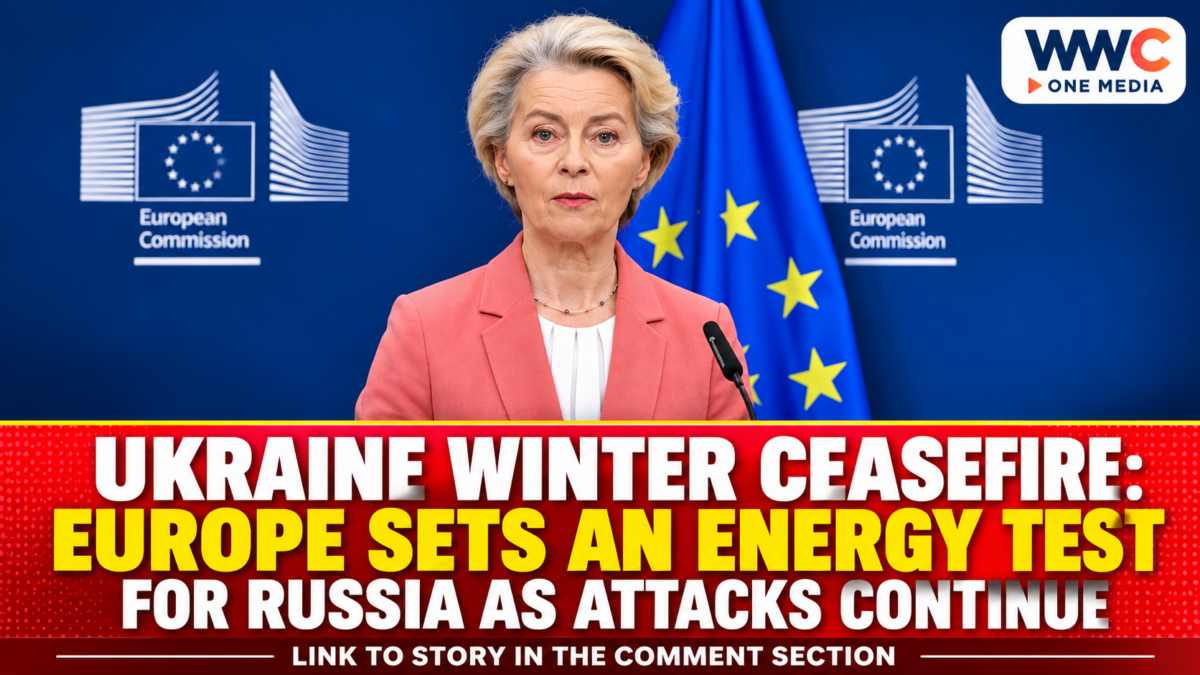
European Commission President Ursula von der Leyen called on Russia to accept a winter ceasefire covering Ukraine’s energy infrastructure during a European Parliament debate on November 25, 2026, presenting a halt to attacks on power and heating systems as a practical sign of serious interest in peace. Her appeal came as the European Union prepared another round of support for Ukraine and Kyiv continued to report damage to its energy network.
The proposal is significant because it focuses on infrastructure that civilians rely on through the coldest months. A pause in attacks on energy facilities would not resolve the wider war, but it could offer a concrete measure of whether diplomatic momentum is translating into steps that protect essential services.
Ukraine winter ceasefire: the proposal and its diplomatic test
Von der Leyen told lawmakers that Russia should agree to a winter ceasefire on energy infrastructure and a separate truce to ensure the safe passage of food exports through the Black Sea. She said these would be important steps in demonstrating that Moscow was serious about negotiations.
The wording matters. The European Commission President was calling for an agreement, not announcing one. Her speech did not say Russia had accepted the proposal, that a monitoring mechanism had been agreed, or that a ceasefire had begun.
The appeal followed discussions among the Coalition of the Willing, a group of countries supporting Ukraine. In a November 13 joint statement with European Council President António Costa after meeting Ukrainian President Volodymyr Zelenskyy in Dublin, the EU leadership said it welcomed renewed momentum in peace talks and would remain involved in the process.
The same statement said the European Council would discuss Ukraine’s urgent financing needs for 2027 at its November 26–27 meeting. It also confirmed that the European Commission would present its 22nd sanctions package against Russia.
That sequence puts the energy ceasefire proposal alongside two other tracks: continued pressure on Russia and financial and practical support for Ukraine.
Why energy infrastructure is central to the winter debate
Von der Leyen told the European Parliament that infrastructure in Ukraine had been struck more than 1,000 times since September. She identified power stations, heating systems and water supplies among the services affected.
The figure is her statement to lawmakers, rather than an independently itemised incident count in the speech. It nevertheless illustrates the scale of the concern being raised by the EU leadership as winter approaches.
The impact of energy damage can extend beyond the facility directly hit. Electricity is needed to operate water systems, public services, businesses and heating infrastructure. When generation or distribution equipment is damaged, communities may face interruptions even when power plants elsewhere in the country remain operational.
Ukraine’s own presidential communications have described the difficulty of repairing and protecting the network. In an address on November 6, Zelenskyy said Russia’s tactics were targeting power grids, transformers and switchgear. He explained that some regions could experience shortages even when sufficient generation capacity existed, because damaged distribution equipment still needed repair.
That distinction is important: having electricity available somewhere in a national system does not guarantee that it can be delivered reliably to every household or community.
WWC has previously examined how a November 20 barrage disrupted Kyiv’s critical infrastructure, including the effects on transport, water services and electricity. The broader issue is that damage to interconnected systems can complicate daily life long after the immediate attack.
Europe is pairing diplomacy with winter assistance
The EU’s November 13 statement outlined practical support intended to help Ukraine maintain essential services during winter. It said the European Commission was mobilising 500 generators from its rescEU reserves, helping establish emergency support centres and providing essential equipment.
The statement also referred to support for the delivery of four floating bridges from Norway and 200 buses. These measures form part of a wider effort to keep communities connected and support essential operations.
In her November 25 speech, von der Leyen said the EU had provided more than €235 billion to Ukraine since the beginning of Russia’s full-scale invasion. She described the assistance as including financial support for hospitals and public services, military assistance and reconstruction.
She also outlined the Commission’s proposed financing plan for 2027. The proposal, called the Instrument for Coordinated Support to Ukraine, would provide €45 billion next year, with €20 billion for budget support and €25 billion for military support. Von der Leyen said Ukraine faced a financing gap of around €70 billion in 2027, with the remaining third expected to be covered by international partners.
These figures describe the Commission President’s stated proposal and assessment; they should not be confused with a completed payment or a final agreement by all funding partners.
Sanctions remain part of the pressure strategy
The call for an energy ceasefire came alongside the EU’s 22nd sanctions package against Russia, which von der Leyen said had been adopted on November 23.
In her parliamentary address, she highlighted measures involving financial services, energy services, shipping, visas, business roles and sporting and cultural organisations. Among the energy-related measures, she said the EU would expand restrictions so European companies could no longer help Russia develop or maintain its energy infrastructure.
She also referred to action against Russia’s so-called shadow fleet, saying more than 70 ships had been listed and that the Commission proposed banning tankers insured in Russia.
The sanctions package and the ceasefire appeal serve different purposes. Sanctions are intended to raise the economic and operational cost of continuing the war. A ceasefire, if accepted and implemented, would aim to stop a specific category of attacks for an agreed period.
Neither measure guarantees an end to the conflict. Their effectiveness depends on enforcement, political decisions and whether the parties comply with any commitments.
For readers following the wider energy-security consequences, WWC has also reported on concerns about Ukraine’s nuclear safety as winter grid attacks threaten reliable power supplies. The issue demonstrates why stable electricity connections matter not only for households but also for critical infrastructure.
What happens next
The immediate diplomatic test is whether Russia responds to the proposed winter pause and whether negotiations produce a defined arrangement. The EU statement and von der Leyen’s speech do not establish that such an agreement exists.
The European Council’s November 26–27 meeting is also expected to address Ukraine’s 2027 financing needs. That discussion will help clarify how the EU intends to sustain financial support while the war continues.
For Ukraine, the practical challenge remains the protection, repair and distribution of electricity and heating services. The November 6 presidential address described the need for additional repair crews, equipment and air-defence support. These needs underline why a ceasefire focused on energy infrastructure would matter to civilians even if it did not settle the wider conflict.
The EU’s position is therefore built around two parallel demands: maintain pressure on Russia while supporting Ukraine’s ability to withstand another winter. Whether the proposed energy pause becomes more than a diplomatic appeal will depend on decisions and actions still to come.
Frequently asked questions
What ceasefire did Ursula von der Leyen propose?
She called for Russia to agree to a winter ceasefire covering energy infrastructure in Ukraine, alongside a separate truce to ensure the safe passage of food exports through the Black Sea.
Has Russia agreed to the proposed energy ceasefire?
The European Commission President’s November 25 speech did not announce Russian acceptance. It presented the ceasefire as a proposal Russia should agree to.
Why is Ukraine’s energy infrastructure important during winter?
Power stations, electricity networks, heating systems and water services support essential daily needs. Damage to generation or distribution equipment can disrupt services for communities even when electricity is available elsewhere.
What winter assistance is the European Union providing?
The EU’s November 13 statement said it was mobilising 500 generators, helping establish emergency support centres and providing essential equipment. It also referred to support for four floating bridges from Norway and 200 buses.
What happens at the EU’s November 26–27 meeting?
The European Council is scheduled to discuss Ukraine’s urgent financing needs for 2027. The EU’s November 13 joint statement identified this as an item for the meeting.










