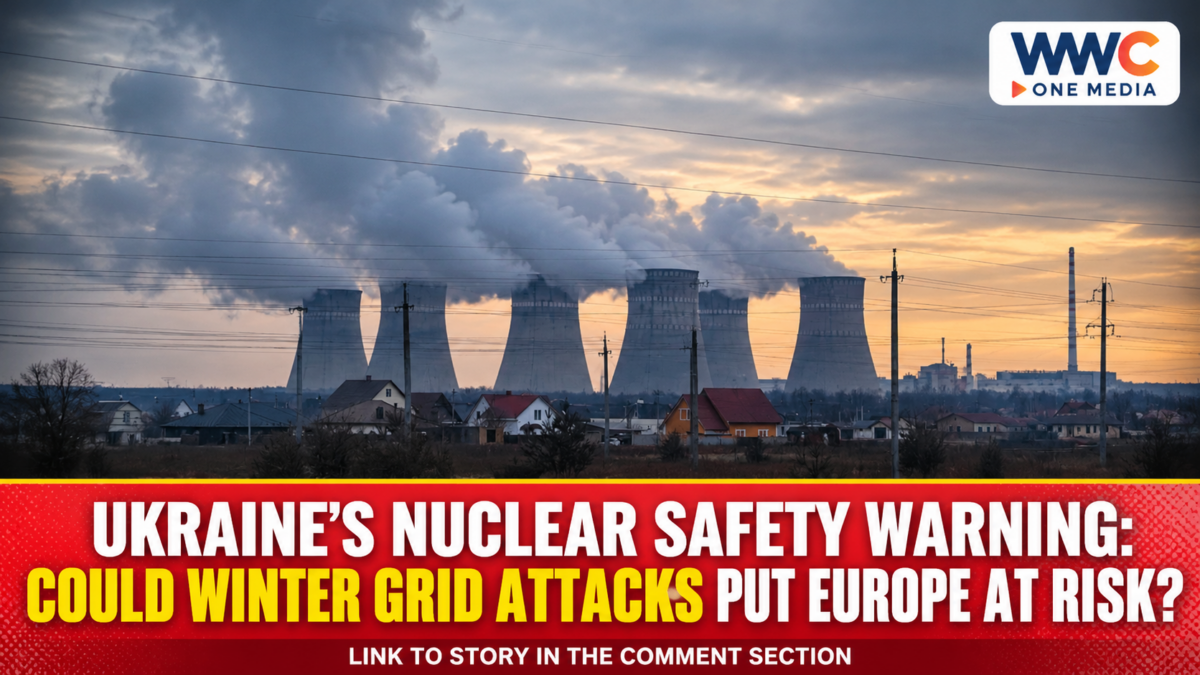
Ukraine is entering the winter with a nuclear-safety concern that extends beyond damaged power stations and electricity shortages: repeated disruptions to the national grid are making it harder to maintain the reliable external power supplies that nuclear facilities need to operate safely.
On Nov. 16, three international groups of nuclear and radiation regulators issued a joint warning about the growing risks. Two days earlier, the International Atomic Energy Agency (IAEA) had reported another complete loss of external electricity at the Russian-controlled Zaporizhzhia Nuclear Power Plant, the 27th such incident since the conflict began. WENRA+1
The warning does not mean a nuclear accident has occurred or that radioactive material has been released. It highlights a dangerous chain of possible failures: attacks damage electricity infrastructure, disrupted connections weaken the power supply to nuclear facilities, and prolonged loss of external electricity can place essential safety systems under greater pressure.
That distinction matters as Ukraine faces another heating season. The country’s nuclear facilities are part of a wider electricity network already strained by war, while the consequences of a serious nuclear incident would not necessarily stop at Ukraine’s borders.
Why Ukraine’s Nuclear Safety Depends on the Power Grid
Nuclear power stations need electricity not only to generate power but also to operate essential safety equipment. Cooling systems, monitoring instruments and other safety functions require dependable electricity, including when a reactor is not producing electricity for the grid.
A plant can therefore face a safety problem even if its reactor buildings have not been directly hit. Damage to transmission lines, substations or other grid equipment can interrupt the external electricity supply that facilities rely on.
That is the central concern in the Nov. 16 joint statement by the Western European Nuclear Regulators Association (WENRA), the Heads of European Radiological Protection Competent Authorities (HERCA) and the Heads of Nordic Radiation Safety Authorities (NORA).
The groups warned that prolonged power interruptions have undermined the conditions needed to maintain nuclear safety. They also raised the possibility of a complete failure of Ukraine’s national electricity grid, which could have serious implications for the safety of nuclear facilities.
Their statement called for attacks against Ukraine’s nuclear facilities and the energy infrastructure essential to their safe operation to cease. It also committed the organisations to continued monitoring, stronger emergency preparedness and cross-border coordination in Europe. WENRA
The warning is about risk, not confirmation of an imminent accident. The regulators did not announce that a release of radioactive material had taken place.
Zaporizhzhia’s 27th External Power Loss Shows the Problem
The most immediate illustration is the Zaporizhzhia Nuclear Power Plant. The IAEA reported that the facility lost all off-site electricity for more than 12 hours on Nov. 8 after damage to the Ferosplavna-1 330-kilovolt power line.
Four emergency diesel generators automatically started to supply essential safety systems. The plant later switched to two generators to conserve fuel.
The IAEA identified the incident as the 27th complete loss of off-site power at the site since the start of the conflict. It also reported that the plant had depended on the single Ferosplavna-1 external power line since late March, while efforts to restore another connection remained complicated by the location and condition of the damaged infrastructure. PublicNow
Emergency diesel generators are an important backup. However, their presence does not make repeated external-power failures inconsequential. They depend on functioning equipment, available fuel and personnel capable of maintaining and operating the systems.
The IAEA’s account is particularly important because it describes an actual interruption and the response at the plant, rather than a hypothetical scenario. It shows how the loss of a grid connection can require a nuclear facility to rely on backup arrangements to maintain essential functions.
Radiation Readings Do Not Show a Reported Rise at Operating Plant Sites
The safety warning should not be confused with evidence of a current radiation emergency.
Energoatom, Ukraine’s state nuclear operator, published monitoring information covering Nov. 5 to Nov. 12. It reported that the radiation background around the monitored nuclear plant sites had not changed and remained consistent with levels associated with normal pre-war operation.
Its Nov. 16 update also listed environmental dose-rate readings at the South Ukraine, Khmelnytskyi and Rivne nuclear power plant sites. The reported readings in the supervised areas were 0.10, 0.10 and 0.09 microsieverts per hour, respectively.
There is an important limitation: Energoatom said some Zaporizhzhia data were unavailable because the plant’s data-transmission systems had been physically disconnected. The operator included figures obtained through the IAEA’s International Radiation Monitoring Information System, but the missing transmission data mean the available table should not be treated as a complete independent picture of every measurement at the site. Energoatom
The distinction is essential for readers. The current concern is the deterioration of conditions that support nuclear safety, not a verified radioactive release. Monitoring results provide useful information, but they do not remove the need to protect electricity connections and backup systems.
Winter Adds Pressure to an Already Fragile Energy System
The nuclear warning comes as Ukraine prepares for its fifth winter since Russia’s full-scale invasion.
The International Energy Agency’s Nov. 4 pre-winter assessment said Ukraine had improved its resilience through additional distributed electricity generation, battery storage and protective measures. However, it warned that power shortages remained likely in the coming months, depending on the intensity of attacks and weather conditions.
The report also identified 18 priority substations considered important for nuclear generation output, cross-border electricity trade and the ability to restart the grid after a major failure. It said these substations would be, or already were, receiving active and passive defence measures, while many other energy assets remained partly or fully unprotected. IEA+1
Cold weather can make the problem more difficult. Electricity demand rises as households and businesses require more power for heating, while damage to district-heating infrastructure can push more consumers towards electric heaters. That can add pressure to a system already dealing with damaged generation and transmission equipment.
The IEA has also stressed the importance of decentralised generation, batteries, equipment reserves and faster repairs. These measures can help maintain supply during local disruptions, but they cannot eliminate the underlying risk if critical grid infrastructure continues to be damaged.
The broader consequences of Ukraine’s energy vulnerability have already featured in WWC ONE MEDIA’s coverage of Russian attacks on the power grid and the threat of winter blackouts. The latest nuclear warning adds another dimension: grid disruption is not only an electricity-supply problem but also a safety concern for facilities that depend on reliable power.
Why the Warning Matters Beyond Ukraine
A serious nuclear incident would not be confined to the country’s domestic energy debate. The WENRA, HERCA and NORA statement specifically warned that a release of radioactive material could affect people and the environment across Ukraine and potentially beyond.
That is why the groups highlighted cross-border emergency preparedness and coordination. European countries would need to be ready to share information, assess possible consequences and coordinate protective responses if conditions deteriorated.
The issue also illustrates the wider security implications of attacks on energy infrastructure. Electricity networks connect power stations, industrial facilities, heating systems and essential public services. A strike against one part of the network can create consequences well beyond the damaged site.
For readers following the wider European energy picture, WWC ONE MEDIA has also examined the pressure on Europe’s electricity and gas markets. Ukraine’s nuclear-safety challenge is different from a market-price crisis, but both underline how energy security depends on infrastructure that can withstand disruption.
The debate over nuclear power in the region is also continuing, as explored in WWC’s report on Eastern Europe’s nuclear investment plans and construction deadlines. New reactors may form part of long-term energy strategies, but existing facilities still require reliable grids, safety oversight and emergency planning.
What Happens Next?
The next test will be whether Ukraine can maintain stable electricity connections to its nuclear facilities while repairing and protecting the wider power network.
The IAEA has said it is continuing to work with both sides to support restoration efforts involving the Dniprovska substation and a 750-kilovolt external power line at Zaporizhzhia. The agency has also called for military restraint around nuclear facilities and electricity infrastructure connected to nuclear safety. PublicNow
Ukraine’s ability to protect substations and transmission equipment will remain critical. Air defence is part of that effort, alongside physical protection, spare equipment and faster repairs. WWC ONE MEDIA has previously examined the pressure on Ukraine’s air-defence network and the support Kyiv is seeking from its allies, as well as the damage to electricity infrastructure during attacks around Kyiv.
The coming weeks will show whether these measures can keep the grid sufficiently stable through the coldest months. For now, the official warnings point to a serious risk that requires prevention and preparedness—not a claim that a nuclear disaster is already unfolding.
Frequently Asked Questions
1. Has a nuclear accident occurred in Ukraine?
The Nov. 16 statement by WENRA, HERCA and NORA warned of rising nuclear-safety risks. It did not report that a nuclear accident or radioactive release had occurred.
2. Why does a power-grid attack threaten a nuclear power plant?
Nuclear facilities need electricity for essential safety equipment, including systems that support cooling and monitoring. Damage to external power lines and substations can force facilities to rely on backup supplies.
3. What happened at the Zaporizhzhia Nuclear Power Plant on Nov. 8?
The IAEA reported that the plant lost all off-site electricity for more than 12 hours after damage to its remaining external power line. Emergency diesel generators supplied essential safety systems.
4. Are radiation levels rising around Ukraine’s nuclear plants?
Energoatom’s published monitoring information said the radiation background at the monitored plant locations had not changed from levels associated with normal pre-war operation. Some Zaporizhzhia monitoring data were unavailable because of disconnected data-transmission systems.
5. Could a nuclear incident affect countries outside Ukraine?
The regulators warned that a release of radioactive material could potentially affect people and the environment beyond Ukraine. The extent of any impact would depend on the nature and scale of an incident and the conditions at the time.