
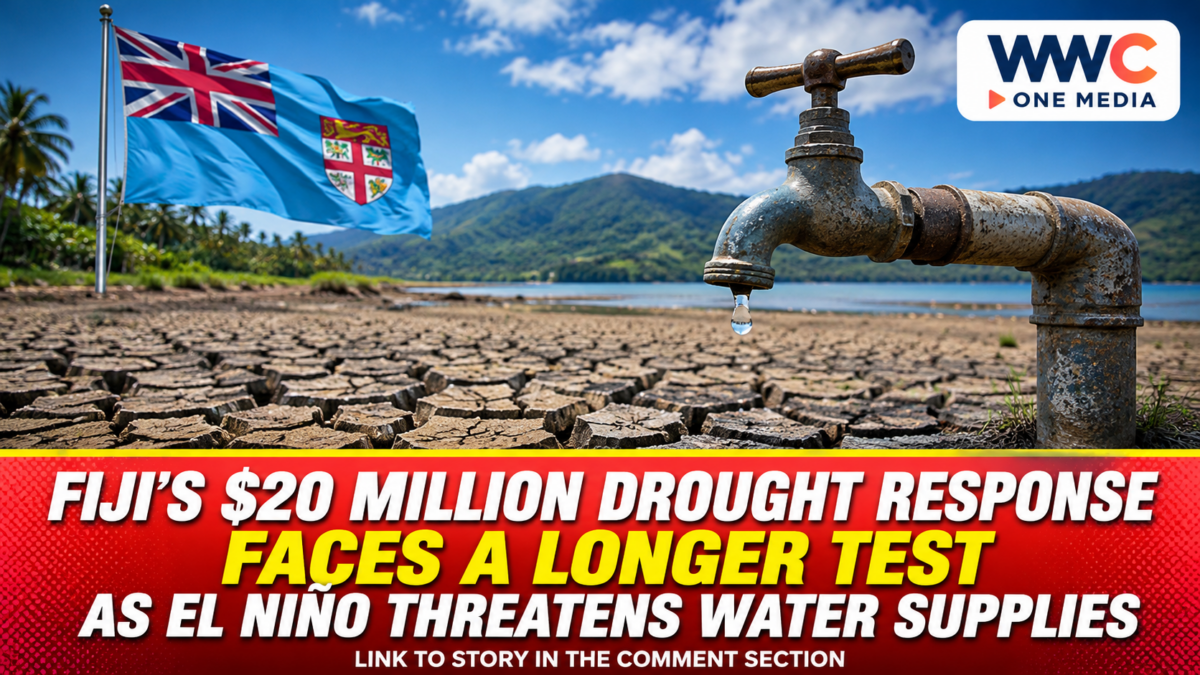
Fiji’s government declared a National State of Disaster covering the entire country on November 18, 2026, after assessments found that the ongoing El Niño drought had reached crisis thresholds. The government also allocated FJ$20 million by redirecting existing ministry funds, while the national meteorological service warned that very dry conditions were likely to persist through January 2027.
The declaration gives authorities a formal mechanism to intensify their response, but the scale of the challenge extends beyond emergency water deliveries. Rainfall shortages are putting pressure on household water access, agriculture and water-dependent infrastructure, raising a difficult question: how can Fiji sustain essential services if dry conditions continue into the new year?
Fiji drought response moves from monitoring to crisis action
The declaration was approved by Cabinet on the advice of the National Disaster Risk Management Council under Section 91 of the National Disaster Risk Management Act 2024. It covers the entire Republic of Fiji and is intended to strengthen coordination, resource mobilisation and assistance to affected communities.
The government said the FJ$20 million allocation would support emergency water supplies, affected communities, farmers and livestock owners. The money is being redeployed from existing ministerial funds, rather than announced as a separate new revenue source.
That distinction matters. Reallocating existing budgets can make funds available for urgent action, but it also means authorities must manage competing demands across government programmes. The public announcement does not provide a detailed breakdown of how much of the allocation will go to water carting, agricultural support, transport assistance or other interventions.
The declaration is time-limited. Under Section 93, it can remain in force for a specified period not exceeding 30 days. Cabinet may extend or revoke it on the advice of the National Disaster Risk Management Council. The legal mechanism therefore allows the government to reassess the situation rather than treating the declaration as an indefinite measure.
Official forecasts show why the emergency may last
Fiji’s November 12 Early Action Rainfall Watch identified seriously dry conditions over a number of areas on a three-month timescale, including Vatulele, Yanuca, Kadavu, Ono, Lakeba and parts of the southern Lau group. Other locations were classified as very dry.
The outlook was also concerning. The service forecast a very high chance of very dry conditions across the Fiji group during November and for the November 2026 to January 2027 period.
A separate Fiji Meteorological and Hydrological Services climate outlook, issued October 30, reported that 21 of 22 stations reporting in time for its October bulletin recorded well-below-average rainfall, while one recorded below-average rainfall. It also described prolonged dry conditions across much of the country, particularly the Western Division and maritime islands.
These are not simply weather statistics. The rainfall watch identifies different time horizons for potential impacts. Shorter dry periods can affect rainwater tanks, small streams, shallow wells and young crops. Longer periods can place pressure on rivers, reservoirs, dams and deeper groundwater systems.
The distinction is important for planning. Emergency water deliveries can help communities facing immediate shortages, but they do not by themselves restore depleted water sources or guarantee adequate rainfall for the next planting cycle.
Emergency assistance is already reaching communities
The government reported that more than two million litres of emergency water had been delivered to affected maritime communities over the month before the declaration. The Water Authority of Fiji was also supplying emergency water to affected mainland communities.
Agricultural assistance has been organised around six initiatives. These cover emergency water and irrigation, livestock feed, climate-resilient planting materials and seed, sugar-sector drought protection, household and community food security, and sustainable agricultural practices.
The Ministry of Women, Children and Social Protection also increased monthly eTransport top-ups for eligible older persons and persons with disabilities. The increase applies to older people holding purple eTransport cards and people with disabilities holding green eTransport cards under the Transport Assistance Scheme.
These measures show that the response is not limited to water supply. Drought can affect household access, farm production, livestock and the ability of vulnerable residents to reach essential services.
The operational challenge is ensuring assistance reaches the places where shortages are most severe. Fiji’s geography makes that particularly important: maritime and remote communities may face different delivery constraints from larger mainland population centres.
The November 23 review puts coordination under scrutiny
A further government update published on November 23 said the Emergency Committee of the National Disaster Risk Management Council had met to review and strengthen the national response. The meeting was chaired by Mitieli Cama, Permanent Secretary for Rural and Maritime Development and Disaster Management and National Disaster Controller.
The agenda included updates on the national water situation from the Water Authority of Fiji, weather and tropical cyclone outlooks from the Fiji Meteorological Service, and a briefing on the El Niño response plan, operational arrangements, budget, incident action plan and coordination gaps.
The committee’s review is significant because a national declaration is only one part of disaster management. Effective implementation depends on agencies sharing current information, identifying underserved areas and coordinating water, agriculture and social support.
The government said further details on meeting outcomes and the way forward would be communicated in a later update. Until those details are published, it would be premature to claim that the review has resolved identified coordination gaps or that all affected communities are receiving adequate supplies.
Why Fiji’s drought matters beyond its borders
Fiji’s experience is relevant to other Pacific and Southeast Asian countries because water security is closely connected to food production, public health, energy and household resilience. The effects of prolonged dry conditions can spread across several sectors even when the initial problem appears to be a shortage of rainfall.
The Philippines is also preparing for El Niño-related pressure on water and agriculture. WWC has reported on Cebu’s preparations for possible water rationing, where local planning has focused on protecting supply and preparing emergency deliveries. Its coverage of potential agricultural losses in Central Visayas also illustrates how water constraints can become a food-production concern.
There are differences in geography, institutions and local conditions, so Fiji’s response cannot simply be copied elsewhere. But the underlying planning issue is shared: governments need to monitor water sources, protect essential supply, support farmers and communicate clearly when forecasts point to prolonged rainfall deficits.
WWC has also examined how irrigation investment in Kalinga can support farmers during dry conditions. Such infrastructure does not eliminate drought risk, but it shows why long-term water management must complement emergency relief.
What happens next
The immediate test is whether Fiji’s agencies can sustain water deliveries and targeted support while the dry outlook remains in place. The next public update on the November 23 committee review should clarify operational priorities, any decisions taken and how agencies intend to address coordination gaps.
The disaster declaration can last no more than 30 days at a time unless extended under the law. That makes reassessment important as conditions evolve. The government’s own forecasts point to a period of continued dryness through January, so the response will need to be measured not only by the initial funding announcement but also by whether communities maintain access to safe water and farmers receive timely support.
For Fiji, the declaration marks a formal escalation. The longer test will be whether emergency action can protect households and livelihoods while the country prepares for a drought that may outlast the first phase of its response.
Frequently Asked Questions
Why did Fiji declare a National State of Disaster?
The government said updated assessments confirmed that the ongoing El Niño drought had reached crisis thresholds under the National El Niño Preparedness and Response Plan.
How much money has Fiji allocated for the drought response?
The government announced FJ$20 million, redeployed from existing ministerial funds, to strengthen emergency water supplies and support affected communities, farmers and livestock owners.
How long can Fiji’s disaster declaration remain in force?
Under Section 93 of the National Disaster Risk Management Act 2024, the declaration can remain in force for a specified period not exceeding 30 days. Cabinet may extend or revoke it on the advice of the National Disaster Risk Management Council.
Is Fiji expected to remain dry into 2027?
Fiji’s November rainfall watch forecast a very high chance of very dry conditions across the Fiji group for November 2026 to January 2027. Forecasts are not guarantees, and conditions can vary by location.
What support is being provided to farmers?
The government announced six initiatives covering emergency water and irrigation, livestock feed, climate-resilient planting materials and seed, sugar-sector drought protection, household and community food security, and sustainable agricultural practices.










