NEW YORK, UNITED STATES — Jensen Huang’s return as chief executive of Nvidia has reignited debate over AI market risks after New York City Mayor Zohran Mamdani questioned the American economy’s dependence on artificial intelligence-related investments and the potential implications for workers’ retirement savings.
Nvidia publicly announced Huang’s reinstatement on Nov. 23, 2026, following a unanimous decision by its board of directors, reversing a leadership transition announced less than two weeks earlier.
However, the corporate comeback has brought a broader economic question into focus: what happens when the financial expectations surrounding an entire technology industry become closely associated with a handful of companies and their executives?
For investors, policymakers and businesses across the Asia-Pacific region, the debate extends beyond Nvidia’s leadership.
It concerns the resilience of an increasingly interconnected technology economy.
Mamdani raises concerns over AI market risks
Speaking during a public event in Brooklyn on Nov. 23, Mamdani addressed questions about financial market volatility and Huang’s reinstatement.
The New York City mayor questioned whether working Americans should face uncertainty surrounding their retirement investments because of developments involving individual corporate executives.
Mamdani described the stock market as “disproportionately dependent” on artificial intelligence-related stocks.
His concern centred on the influence that the technology sector could exert over financial markets and the broader American economy.
The remarks highlight a distinction between the economic opportunities created by artificial intelligence and the financial vulnerabilities associated with concentrated investment exposure.
However, Mamdani’s comments did not establish that specific pension funds had incurred losses because of Nvidia’s leadership changes.
The actual impact on retirement portfolios would depend on their investments, asset allocation, risk-management arrangements and exposure to individual technology companies.
Jensen Huang returns, but Nvidia’s investigation continues
Nvidia’s corporate records establish that its board reinstated Huang on Nov. 22, with the company publicly announcing the decision the following day.
Huang resumed his responsibilities as president, chief executive officer and board director.
Colette Kress, who served as interim chief executive, returned to her continuing responsibilities as executive vice president and chief financial officer. Harvey C. Jones remains board chairman.
The leadership reversal does not mean that Nvidia has concluded its independent investigation.
The board confirmed that the investigation would continue and that Huang had committed to cooperating with the process.
Nvidia also disclosed that it had received input from senior levels of the US government before reaching its decision. The board expressed confidence that Huang’s reinstatement would not create a national security risk.
That assessment represents the board’s stated position rather than a final determination from the continuing investigation.
WWC ONE MEDIA previously examined Nvidia’s leadership reinstatement and continuing corporate investigation, highlighting the distinction between restoring executive leadership and resolving outstanding governance matters.
Nvidia’s US$115.8 billion revenue illustrates the scale of the AI boom
The leadership controversy comes during a period of exceptional financial expansion for Nvidia.
For its third quarter of fiscal 2027, which ended Oct. 25, 2026, the semiconductor company reported revenue of US$115.8 billion, representing an annual increase of 103%.
Its Data Center business generated US$107.6 billion, rising 110% from the corresponding period a year earlier.
Net income under US generally accepted accounting principles reached US$65.3 billion.
The company’s fourth-quarter revenue outlook stands at US$130 billion, with a possible variation of 3% in either direction.
These results demonstrate the substantial commercial demand Nvidia has experienced as businesses invest in advanced computing infrastructure.
They also illustrate the company’s significant reliance on data centre-related activities.
Strong corporate earnings, however, do not automatically eliminate investment risk.
A profitable company can still experience changes in its market valuation when investors reassess future growth, competitive pressures, regulatory exposure or management stability.
This distinction is particularly important when investment expectations extend beyond a single company into related industries.
Why AI stock concentration matters for retirement savings
The economic concern raised by Mamdani involves a financial principle known as concentration risk.
Investment portfolios can become particularly sensitive to developments involving a limited number of companies when those businesses account for substantial portions of their holdings.
The S&P 500, a widely followed American equity benchmark, includes 500 leading companies and represents approximately 80% of available US stock market capitalisation.
Its market-capitalisation-based structure means that larger companies generally exert greater influence on index performance than smaller constituents.
Consequently, investors who hold funds tracking major equity benchmarks may have indirect exposure to large technology businesses even if they have not individually purchased shares in those companies.
This exposure can contribute to investment gains during periods of technological expansion.
Conversely, declining valuations among heavily weighted companies can place pressure on portfolio performance.
The implications differ across retirement arrangements. A defined-benefit pension does not necessarily respond to daily market movements in the same way as an individually managed retirement investment account.
Mamdani’s remarks therefore raise a legitimate subject for financial discussion without establishing that every American worker faces the same degree of exposure.
Asia-Pacific businesses face a wider AI investment test
The economic implications of Nvidia’s leadership extend beyond the United States.
For businesses involved in semiconductor manufacturing, cloud computing and data centre development, the availability of advanced processors and the predictability of technology regulations can influence long-term commercial decisions.
Nvidia’s latest financial outlook does not assume any Data Center compute revenue from China.
That assumption underscores the importance of separating global demand for artificial intelligence infrastructure from the regulatory conditions governing access to advanced technology.
WWC ONE MEDIA previously explored Nvidia’s China chip sales and the uncertainty surrounding future exports.
The regional implications also extend to Southeast Asia, where infrastructure developers must consider equipment availability alongside financing, regulatory compliance and operating costs.
These challenges were examined in WWC ONE MEDIA’s coverage of Thailand’s AI data centre ambitions and US semiconductor restrictions.
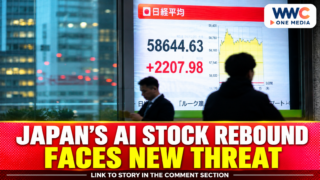
Financial market developments provide another dimension to the debate, as illustrated by the recent Asian stock market recovery and continuing uncertainty surrounding the AI investment boom.
For Asia-Pacific investors, the underlying question is whether expectations for future artificial intelligence demand will translate into sustainable corporate earnings across the wider technology supply chain.
What happens next for Nvidia and the AI economy?
Nvidia has established a National Security and Export Control Committee composed of independent directors.
The company is also seeking to appoint a chief compliance officer responsible for overseeing corporate compliance.
These measures introduce additional governance mechanisms while the independent investigation remains underway.
Their effectiveness will depend on how they operate in practice, including whether they provide meaningful oversight and address identified risks.
Meanwhile, Nvidia’s future financial disclosures will offer further insight into the sustainability of its revenue growth and the development of its international business.
Artificial intelligence remains a significant commercial opportunity, but its potential benefits should not be confused with guaranteed investment returns.
Huang’s reinstatement resolves Nvidia’s immediate leadership transition. It does not independently resolve questions about market concentration, technology spending, corporate governance or retirement investment exposure.
The larger economic test is whether the AI industry can deliver lasting productivity improvements and sustainable financial returns without creating excessive dependence on a narrow group of corporations.
For Nvidia and the global technology economy, that question remains open.
Frequently Asked Questions
Why did Jensen Huang return to Nvidia?
Nvidia’s board unanimously approved Huang’s reinstatement after discussions with him and input from senior levels of the US government. The board considered his return to be in the company’s interests.
When was Jensen Huang reinstated as Nvidia CEO?
Nvidia’s Form 8-K identifies Nov. 22, 2026, as the effective reinstatement date. The company publicly announced the decision on Nov. 23.
What did Zohran Mamdani say about artificial intelligence?
Mamdani expressed concern about the stock market’s dependence on AI-related companies and the potential implications of corporate volatility for workers’ retirement investments.
How much revenue did Nvidia generate in its latest quarter?
Nvidia reported US$115.8 billion in third-quarter fiscal 2027 revenue, including US$107.6 billion from its Data Center business.
Is Nvidia’s independent investigation over?
No. Nvidia confirmed that its independent investigation would continue despite Huang’s reinstatement as president, chief executive and board director.