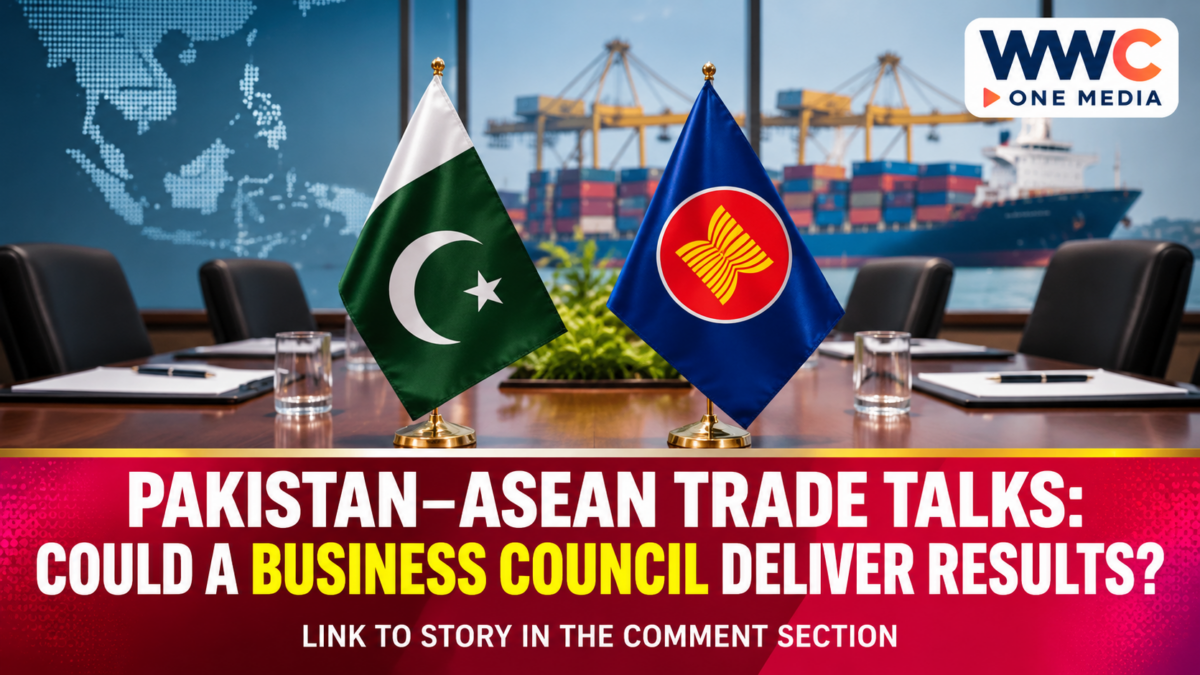
ISLAMABAD, Pakistan — Nov. 21, 2026. ASEAN Secretary-General Kao Kim Hourn concluded a two-day working visit to Pakistan on Nov. 20 after meetings with senior government officials and a prominent business chamber. The Pakistan ASEAN trade talks produced a new proposal worth watching: closer cooperation between the Federation of Pakistan Chambers of Commerce and Industry (FPCCI) and the ASEAN Business Advisory Council, including exploration of an ASEAN–Pakistan Business Council.
That idea goes further than a general promise of friendship, but it is not a newly established council, a signed free-trade agreement or an investment contract. Its importance depends on whether business representatives subsequently agree on a structure, programme and measurable commercial work.
Pakistan ASEAN Trade Talks Extend Into the Business Community
The ASEAN Secretariat’s Nov. 20 announcement records a meeting between Kao and FPCCI president Atif Ikram Sheikh. They discussed trade and investment opportunities, direct contacts among companies and ways to strengthen private-sector engagement. Kao identified deeper economic integration and digital transformation among ASEAN’s priorities.
The important new detail is his encouragement of links between FPCCI and the ASEAN Business Advisory Council, including the possibility of an ASEAN–Pakistan Business Council. The official notice describes the council as something to explore, not as an institution already launched with an appointed leadership or operating budget.
Analysis: A joint business channel could make it easier to identify practical obstacles facing importers, exporters and investors. But its credibility will rest on participants, follow-up meetings and transactions, rather than a name alone.
What the Government Meetings Actually Established
The Pakistan government records a Nov. 19 discussion between Deputy Prime Minister and Foreign Minister Mohammad Ishaq Dar and Kao. They reviewed progress under their existing sectoral dialogue relationship and discussed trade, investment, transport links, agriculture, food security, climate resilience, disaster preparedness and digital innovation.
Prime Minister Muhammad Shehbaz Sharif also met Kao in Islamabad. The prime minister called for goodwill to turn into concrete economic and development partnerships, and identified information technology and education among areas for cooperation.
These are officially documented policy priorities. The releases do not identify a newly signed ASEAN-wide tariff agreement, an investment amount, a named factory project or a scheduled reduction in customs duties.
For comparison, WWC has covered Pakistan’s separate ECO trade and connectivity agenda. That regional mechanism is distinct from ASEAN’s engagement and should not be counted as an outcome of the November working visit.
Why a Business Council Would Matter
An effective cross-border business forum can help firms locate counterparties and identify hurdles such as product standards, logistics costs, licensing rules and payment arrangements. It can also generate proposals for government officials to consider. None of those benefits occurs automatically when representatives endorse closer contact.
The official FPCCI meeting record contains no list of participating companies announcing contracts, no agreed investment pipeline and no target trade volume. That means the most useful next evidence would be a written plan stating who will participate and what business problems they intend to solve.
Analysis: The difference between diplomatic access and measurable commerce is central. A future business council might provide introductions and consultation, but it cannot independently grant market access or guarantee financing.
WWC’s analysis of Southeast Asian supply-chain competition explains why businesses weigh infrastructure, regulations and market conditions when deciding where to invest. The same commercial scrutiny would apply to any prospective Pakistan–ASEAN venture.
The Existing Partnership Is a Framework, Not a Trade Treaty
Pakistan and ASEAN have an established sectoral dialogue relationship, and officials are working through their practical cooperation programme for 2024–2028. The existing WWC report already explains this institutional background; the November visit should therefore be understood as renewed work within an existing relationship.
A sectoral partnership allows consultations and cooperation projects. It does not make Pakistan an ASEAN member or give Pakistani products the tariff treatment reserved for parties to a particular trade agreement. Any preferential access would need its own applicable legal instrument and implementation conditions.
The distinction matters for companies planning exports. A diplomatic announcement does not replace the customs classification, standards documentation or duties applicable to an actual shipment.
Analysis: A useful test of the 2024–2028 programme would be publicly released milestones, identified implementing agencies and progress reports, not simply a larger number of meetings.
Digital Trade and Connectivity Need Practical Decisions
Pakistan’s government identified digital innovation and regional connectivity as important subjects in the talks. Kao’s business meeting likewise highlighted ASEAN’s digital transformation priorities. Those overlapping interests may support further cooperation on technology and commercial services.
But the records do not establish an interoperable digital customs system, completed logistics corridor or funded digital infrastructure venture resulting from this visit. Each would require separate technical, regulatory and financing commitments.
A similar distinction applies to trade routes. Pakistan’s prime minister described the country’s geography as a potential link to other regions, but geography alone does not establish efficient transit arrangements or lower freight prices.
WWC previously examined ASEAN Plus Three trade and food-security initiatives. Those involve a different set of partners and documents; they provide regional context, not evidence that Pakistan received new concessions.
What Happens Next
The next records to watch are a formal decision on whether to establish an ASEAN–Pakistan Business Council, any joint FPCCI–ASEAN business programme, and follow-up projects under the existing cooperation framework. A credible commercial announcement would identify participating firms, obligations, timeframes and any disclosed funding.
For now, the November visit has demonstrated official and private-sector interest. The proposed business council is the clearest specific new avenue in the record. Turning it into stronger trade remains a task for future decisions, not an accomplished outcome of the talks.
Frequently Asked Questions
Did Pakistan and ASEAN sign a new free-trade agreement in November 2026?
No new free-trade agreement is identified in the original official announcements reviewed. They describe talks and cooperation priorities, not signed tariff concessions.
Who attended the Pakistan–ASEAN government meetings?
ASEAN Secretary-General Kao Kim Hourn met Deputy Prime Minister and Foreign Minister Mohammad Ishaq Dar and Prime Minister Muhammad Shehbaz Sharif during his Nov. 19–20 working visit.
Has an ASEAN–Pakistan Business Council been established?
The Nov. 20 ASEAN announcement says closer cooperation and the possibility of establishing a council were explored. It does not confirm that a council already operates.
Who represented Pakistan’s business chamber?
The ASEAN Secretariat identifies Atif Ikram Sheikh as president of the Federation of Pakistan Chambers of Commerce and Industry at the Nov. 20 meeting.
What would show these trade talks are producing results?
A formally announced business initiative, verified investment contracts, implemented trade-facilitation measures or documented transactions would show more than expressions of interest alone.