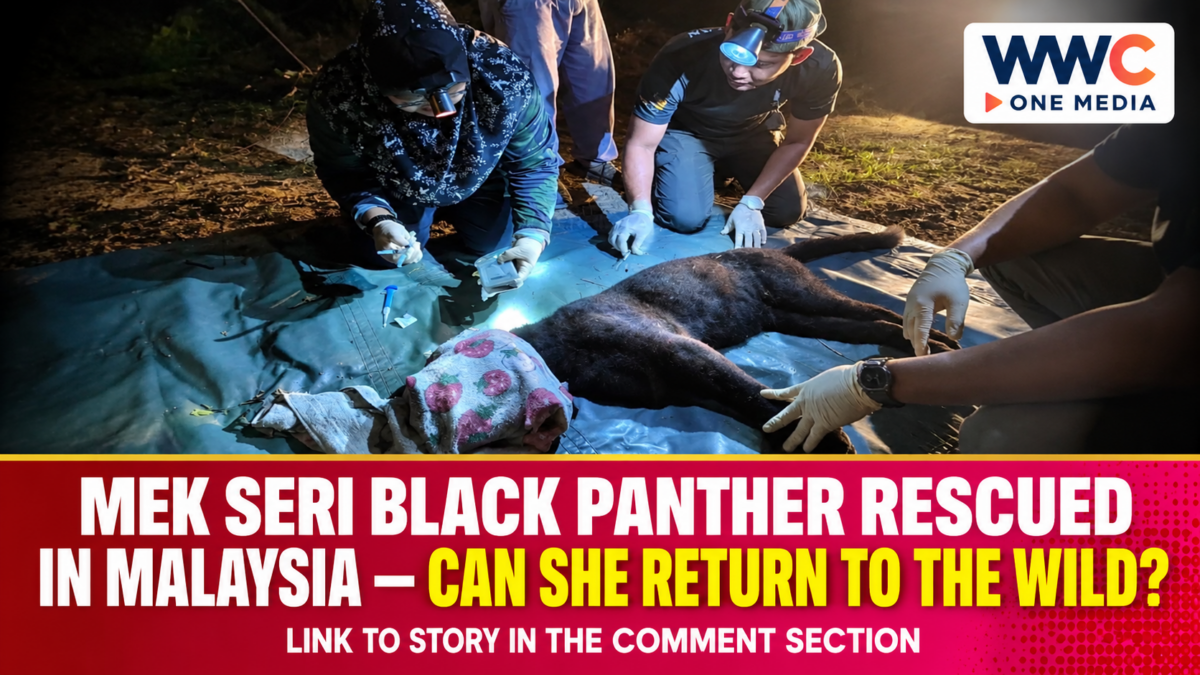
PAHANG, Malaysia — Malaysian wildlife authorities rescued a female black panther during an operation in Maran, Pahang, on Nov. 16, 2026, adding another case to the country’s efforts to protect and manage wild predators. The Department of Wildlife and National Parks, known as PERHILITAN, subsequently identified the animal as a leopard weighing 18.4 kilogrammes and estimated her age at four years.
The rescue has prompted a more important question than how the animal was recovered: what evidence will authorities need before deciding whether she can safely return to her natural habitat?
For Malaysia’s wildlife conservation system, rescue operations are only one part of a longer process involving animal welfare, professional assessment and habitat protection.
What the Mek Seri black panther rescue confirms
PERHILITAN’s public account confirms that the Nov. 16 operation involved a female leopard, scientifically identified as Panthera pardus, in Maran.
The agency’s description places the animal within the leopard species rather than identifying her as a separate species called the black panther.
This distinction matters because black panthers are commonly understood as dark-coloured leopards or jaguars. In Peninsular Malaysia, the relevant animal in the official account is the leopard.
The wildlife department’s published information establishes the location, date, sex, approximate age and recorded weight of the rescued animal.
Those details provide an essential starting point for understanding the case. They do not, by themselves, establish the animal’s medical condition, the cause of any mobility problems or the prospects for eventual release.
In wildlife rescue reporting, distinguishing confirmed observations from unanswered medical questions is particularly important.
Why the leopard’s recovery matters
Returning a rescued predator to the wild involves more than removing it from immediate danger.
A leopard must be capable of moving, hunting and responding to its surroundings without becoming dependent on continued human intervention.
These are practical considerations for any eventual release assessment, rather than conclusions about the condition of this particular animal.
An animal that survives an initial encounter may still require further observation before wildlife professionals can establish whether rehabilitation is appropriate.
The difference between successful rescue and successful rehabilitation is therefore substantial.
WWC has previously examined the return of rescued wildlife to suitable natural habitats in Zamboanga del Norte, where conservation work involved both animal recovery and release planning.
Although the Malaysian leopard case involves a different species and jurisdiction, the same central question remains relevant: how can conservation authorities determine that an animal is ready for life outside human care?
For Mek Seri, a responsible conclusion must depend on veterinary findings rather than expectations created by public interest in her rescue.
Malaysia’s wildlife laws provide the conservation framework
Malaysia already has a legal structure covering the protection and management of wildlife.
PERHILITAN’s official enforcement guidance identifies the Wildlife Conservation Act 2010, known as Act 716, as a central instrument protecting listed species in Peninsular Malaysia.
The government’s published wildlife schedules identify Panthera pardus as the leopard, locally known as harimau kumbang.
That classification is significant because the animal is not simply an unusual visitor to a plantation or rural settlement. It belongs to a species addressed within the country’s formal wildlife protection framework.
The law also distinguishes wildlife protection from ordinary animal handling, creating a legal basis for regulating activities involving protected species.
A separate question concerns how wildlife authorities respond when large predators appear close to areas used by people.
In its earlier examination of human-tiger encounters and wildlife protection in Perak, WWC highlighted the challenge of protecting wildlife while addressing risks to communities.
The same general conservation principle applies here: effective management must consider the safety of people and animals without treating every wildlife encounter as evidence of a broader conflict.
What this rescue could mean for conservation
Analysis: Mek Seri’s rescue illustrates the importance of measuring conservation outcomes beyond the initial intervention.
A completed rescue confirms that an animal was recovered. It does not automatically demonstrate successful rehabilitation, a safe release or an improvement in the wider leopard population.
Malaysia’s wildlife department maintains a dedicated conservation division responsible for planning, implementing and monitoring programmes involving wildlife in natural habitats.
That institutional responsibility places individual rescue cases within a much larger conservation framework.
Wildlife management also depends on understanding where animals live, how suitable habitats are maintained and how human activities interact with those habitats.
Regional conservation programmes offer useful examples of longer-term management.
WWC’s coverage of the Monkayo forest restoration project and its biodiversity goals examined how habitat restoration can be evaluated through ecological monitoring rather than tree planting alone.
The comparison is not evidence that habitat degradation caused Mek Seri’s rescue. No such causal conclusion follows from the verified details of this case.
Instead, it illustrates why conservation success requires several different measurements: the welfare of individual animals, the condition of their habitats and the longer-term outcomes of wildlife management programmes.
What happens next for Mek Seri?
The next meaningful development would be a more detailed official assessment of the animal’s health and suitability for rehabilitation or release.
Veterinary professionals would need to determine whether any physical limitations can be addressed and whether the leopard could function independently in a natural habitat.
A release decision, if considered, would also require an assessment of an appropriate location and the risks associated with returning the animal to the wild.
These are the questions that matter most, but they should not be confused with decisions already confirmed by the available primary records.
As of Nov. 21, the verified public information reviewed for this article does not establish a release date, a final veterinary diagnosis or a completed rehabilitation outcome.
Until further official findings become available, Mek Seri’s long-term future remains unresolved.
The important achievement so far is the documented rescue. The next test will be whether subsequent veterinary and conservation assessments provide a clear basis for deciding what should happen to her.
Frequently asked questions
What happened to Mek Seri in Malaysia?
PERHILITAN reported rescuing a female leopard during an operation in Maran, Pahang, on Nov. 16, 2026.
How old is the rescued black panther?
The department estimated the leopard’s age at four years and recorded her weight as 18.4 kilogrammes.
Is Mek Seri a black panther or a leopard?
The official identification is Panthera pardus, the leopard species. The term black panther commonly refers to a dark-coloured leopard or jaguar rather than a separate species.
Can Mek Seri return to the wild?
Her eventual release cannot be confirmed from the primary information reviewed. Any decision would require appropriate professional assessment of her condition and suitability.
Why are leopards protected in Malaysia?
Leopards are included in Malaysia’s wildlife protection framework, which regulates activities involving protected wildlife and supports conservation management.