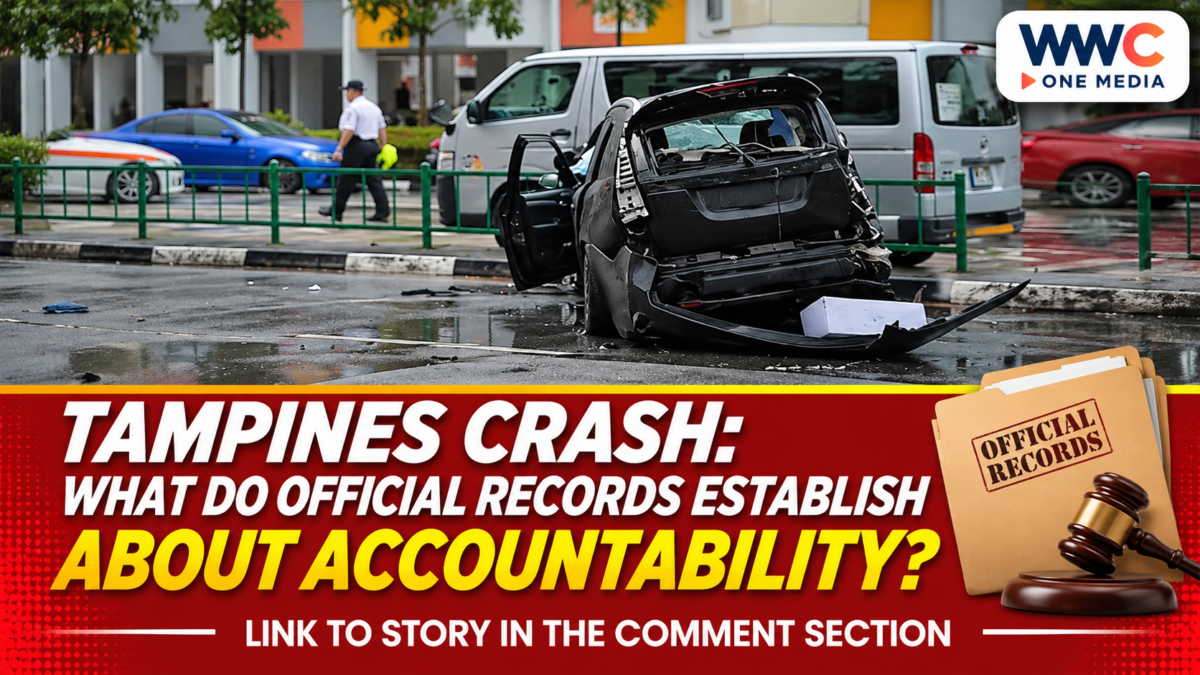
SINGAPORE — Nov. 21, 2026. Singapore Police have documented a fatal collision involving two cars and a motorcycle along Tampines Avenue 12 on Oct. 29, 2026, and announced charges against a 30-year-old man two days later. The collision killed a 24-year-old motorcyclist and his 24-year-old female pillion passenger; another driver was taken to hospital conscious.
The case raises questions about traffic enforcement and protection of vulnerable road users. It also requires a strict distinction between police allegations, any eventual court findings and the circumstances of the victims’ relatives. A reported November visit by a senior minister to the family has not been independently established through an accessible original statement for this article.
Tampines Crash: The Police Timeline
Singapore Police said officers were alerted at approximately 10.35 p.m. on Oct. 29 to a collision involving two cars and a motorcycle. The motorcyclist and pillion passenger were taken to hospital unconscious and subsequently died. A 25-year-old woman driving one of the cars was transported to hospital conscious.
The police announcement described the other car’s driver as a 30-year-old man who left the location with a 29-year-old female passenger without rendering assistance. It reported that police identified both through ground enquiries and footage from police and closed-circuit cameras, and arrested them near West Coast Road on Oct. 30.
This timeline is drawn from the official Oct. 31 police announcement. It does not resolve the accused driver’s criminal responsibility, which is for the courts to determine.
What the Charges Mean — And Do Not Mean
The police announcement said the man was to be charged on Oct. 31 with dangerous driving causing death, dangerous driving causing hurt, repeat driving while disqualified and several other traffic offences. Preliminary investigations also indicated he was operating a deregistered car with a cloned number plate while disqualified from driving.
These are allegations and preliminary police findings, not a conviction for the Oct. 29 collision. A charge starts a judicial process in which the prosecution must prove the applicable elements and the accused is entitled to respond.
WWC has previously detailed WWC’s earlier account of the Tampines driving charges. The present background review should not be republished as an unrelated first account of the same crash.
Why the Wider Road-Safety Figures Matter
In a September speech launching Singapore Ride Safe 2026, the Ministry of Home Affairs reported that fatal road accidents fell from 78 in the first half of 2025 to 60 in the same period of 2026. Fatalities among motorcyclists and pillion riders declined from 43 to 28.
The same speech identified less encouraging indicators: injury-producing motorcyclist accidents rose by 4.3%, while the number of injured riders and pillion passengers increased by 5.8%. The figures describe nationwide trends across six months, not the cause of the Tampines collision in October.
A later ministry speech noted that traffic accidents resulting in injury or death rose from 3,826 in January–June 2025 to 3,929 in January–June 2026. That illustrates why a fall in deaths does not automatically mean all aspects of road safety are improving.
Readers can examine those broader trends in WWC’s review of Singapore’s mid-year road-safety figures. National data provide context, not an explanation of any one defendant’s behaviour.
How Enforcement Policy Is Changing
The Ministry of Home Affairs announced that Singapore’s Driver Improvement Points System would be tightened from Jan. 1, 2027. The planned changes include lower demerit-point thresholds for probationary and non-probationary motorists and longer suspension periods for non-probationary motorists.
Those measures were announced before the Oct. 29 crash. They should not be portrayed as a direct policy response to it. Nor should the announcement be taken as evidence that the measures have already reduced collisions; their start date remains in the future as of this article.
The same ministry speech described defensive-riding programmes and coordination with employers of platform workers. These measures reflect a wider approach involving enforcement, training and safer operating practices, rather than treating punishment as the only road-safety tool.
For a distinct example of the challenges facing motorcyclists, see WWC’s separate coverage of a Lim Chu Kang road collision. It concerns a different incident and should not be used to infer the facts of Tampines.
Support for Families Requires Separate Verification
Reports about a subsequent visit to the deceased couple’s relatives concern a different part of the public-interest story: what support is available after a fatal collision. However, the original Nov. 18 social-media statement about that visit was not accessible during this review. Its participants, discussion and proposed assistance are therefore excluded from this article as independently verified facts.
Analysis: Family assistance and criminal proceedings serve different needs. Practical support may be necessary long before a court case ends, but neither a reported visit nor expressions of sympathy establish a final legal outcome or guaranteed financial assistance.
A responsible update should establish any announced assistance from the original statement or the organisations directly involved, without circulating unnecessary information about a child or other relatives. Public interest does not require disclosure of private family arrangements.
What Happens Next
The legal case should be followed through official court listings, filed charges and any published judgments. Subsequent police or ministry updates may clarify enforcement measures, but proposals and completed changes should be distinguished.
The visit described in the supplied news lead remains outside this primary-record-confirmed manuscript until the minister’s original public statement can be opened and checked. WWC already has significant coverage of the Tampines case, making a verified update to that coverage preferable to another general crash report.
Frequently Asked Questions
When did the Tampines Avenue 12 crash happen?
Singapore Police recorded the collision at about 10.35 p.m. on Oct. 29, 2026. It involved two cars and a motorcycle.
How many people died?
Police confirmed that a 24-year-old motorcyclist and his 24-year-old female pillion passenger died after being taken to hospital.
Was the other driver convicted?
The Oct. 31 police announcement described charges to be brought against a 30-year-old man. That announcement is not a conviction or a final court judgment.
Did the minister’s reported family visit establish new assistance?
The original statement describing the visit could not be independently opened for this review. No specific assistance outcome is verified here.