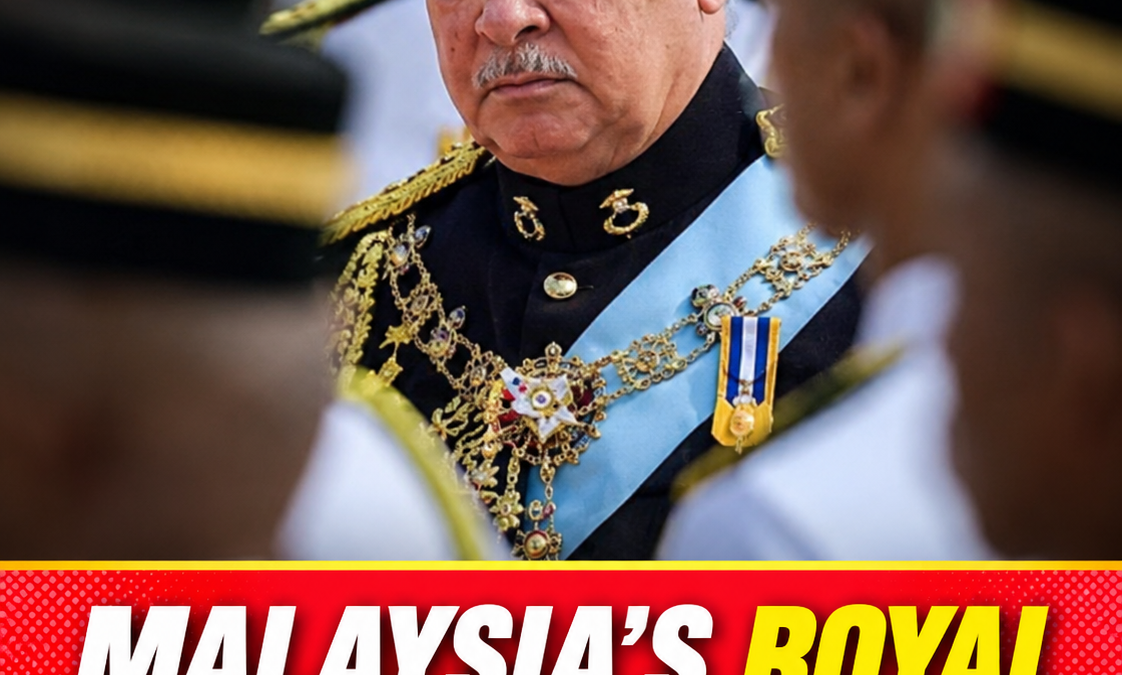
A royal pardon in Malaysia is not an automatic release from prison, nor is it simply a decision made without constitutional procedures. Article 42 of the Federal Constitution establishes who may grant clemency, the role of Pardons Boards and the different forms of relief available to convicted prisoners.
The framework is important because the authority responsible depends on the offence and where it was committed. It also explains why a pardon, a reduction in sentence and a change in the way a prison term is served should not be treated as interchangeable decisions.
The Constitution determines who has the power to grant a pardon
Article 42 divides Malaysia’s clemency powers between the Yang di-Pertuan Agong and the rulers or governors of the states.
The King has authority over offences tried by court-martial and offences committed in the Federal Territories of Kuala Lumpur, Labuan and Putrajaya. For other offences committed within a state, the relevant Ruler or Yang di-Pertua Negeri holds the constitutional power.
This means the location of the offence is a central consideration. The place where a prisoner is currently held does not, by itself, determine which authority has jurisdiction over the clemency application.
The Constitution also provides a rule for offences committed across state boundaries or outside Malaysia. Where an offence was committed in more than one state, partly outside the country or in circumstances that make its location uncertain, it is treated as having been committed in the state where the case was tried.
That provision helps establish which constitutional authority is responsible when a case does not fit neatly within one geographical boundary.
Pardons Boards play a formal role in the process
A Pardons Board is not merely an administrative office. It is a constitutional body involved in the exercise of clemency.
Under Article 42, a state Pardons Board comprises the Attorney General of the Federation, the state’s Chief Minister and no more than three additional members appointed by the Ruler or Yang di-Pertua Negeri.
The appointed members serve three-year terms and may be reappointed. The Constitution also prevents a member of a state legislative assembly or the federal House of Representatives from being appointed to the board.
The board must meet in the presence of the relevant Ruler or Yang di-Pertua Negeri, who presides over the meeting. Before giving its advice, it must consider any written opinion submitted by the Attorney General.
The Federal Territories have a single Pardons Board covering Kuala Lumpur, Labuan and Putrajaya. The constitutional arrangements apply with adjustments: the Yang di-Pertuan Agong presides over the board, while the minister responsible for the Federal Territories takes the place of the state Chief Minister.
These provisions establish that the clemency process involves more than the announcement of a royal decision. The board’s consideration and advice form part of the constitutional framework.
A pardon is not the only form of clemency
Article 42 identifies several forms of relief that may be granted.
A pardon is an act of clemency that may remove or reduce the consequences of a conviction and sentence, depending on the terms of the order.
A reprieve or respite provides another form of relief relating to the execution or timing of punishment. The Constitution lists these separately from a pardon.
The same article also provides for remission, suspension and commutation of sentences.
Remission reduces the period or amount of punishment. Suspension puts the execution of a sentence on hold, while commutation replaces a sentence with a less severe one.
The distinction is significant. A reduction in a prison term does not automatically mean that a conviction has been overturned. Similarly, changing a sentence does not necessarily mean that every other legal consequence or separate conviction has disappeared.
The terms and scope of the actual clemency order therefore matter. The public should not assume that every royal decision produces the same legal result.
Special constitutional arrangements apply in certain cases
Article 42 contains exceptions to its general allocation of authority.
One concerns offences under laws regulating Islamic religious affairs. For courts established under such laws in Melaka, Penang, Sabah and Sarawak, as well as the Federal Territories, the King exercises the relevant clemency powers as Head of the religion of Islam in the state.
The Constitution also provides special arrangements when a clemency decision concerns certain members of the royal institutions themselves.
If the powers of a state Yang di-Pertua Negeri are to be exercised in respect of that officeholder, or the officeholder’s wife, son or daughter, the Yang di-Pertuan Agong exercises the powers on the advice of the relevant state’s Pardons Board.
Where the matter concerns the Yang di-Pertuan Agong, a state Ruler or the relevant Consort, the Conference of Rulers exercises the powers under the constitutional arrangements. The Constitution also sets out procedures for cases involving the children of the King or a state Ruler.
These provisions demonstrate that the pardon system is designed to address different constitutional circumstances rather than operate through one identical procedure in every case.
Can the courts examine a royal pardon?
The clemency power is a constitutional prerogative, but its exercise remains connected to the procedures set out in the Federal Constitution.
A Kuala Lumpur High Court judgment delivered on Dec. 22, 2025, in the judicial review case brought by former prime minister Najib Razak examined whether an alleged supplementary order allowing him to serve a reduced prison sentence under house arrest had been made in accordance with Article 42.
The court found that the Federal Territories Pardons Board had considered the proposed full pardon and a reduction in the prison term and fine. It also found that the house-arrest arrangement had not been deliberated on at the relevant board meeting.
The court dismissed Najib’s application, concluding that the alleged supplementary order had not followed the constitutional procedure required under Article 42.
The judgment is significant because it distinguishes the exercise of clemency from the question of whether an order was made through the constitutionally prescribed process.
It does not mean that courts can simply substitute their own preferred outcome for a royal clemency decision. Rather, the case demonstrates that constitutional compliance can become an issue when a party asks a court to enforce an order whose validity is disputed.
WWC has followed the wider legal debate in its coverage of the government’s explanation of its role in Najib’s house-arrest pardon and the earlier legal challenge involving the alleged house-arrest arrangement.
What happens after a clemency decision?
The practical effect depends on the terms of the decision and the legal requirements that apply to it.
A pardon that provides for a prisoner’s release may require the relevant prison authorities to act on the formal order. A reduction in a sentence may change the period of imprisonment without ending it immediately.
A conditional decision may also require the prisoner to comply with specified requirements. Authorities responsible for implementing the order must follow its terms and any applicable legal procedures.
This is why the wording of the official order matters. Public statements, political comments and claims about what a decision supposedly contains cannot replace the authenticated document.
Readers can also examine WWC’s report on the conditions and implementation questions surrounding Najib’s house-arrest arrangement.
What happens next
The constitutional framework remains the starting point whenever a Malaysian royal pardon is discussed. The relevant authority, the composition and role of the Pardons Board, the form of clemency and the wording of the final order all determine how a decision should be understood.
For the public, the most important distinction is between the power to grant mercy and the legal process required to exercise that power.
A royal pardon is an established constitutional mechanism. But its consequences cannot be understood properly without examining the specific order and the provisions governing the case.
Frequently asked questions
1. Who can grant a royal pardon in Malaysia?
The Yang di-Pertuan Agong has authority over court-martial offences and offences committed in Kuala Lumpur, Labuan and Putrajaya. State Rulers or Yang di-Pertua Negeri have authority over other offences committed in their respective states, subject to the Constitution’s special provisions.
2. Does the Pardons Board make the final decision?
The board has a formal advisory role under Article 42. The relevant royal authority exercises the clemency power within the constitutional framework, with the board’s advice and required procedures forming part of the process.
3. Can a royal pardon reduce a prison sentence?
Yes. Article 42 provides for remission, suspension and commutation of sentences, in addition to pardons, reprieves and respites. The result depends on the form and terms of the decision.
4. Does receiving a pardon automatically mean a person is innocent?
A pardon is an exercise of clemency, not the same thing as a court overturning a conviction. Its legal effect depends on the terms of the order.
5. Can a Malaysian court examine a disputed pardon order?
A court may be asked to examine whether an order complied with constitutional requirements, particularly when a party seeks to enforce it. The scope of judicial examination depends on the legal issue and the applicable principles.