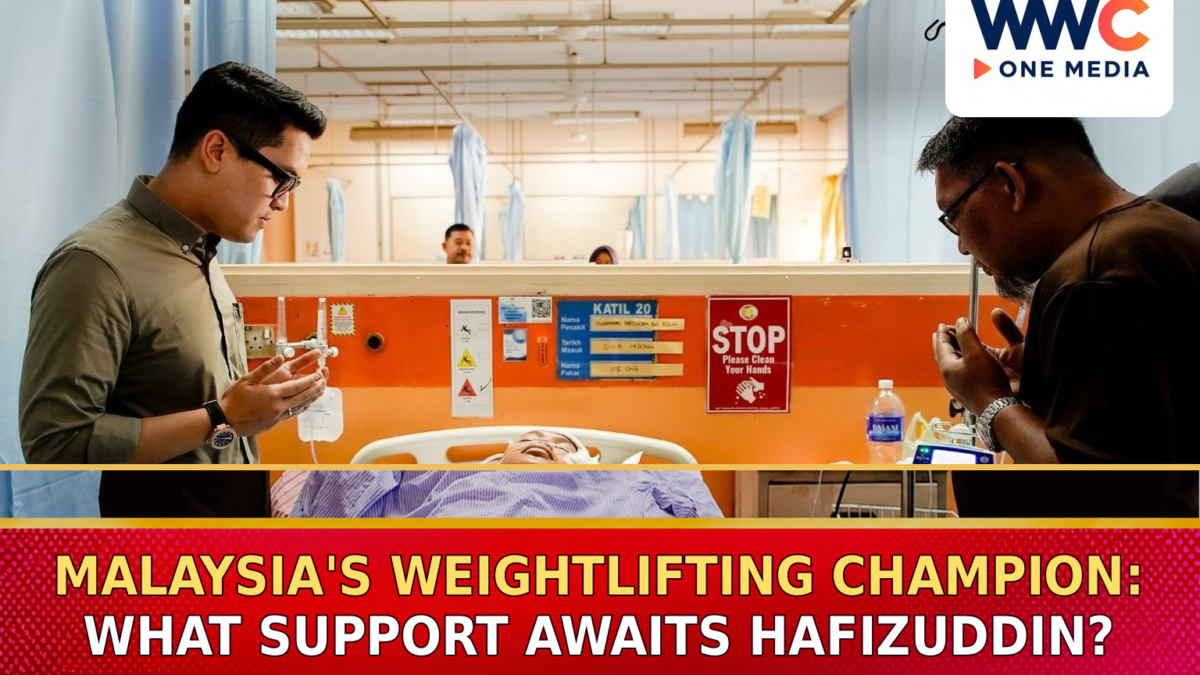
Malaysia’s Commonwealth Games weightlifting champion Muhammad Hafizuddin Roslin is facing a long recovery after a motorcycle accident in Kuala Lumpur on November 16, 2026, resulted in the loss of his right arm. Malaysian sports authorities and the country’s social security agency have since outlined medical, financial and rehabilitation assistance for the athlete.
The response is significant because it goes beyond immediate hospital care. It raises a wider question about how a country supports an elite athlete when a life-changing injury abruptly changes the direction of a sporting career.
Hafizuddin won the men’s 88-kilogram weightlifting gold medal at the 2026 Commonwealth Games in Glasgow. Now, the priority is ensuring that the assistance announced by government agencies and sporting organisations translates into sustained support during treatment, rehabilitation and his transition to life beyond competitive weightlifting.
From Commonwealth champion to a difficult recovery
Hafizuddin’s achievement in Glasgow established him among Malaysia’s leading weightlifters. He secured the men’s 88kg gold medal with a combined total of 345 kilograms.
The National Sports Council’s November 17 statement identified him as an athlete under Malaysia’s Podium Programme. It also confirmed that he was receiving treatment at Kuala Lumpur Hospital following the accident.
The council said its sports management personnel had visited the hospital to obtain updates and ensure that the athlete’s welfare was being addressed.
The following day, Malaysia’s Social Security Organisation, known as PERKESO, confirmed that Hafizuddin had sustained serious injuries and that his right arm had been amputated above the elbow.
The announcement marked a major change for an athlete whose career had been built around strength, technique and years of specialised training. His immediate needs, however, are now medical care, recovery and practical assistance.
What Hafizuddin may receive under PERKESO
One of the most important parts of the response concerns social protection.
PERKESO said preliminary checks found that Hafizuddin was an active contributor under the Employees’ Social Security Act 1969. This made him eligible for protection under the LINDUNG 24 Jam scheme, which covers qualifying accidents outside working hours.
The agency identified two benefit categories. Temporary Disablement Benefit is listed at RM50.40 per day, while Permanent Disablement Benefit is subject to an assessment by the Medical Board.
These figures need to be understood correctly. Eligibility does not mean every benefit has already been paid, and the permanent-disability assessment is not an automatic approval of a particular final amount.
PERKESO also identified access to medical treatment and rehabilitation support under the scheme. Its official explanation of LINDUNG 24 Jam describes protection for qualifying non-occupational accidents, including incidents outside normal working hours.
For Hafizuddin, the scheme could form an important part of the financial support available during recovery. The actual benefits and payment arrangements will depend on the applicable assessment and administrative process.
Malaysia’s sports authorities promise continued assistance
The National Sports Council has also committed to supporting Hafizuddin throughout treatment and recovery.
A November 18 update attributed to the Perlis State Sports Council described coordination with the national council and the Perlis Weightlifting Association. The stated support includes psychosocial assistance, long-term rehabilitation and planning for a possible new career path.
The same update outlined several forms of assistance, including continuation of his training allowance under existing eligibility, medical and follow-up treatment costs, and accommodation and meals for family members staying near the hospital.
The support package also includes insurance benefits estimated at RM120,000. That figure should be treated as an estimate of eligible coverage, not as confirmation that the full amount has already been released.
The distinction matters. Announced assistance becomes meaningful to an injured athlete only when the services are accessible, the claims are processed and support continues after the immediate public attention fades.
Why rehabilitation and career planning matter
For elite athletes, recovery is not limited to hospital treatment. It can involve physical rehabilitation, adjustments to everyday activities, psychological support and decisions about employment or future participation in sport.
Hafizuddin’s situation makes those needs especially important. The Perlis State Sports Council has identified psychosocial support and long-term rehabilitation as part of its approach, while the national sports authorities have pledged continued assistance.
The challenge is to make those commitments practical and consistent.
The experience of athletes in other disciplines also shows why rehabilitation and long-term planning deserve attention. WWC previously examined the return of Indian steeplechaser Avinash Sable after knee surgery, where physical recovery and rebuilding confidence were both important parts of returning to competition.
Hafizuddin’s circumstances are different, and his future should not be measured against another athlete’s recovery. The relevant point is that support must respond to the individual’s needs rather than assume that one rehabilitation pathway fits everyone.
Could coaching offer a future in sport?
Malaysia’s Weightlifting Federation has indicated that it is prepared to help Hafizuddin explore a possible career in coaching.
The federation’s president, Datuk Ayub Rahmat, said the organisation was considering opportunities for the athlete to gain exposure to coaching, particularly at state level in Perlis.
This is an option under consideration, not a confirmed appointment.
A coaching pathway could allow Hafizuddin to remain connected to the sport and draw on his experience as an international competitor. However, any future role would need to take account of his recovery, personal preferences, training and professional development.
It is also important not to assume that coaching is the only possible direction. The wider commitment to vocational rehabilitation and career planning leaves room for other opportunities as his needs become clearer.
The Philippines has also seen how athletes with disabilities continue to compete at international level. WWC’s coverage of Filipino para-athlete King James Reyes and the country’s wider para-sport campaign offers regional context, but Hafizuddin’s future sporting participation should remain his decision and should not be presumed.
What happens next
The immediate priority remains Hafizuddin’s medical treatment and recovery. The National Sports Council, PERKESO and the Perlis State Sports Council have each outlined forms of assistance, but the next stage will involve the practical delivery of those commitments.
For PERKESO, this includes the applicable assessment for permanent disablement benefits. For the sports authorities, it means maintaining access to medical care, rehabilitation, family support and any career-planning assistance that Hafizuddin chooses to pursue.
The proposed coaching pathway may develop further, but no formal appointment has been confirmed in the information reviewed.
For now, the clearest measure of the response will not be the size of the announced package alone. It will be whether Hafizuddin receives sustained support that addresses his medical, financial, practical and professional needs over time.
Frequently asked questions
Who is Muhammad Hafizuddin Roslin?
Muhammad Hafizuddin Roslin is a Malaysian national weightlifter who won the men’s 88kg gold medal at the 2026 Glasgow Commonwealth Games.
What happened to Hafizuddin Roslin?
He was involved in a motorcycle accident in Kuala Lumpur on November 16, 2026. His right arm was later amputated above the elbow following serious injuries.
What financial assistance is Hafizuddin eligible to receive?
PERKESO confirmed his eligibility for LINDUNG 24 Jam benefits. Temporary Disablement Benefit is listed at RM50.40 per day, while Permanent Disablement Benefit depends on Medical Board assessment.
Will Malaysia’s government cover his medical expenses?
Statements from Malaysia’s sports authorities outlined government-backed coverage of treatment and medical expenses, including follow-up care. The announced assistance also includes rehabilitation and support for family members.
Could Hafizuddin become a weightlifting coach?
Malaysia’s Weightlifting Federation has said it is prepared to help him explore a possible coaching pathway, particularly at state level. No formal coaching appointment has been confirmed.