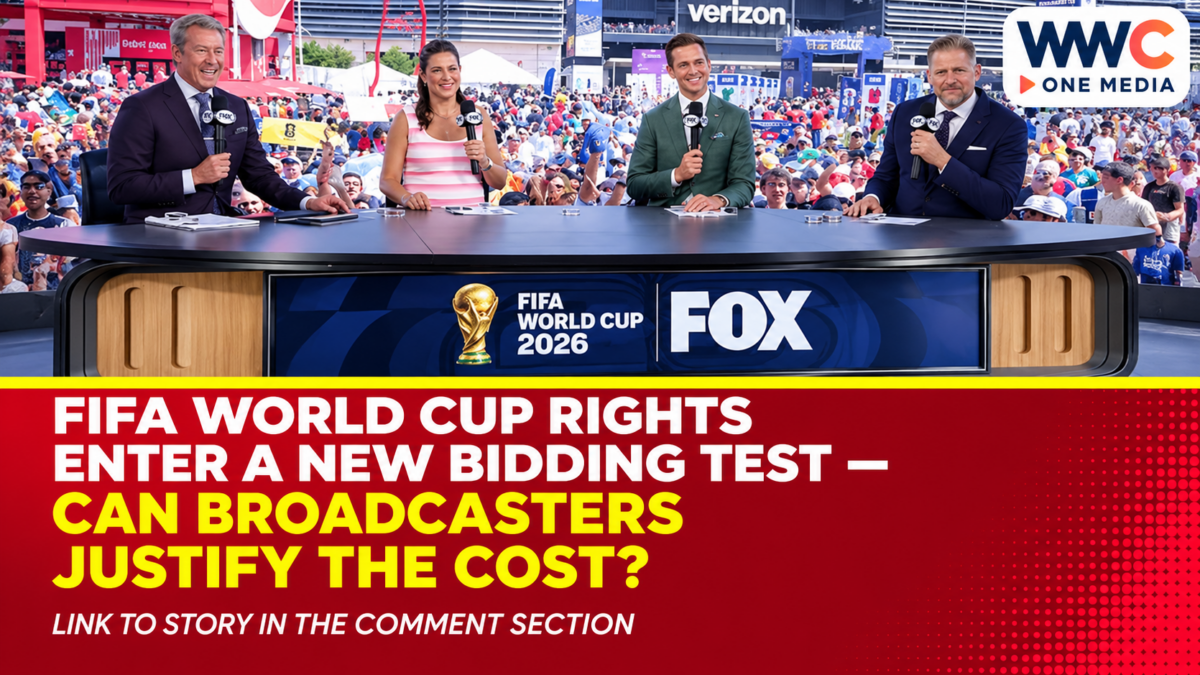
NEW YORK — Nov. 19, 2026. FIFA is accepting proposals for US and Puerto Rico broadcast rights to the 2030 men’s World Cup, with an option covering the 2034 tournament, as media groups weigh the cost of live sport against advertising, subscription and streaming opportunities. The governing body’s October invitation sets a noon US Eastern deadline for Nov. 19 but does not identify the bidders, disclose their offers or announce a successful applicant.
The competition comes after the 2026 tournament delivered record US audiences and a significant advertising boost for Fox. The commercial question is whether the next rights holder can turn large viewing figures into enough revenue to cover both the rights fee and the cost of producing and distributing the matches.
FIFA World Cup Rights: What the Tender Actually Covers
FIFA opened the tender on Oct. 22 for the 2030 men’s tournament in the United States and Puerto Rico. Interested parties may also seek the rights to the 2034 edition. The announcement invites broadcasters and streaming platforms to propose how they would distribute the matches and reach fans.
These are rights for particular territories, not a worldwide sale. The 2030 tournament is scheduled across Morocco, Portugal and Spain, with centenary matches in Argentina, Paraguay and Uruguay. Saudi Arabia will host the 2034 edition.
The tender notice does not state a minimum bid, the value of any offer or the identity of a preferred partner. A report of a prospective multibillion-dollar deal should not be confused with a signed contract or completed award. Nor does a bidding deadline establish that a transaction must be finalised the same day.
Fox Has Fresh Evidence of the World Cup’s Commercial Value
Fox’s fiscal first-quarter 2027 earnings call provides a clear example of how a major tournament can affect a broadcaster’s business. The company reported revenue growth of 22% and a 47% increase in advertising revenue, with the 2026 men’s World Cup among the principal drivers of higher advertising sales.
Its television segment reported a 60% increase in advertising revenue, benefiting from the tournament and political advertising. Management also acknowledged that expenses increased because of World Cup production and sports-rights costs. Those figures are Fox’s company-wide and segment results; they should not be presented as the tournament’s standalone profit.
Asked about bidding for future World Cup rights, Fox’s leadership said it would evaluate the 2030 and 2034 opportunities with financial discipline. That establishes interest in evaluating the opportunity, not proof that Fox submitted a particular offer or agreed to pay a specified amount.
Netflix Already Has a Different FIFA Agreement
Netflix’s existing relationship with FIFA covers the US rights to the 2027 and 2031 Women’s World Cups, announced in December 2024. The arrangement includes Puerto Rico and covers both English- and Spanish-language audiences. FIFA’s announcement confirms live match coverage as well as related programming.
That agreement demonstrates that FIFA is willing to work with a streaming service. It does not confer men’s World Cup rights on Netflix and does not establish that Netflix has made an offer in the new tender. The competitions, years and contracts are different.
FIFA’s budget for 2027–2030 anticipates US$6.064 billion in television broadcasting rights revenue across that four-year cycle. It is a broad revenue forecast for multiple competitions and territories, not the announced asking price for US men’s World Cup coverage.
Why Sports Rights Need More Than Huge Audiences
FIFA says the 2026 men’s World Cup averaged 13.5 million US viewers per match across linear and streaming platforms, while its final averaged 63 million. Those are FIFA-reported audience measures, not guaranteed viewership forecasts for either future tournament.
A broadcaster must weigh advertising income, subscriptions, distribution fees and possible promotional value against rights payments, commentary teams, production facilities, marketing and distribution. A streaming provider faces a different mix of costs and revenue, particularly when the tournament occupies only a portion of a multiyear subscription relationship.
The economics of bundling offer useful context. WWC has examined the proposed Paramount+ and HBO Max streaming bundle, where combining services may influence customer acquisition and retention. That business question is separate from any unconfirmed FIFA rights bid.
What this could mean: Football’s reach makes the competition attractive, but the winner’s financial success depends on what it pays and how viewers use its services. A large bid can build audience share without automatically creating equivalent profit.
Skydance’s Sports Portfolio Adds Industry Context
Skydance’s November financial reporting shows that its group holds a substantial portfolio of sports programming and distribution businesses following its corporate expansion. Its investor materials list major sports partnerships and platforms, but do not confirm that the company submitted or withdrew a bid for the specific FIFA tender.
The company’s wider strategic choices matter when considering financial capacity. WWC has reported on Skydance’s stated cost-cutting plans and leadership changes surrounding its media combination. Those disclosures provide context about spending priorities, not evidence that it declined this particular opportunity.
The reported US$4 billion value and claims about specific companies exiting negotiations were not independently confirmed through FIFA’s invitation, the companies’ earnings materials or public deal announcements examined here. Treating them as settled would misrepresent the available record.
What Happens Next
FIFA’s Nov. 19 submission deadline is the next formal milestone. A later award notice or rights agreement would establish the buyer, territory, tournament years and any financial terms made public. Bidders may also describe their distribution approach once negotiations permit disclosure.
For investors, the most useful subsequent evidence will be a signed agreement, material financial commitments in company filings and management’s explanation of the expected returns. Until those records emerge, this is an open competition with a commercially important audience history, not a completed transaction at a verified price.
Frequently Asked Questions
Which World Cup rights are being offered?
FIFA has invited proposals for US and Puerto Rico rights to the 2030 men’s World Cup, with an option for 2034. The invitation does not cover every market worldwide.
Has FIFA announced a US$4 billion deal with Fox or Netflix?
No such signed agreement or announced award was verified in the first-party records reviewed. The figure should not be treated as an established final deal value.
Does Netflix already broadcast FIFA tournaments?
Netflix secured US rights to the 2027 and 2031 Women’s World Cups under a separate FIFA agreement. That does not give it men’s tournament rights for 2030 or 2034.
Did Skydance officially withdraw from the bidding?
The public company filings and FIFA announcement examined do not establish a formal withdrawal. A verified company statement or tender record would be needed to confirm that claim.