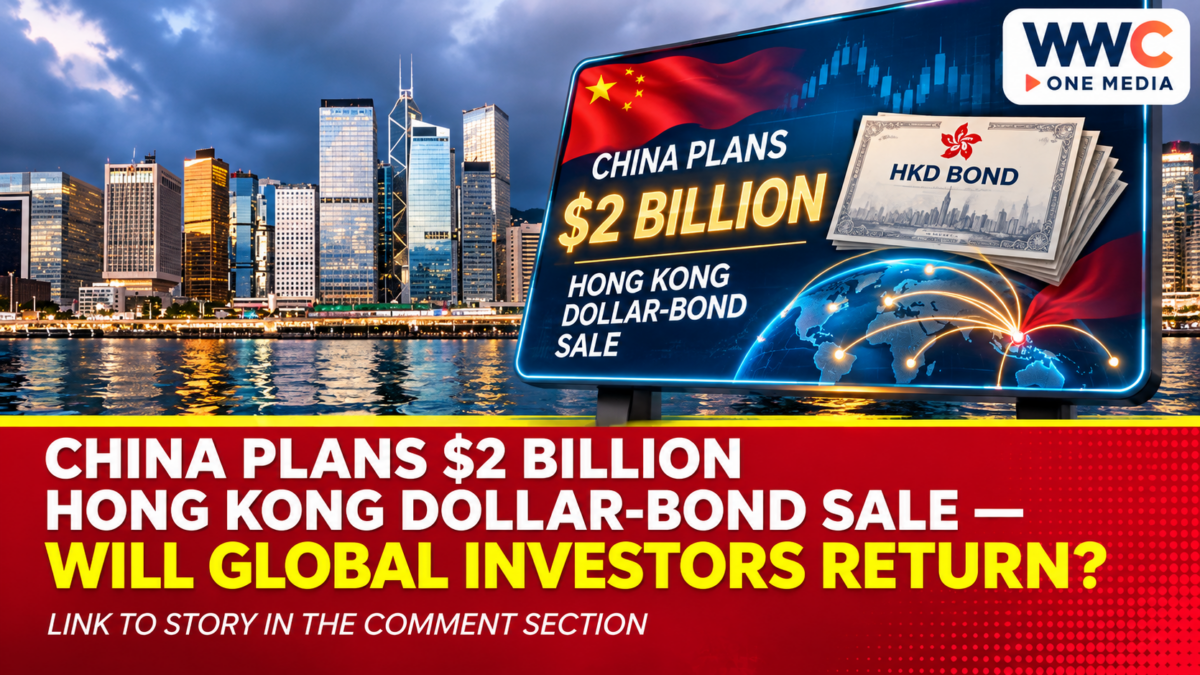
BEIJING / HONG KONG — Nov. 19, 2026. China’s Ministry of Finance has authorised an offering of up to US$2 billion in sovereign bonds denominated in US dollars in Hong Kong during the week beginning Nov. 16. The ministry announced the plan on Nov. 11, but its original notice did not disclose final maturities, yields, pricing or completed sale proceeds.
The planned transaction offers a test of international demand for Chinese government debt in the dollar market. A large order book for a previous offering provides historical context, but it cannot establish the price or investor appetite for new securities before final deal results are published.
China Sovereign Dollar Bonds: What Beijing Approved
The Ministry of Finance said the State Council approved a dollar-denominated sovereign issue in Hong Kong with a ceiling of US$2 billion. The ministry planned the transaction for the week of Nov. 16 and said specific issuance arrangements would follow in a separate notice.
That language sets an upper limit, not a commitment to sell the entire amount. It does not specify how many bond tranches will be offered, whether investors will be asked to subscribe to several maturities or what borrowing rate Beijing will ultimately accept.
For readers following the transaction, three stages should be distinguished: approval to offer bonds, marketing to investors and completed issuance with final pricing. Only the first stage was documented in the original ministry announcement reviewed for this story.
Last Year’s US$4 Billion Sale Provides a Benchmark
On Nov. 5, 2025, the ministry completed a US$4 billion sovereign bond sale in Hong Kong. It issued US$2 billion in three-year notes at a reported issuance rate of 3.646% and US$2 billion in five-year notes at 3.787%.
The ministry reported total subscriptions of US$118.2 billion, approximately 30 times the amount sold. It said the five-year tranche attracted subscriptions equivalent to 33 times its issuance size. The figures show demand for that particular transaction, not a guaranteed outcome for 2026.
The same official results described geographic participation: 53% from Asia, 25% from Europe, 16% from the Middle East and 6% from the United States. These percentages refer to the 2025 bonds and must not be presented as the investor mix of the proposed 2026 issue.
A smaller maximum issue this year also does not automatically mean weaker market confidence. Governments may size offerings for funding needs, benchmark development or investor access; without an official explanation, attributing the difference to a particular motive would be speculation.
Why Hong Kong Matters to Offshore Financing
Hong Kong provides an established market where Chinese government securities can reach international investors. The Ministry of Finance said all bonds from its November 2025 dollar offering would be listed on the Hong Kong Stock Exchange.
The city’s role extends beyond US-dollar instruments. The Hong Kong Monetary Authority recorded a separate renminbi sovereign-bond tender on Oct. 23, 2026, showing that different currencies can be used to reach different funding pools.
These arrangements are relevant to the wider discussion examined in WWC ONE MEDIA’s coverage of offshore yuan financing and China’s international lending ambitions. A dollar bond and a renminbi bond are not interchangeable: their cash flows, foreign-exchange exposures and investor bases differ.
What this could mean: A successful sovereign dollar offering could give market participants a fresh reference point for assessing Chinese borrowing in US currency. The actual benchmark value, however, depends on the securities’ maturities, final yields and secondary-market trading.
A Separate Green Bond Shows China’s Multi-Currency Approach
The Ministry of Finance also reported that it issued CNY4 billion of renminbi-denominated green sovereign bonds in Canada on Nov. 9, 2026. The transaction comprised CNY2 billion of three-year securities at 1.4% and CNY2 billion of five-year securities at 1.5%.
According to the ministry’s official account, subscriptions totalled CNY54.04 billion, or 13.5 times the issue amount. It said these bonds would also be listed in Hong Kong. This was a completed green bond transaction denominated in renminbi, not part of the proposed US$2 billion dollar sale.
The distinction matters because an overseas place of issuance does not by itself determine a bond’s currency. Investors should identify the issuer, denomination, purpose, repayment terms and applicable disclosure before comparing securities.
Similarly, WWC’s analysis of China’s government-bond market and interest-rate questions concerns domestic market conditions rather than an announced final price for this offshore deal.
Sovereign Credit Is Not the Same as Corporate Credit
China’s planned bonds would be obligations of the central government. That makes them different from dollar bonds issued by property developers, local-government-linked businesses or other corporate borrowers.
An investor examining a government security may assess currency, maturity, interest-rate movements, sovereign obligations and market liquidity. A corporate bond adds company-specific operating performance, leverage and repayment considerations. Both can lose market value when yields rise.
WWC previously explored the distinction in its report on stresses in Chinese high-yield dollar bonds. Problems involving a particular company should not be used to infer that China’s central government has encountered the same payment difficulty.
Nor should strong demand for sovereign paper be treated as proof that every private Chinese issuer can obtain comparably favourable financing. Buyers price different risks, protections and maturities.
What Happens Next
The decisive documents will be the Ministry of Finance’s final issuance notice, any exchange offering circular and the official pricing or completion announcement. Those should establish the amount actually issued, maturity dates, interest rates and, if disclosed, the composition of investor demand.
A comparison with the 2025 sale will be meaningful only after those terms are known. Until then, the supported conclusion is straightforward: Beijing approved an offshore dollar offering of up to US$2 billion, but the completed fundraising result and market reception remain unconfirmed in the original records examined.
Frequently Asked Questions
How much is China planning to raise in Hong Kong?
The Ministry of Finance authorised an offering of up to US$2 billion in dollar-denominated sovereign bonds during the week beginning Nov. 16, 2026. The maximum is not a confirmed final sale amount.
Has China already announced the 2026 bonds’ interest rate?
The original Nov. 11 ministry announcement reviewed here did not specify coupons, yields or maturities. These require a separate official pricing notice.
How strong was demand for China’s 2025 Hong Kong dollar bonds?
The Ministry of Finance reported US$118.2 billion in orders for its US$4 billion offering, or approximately 30 times the issued amount. Those results describe 2025, not the new transaction.
Are these the same as China’s renminbi green bonds?
No. The proposed Hong Kong issue is denominated in US dollars. China’s separate November 2026 green sovereign issue in Canada was denominated in renminbi.