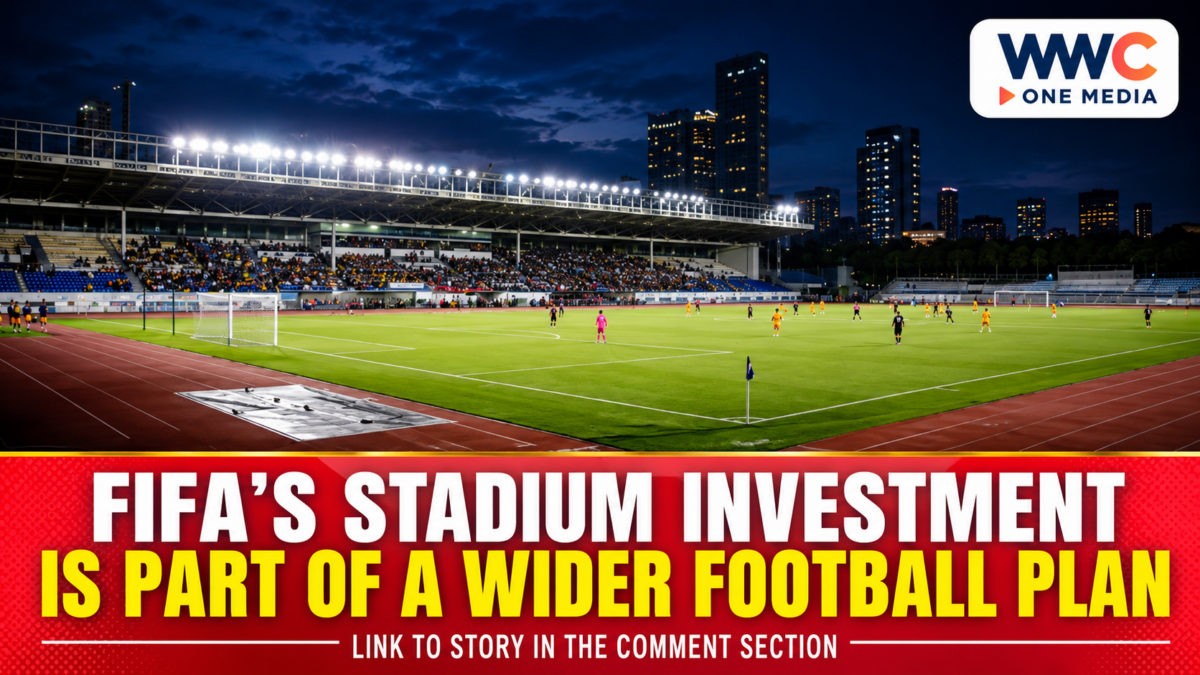
Rizal Memorial Stadium is set for a major redevelopment under a US$15-million project involving FIFA, the Philippine Football Federation (PFF), the Philippine Sports Commission (PSC), the Manila city government and other stakeholders, with a covered 25,000-capacity venue targeted for completion in 2028.
The agreement signed on Nov. 15, 2026, gives the project a defined institutional framework. But its wider significance will depend on whether the upgraded stadium becomes part of a stronger football system that reaches beyond the capital.
For a venue that has been part of Philippine sporting history since 1934, the challenge is twofold: provide facilities that meet modern football requirements while respecting the heritage of the wider sports complex.
Rizal Memorial Stadium’s US$15-million redevelopment: what is planned?
The FIFA project announcement identifies a US$15-million facelift for Rizal Memorial Stadium. The planned venue will have a roof and capacity for 25,000 spectators, with completion expected in 2028.
The redevelopment will include a new natural football pitch and related facilities. The project is being undertaken through cooperation involving FIFA, the PFF, the PSC, the Manila city government and other stakeholders.
The proposed capacity would give the Philippines a larger venue for national-team matches and international football events. The roof is another significant feature because it is part of the planned transformation from a historic open stadium into a more modern competition venue.
However, the published project announcement does not provide a detailed breakdown of construction costs, the final design specifications or a complete procurement timetable. Those details will be important as the project moves from agreement to implementation.
Who is responsible for the stadium project?
The Nov. 15 memorandum of agreement sets out the main responsibilities of the three principal sports organisations.
FIFA will provide the funding. The PFF will lead planning, procurement and construction of the football pitch and related facilities. The PSC will provide the site, authority and local support while retaining ownership and administration of the wider complex.
The PFF says construction is scheduled to begin in the first quarter of 2027. The agreement also establishes a 30-year framework beginning on the date of turnover. The facility is intended to serve as a football stadium and training venue for national and international football.
This division matters because the project involves more than a construction site. It requires coordination between an international governing body, the national football federation and the government agency responsible for the sports complex.
The public will need to see how the partners manage procurement, construction milestones, facility operations and long-term maintenance. A stadium can be impressive at opening, but its value depends on how consistently it is managed and used afterwards.
The US$15-million stadium project is not the same as FIFA’s wider funding programme
The stadium investment should be distinguished from FIFA’s broader football-development funding.
FIFA has separately announced that each member association will be eligible for up to US$25 million over the next four-year cycle through the FIFA Forward programme and the FIFA Surplus Solidarity Programme. The PFF says the Philippine allocation will support academies and football fields in provincial areas.
These are separate funding references. The US$15-million figure is FIFA’s stated amount for the Rizal Memorial Stadium facelift. The up-to-US$25-million figure refers to the wider funding eligibility available to each FIFA member association over the cycle.
That distinction is important for readers assessing the total scale of the investment. The two amounts should not be added together and described as one stadium budget.
The broader programme also points to a more complete view of football development. A national stadium can host major matches, but academies and provincial pitches are needed to give more young players access to regular training and competition.
A historic sports complex must balance modernisation and preservation
Rizal Memorial Stadium is part of a complex with a long place in Philippine sports history.
The PFF says the venue has been the home of Philippine football for 92 years. It served as the main hub of the 1954 Asian Games and the 1991 and 2005 Southeast Asian Games. The complex also hosted The Beatles in 1966.
The heritage responsibility is substantial. The Rizal Memorial Sports Complex was declared a National Historical Landmark by the National Historical Commission of the Philippines in 2017.
The PFF says the redevelopment will comply with Republic Act No. 10066, or the National Cultural Heritage Act of 2009, and secure the necessary clearances to protect the complex’s historical and architectural integrity. The design is also expected to accommodate existing and planned jogging paths and public-use facilities.
This means the project cannot be judged only by the appearance or capacity of the new football venue. The way construction affects the wider complex, its historic structures and public spaces will also matter.
The complex continues to serve different sporting activities. WWC’s coverage of the Asian U-19 Sepak Takraw Championship in Manila highlights the role Rizal Memorial facilities play in hosting youth competitions. Redevelopment planning should take account of the wider sporting environment, not just the football pitch.
Why Philippine football needs investment beyond Manila
A modern stadium can strengthen the national team’s home venue and improve the country’s ability to stage international fixtures. It cannot, by itself, create a deeper pool of players.
That requires a development pathway: accessible pitches, youth academies, qualified coaches, local competitions and opportunities for athletes to progress to higher levels.
The distinction is important for a country where aspiring players live far beyond Metro Manila. A central stadium may be the most visible part of the programme, but provincial facilities can help make football development more accessible to communities that otherwise have fewer opportunities.
The PFF’s reference to academies and provincial fields under FIFA’s wider funding programme is therefore significant. The impact should eventually be assessed not only through the stadium’s completion but also through the reach and continuity of those development initiatives.
The Philippines’ national-team pathway has already drawn attention through its youth sides. WWC previously examined the Philippines under-23 team’s Asian Games campaign. The wider lesson is that competitive progress needs to be supported by a reliable system of training and facilities.
The same principle applies across sports. Grassroots participation and sustained access to coaching are essential if investment in elite venues is to benefit more than a small group of established athletes. WWC has also explored this development challenge in its report on support for Philippine tennis and grassroots player development.
What happens next
The next major milestone is the planned start of construction in the first quarter of 2027. FIFA has identified 2028 as the expected completion year.
Before then, the public will need more detailed information about the final design, procurement process, construction schedule and arrangements for activities within the wider complex. These details will help show how the partners intend to deliver the project while meeting heritage and public-access requirements.
The 30-year framework also makes long-term management important. The agreement assigns ownership and administration of the complex to the PSC, while the PFF is responsible for leading the stadium works. The partners will need clear operating arrangements to ensure the facility remains useful after construction is finished.
The most meaningful measure of success will be what happens after the opening. If the venue hosts major matches while the wider football programme expands training opportunities in the provinces, the investment could have an impact beyond Manila.
If the project is judged only by its seating capacity and appearance, its broader promise will remain untested.
Frequently Asked Questions
1. How much will the Rizal Memorial Stadium redevelopment cost?
FIFA’s project announcement identifies a US$15-million facelift for the stadium.
2. What will the upgraded stadium’s capacity be?
The planned venue is expected to accommodate 25,000 spectators and include a roof.
3. When will construction begin and when is completion expected?
The PFF says construction is scheduled to begin in the first quarter of 2027. FIFA identifies 2028 as the expected completion year.
4. Who will manage the redevelopment?
FIFA will provide funding, the PFF will lead planning, procurement and construction, and the PSC will provide the site and local support while retaining ownership and administration of the wider complex.
5. Will the redevelopment affect the complex’s heritage status?
The PFF says the project will comply with the National Cultural Heritage Act of 2009 and obtain the necessary clearances to preserve the complex’s historical and architectural integrity.
Rizal Memorial Stadium’s redevelopment is a major infrastructure commitment, but the real test will be whether it helps build a stronger football future for the country. A modern national venue matters. So do the provincial pitches, academies and development opportunities that can give more Filipino players a chance to reach it.