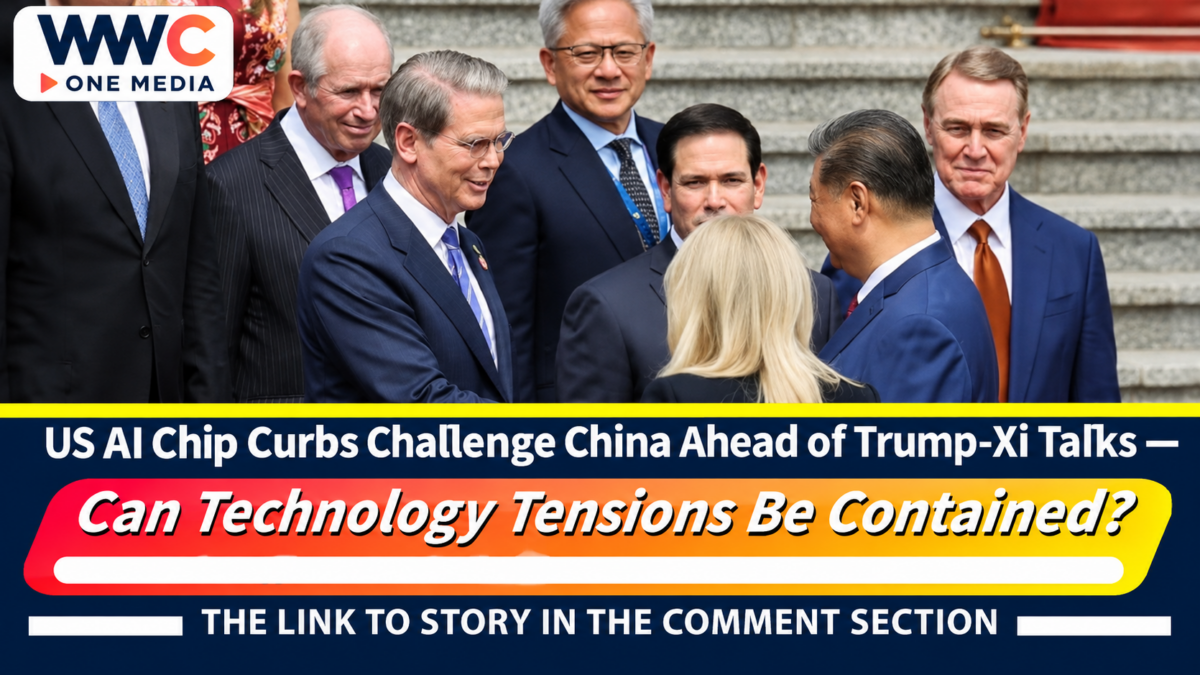
WASHINGTON/BEIJING — The United States unveiled new restrictions on advanced semiconductor shipments and remote computing access on Nov. 16, adding another issue to US-China discussions. The US AI chip curbs target arrangements that could allow customers in restricted jurisdictions to use powerful American-designed chips through overseas data centres even without importing the hardware directly.
China has already opposed the wider use of technology export controls, but its published diplomatic statements do not establish a specific retaliatory measure against this newly announced rule. For policymakers and businesses, the next question is whether tighter security requirements can coexist with continued commercial and diplomatic engagement.
US AI Chip Curbs: What Washington Has Announced
The US Commerce Department issued an interim final rule on remote access to advanced semiconductors, with publication scheduled in the Federal Register for Nov. 19. The rule is designed to cover more than the physical transfer of a chip: it also addresses substantial computing capacity made available through data centres outside restricted markets.
The rule creates a licensing requirement for specified advanced computing items used in data centres that provide more than 12 million in aggregate total processing performance to companies headquartered in designated restricted countries, or ultimately controlled by parent companies headquartered there. Linked data centres can be assessed together.
It also imposes additional destination-based licence requirements for covered exports, reexports and in-country transfers to Indonesia, Malaysia, Singapore, Thailand and Brazil. Those requirements include an exception for qualifying US-headquartered recipients subject to reporting conditions. A requirement to apply for a licence is not the same as an across-the-board ban on legitimate shipments.
China Has Objected — But Has Not Announced a Specific Countermeasure
China’s foreign ministry addressed the prospect of additional US chip restrictions at a Nov. 13 press conference. It opposed what it characterised as misuse of export controls and called for maintaining stable economic and trade relations between the two countries.
That statement predates the formal Nov. 16 release. It establishes Beijing’s publicly expressed position toward tighter controls, not a final response to every provision of the new regulation. The official statements reviewed do not confirm a fresh Chinese export ban, tariff order or other legally effective countermeasure issued specifically in retaliation for this rule.
WWC has previously examined the earlier US-China trade truce and technology dispute. The new regulatory text provides a concrete negotiating issue, but it does not itself prove that an existing trade understanding has collapsed.
Why Renting Computing Power Is Different From Buying Chips
A semiconductor export can be tracked by the hardware’s destination, buyer and declared end use. Cloud computing complicates that model because an overseas customer can rent processing capacity from machines physically installed in another country.
The US rule addresses situations where substantial capacity reaches companies headquartered in specified restricted jurisdictions, including through linked infrastructure. It requires attention to beneficial ownership, intermediaries and changes in how computing resources are used after installation.
Analysis: Governments may see remote access as a route around export restrictions, while businesses see internationally distributed infrastructure as a normal feature of cloud computing. The difficult compliance task is determining the real customer and use of the computing capacity without unnecessarily disrupting permitted services.
Southeast Asian Data Centres Face a Different Question
For Southeast Asia, the regulation introduces immediate planning questions for equipment procurement and service contracts. Singapore, Malaysia, Thailand and Indonesia appear among the five newly named destinations, while the Philippines does not appear on that specific list.
That does not mean every Philippine-based data centre is automatically exempt. The rule’s separate end-use provisions can apply to computing arrangements involving restricted customers regardless of where a covered data centre is located, subject to the regulatory terms.
WWC’s coverage of Malaysia’s unresolved AI-chip re-export checks illustrates why compliance reviews must distinguish a government’s investigation from a finding that a particular company broke the law. Neither the US regulation nor the existence of a regional data centre proves an individual operator has diverted chips.
Semiconductor Licensing Remains More Nuanced Than a Total Ban
The US already operated differentiated licensing arrangements before this announcement. On Jan. 13, the Commerce Department said applications for Nvidia H200, AMD MI325X and comparable semiconductor exports to China could receive case-by-case review under specified security conditions.
That policy did not automatically authorise every buyer or shipment. Applicants had to satisfy requirements addressing customer screening, product testing and the availability of semiconductor production capacity to US customers.
WWC’s earlier examination of Nvidia export-licensing decisions and congressional scrutiny provides context for why decisions about individual licences are distinct from allegations concerning particular officials. A congressional request for documents is not proof of improper licensing, just as an export licence is not proof that a commercial delivery occurred.
The new regulation also formally rescinds the earlier AI Diffusion Rule, which the government said had not been enforced. That change should not be confused with eliminating all existing controls on advanced computing exports.
What Happens Next
The immediate test is publication and implementation of the US rule, followed by licence applications, compliance guidance and formal comments submitted during the consultation period. For existing qualifying remote-computing arrangements, the specified 90-day window creates an operational deadline after the rule takes effect.
Analysis: Beijing could continue objecting diplomatically, seek technical discussions or propose broader trade negotiations. A retaliatory step is possible as a matter of policy choice, but no particular response can responsibly be presented as decided without a primary government announcement.
For both countries, a workable outcome would have to distinguish national-security controls from legitimate trade. The written rules, any official Chinese countermeasure and the eventual joint statements will be more informative than predictions about the leaders’ private intentions.
Frequently Asked Questions
What do the new US AI chip curbs restrict?
They add controls on specified advanced chips and substantial remote computing capacity made available through overseas data centres to companies in restricted jurisdictions, along with extra licensing rules for five named destinations.
Are the Philippines included among the five newly named countries?
No. The named countries are Indonesia, Malaysia, Singapore, Thailand and Brazil. Separate end-use restrictions may still affect covered arrangements in other locations.
Has China announced retaliation against the Nov. 16 rule?
No specific retaliatory legal measure was verified in the official records reviewed as of Nov. 17. China has publicly opposed expanded US technology export controls.
Are Nvidia H200 exports to China completely banned?
The January US policy provided for case-by-case review under security conditions. Individual transactions still require assessment under the applicable rules.
When will the new regulation take effect?
The public-inspection version schedules Federal Register publication for Nov. 19, 2026, and specifies effectiveness upon publication.