ASEAN’s Myanmar Review Reveals a Gap Between Humanitarian Progress and Political Results
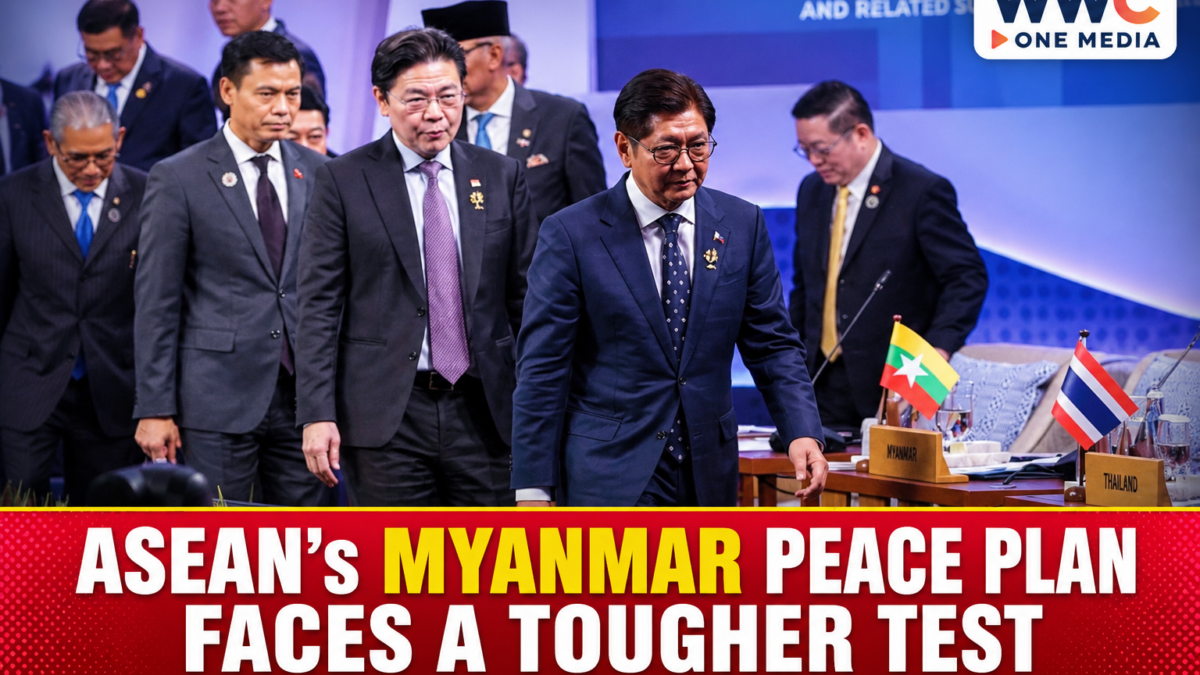
The November 15 decision contains a more detailed assessment of the Philippines’ diplomatic efforts than a simple reaffirmation of the Five-Point Consensus. ASEAN leaders acknowledged that humanitarian operations had advanced in some areas, but they also expressed deep concern over insufficient overall progress in implementing the peace framework.
One significant development involved the ASEAN Coordinating Centre for Humanitarian Assistance on disaster management, or AHA Centre. The leaders welcomed a monitoring mission to Myanmar on October 28, led by Philippine Foreign Affairs Secretary Ma. Theresa P. Lazaro in her capacity as the ASEAN Chair’s Special Envoy on Myanmar.
The mission marked the start of a month-long distribution of humanitarian support to more than 11,000 households, including people in four priority townships that the AHA Centre had not previously reached. ASEAN also noted Myanmar’s openness to expanding humanitarian access to additional areas. ASEAN+1
Lazaro had visited Nay Pyi Taw twice during 2026, on January 6 and October 29, as part of her mandate to engage with parties concerned in Myanmar. Her diplomatic work also included a Myanmar Stakeholders’ Meeting in Tagaytay on January 19–20 and informal discussions with ethnic armed organisations and representatives of the National Solidarity and Peacemaking Negotiation Committee in Pattaya, Thailand, on July 13. ASEAN+1
These activities demonstrate that ASEAN’s approach involves more than meetings between national governments. It also includes contact with different groups and efforts to create conditions for inclusive dialogue.
However, the leaders’ assessment did not describe these developments as a resolution of the conflict. They specifically recorded insufficient progress in implementing the Five-Point Consensus, while acknowledging limited progress in humanitarian assistance.
The Next ASEAN Chair Will Have to Maintain the Pressure
The Manila decision also addresses continuity after the Philippines completes its 2026 chairmanship.
ASEAN leaders called for closer coordination among the previous, current and incoming chairs to maintain a consistent approach to the Five-Point Consensus. They also tasked senior officials with continuing discussions on a possible longer-term Special Envoy arrangement, which could help preserve continuity in diplomatic engagement and assessment of progress. ASEAN
The leaders further mandated ASEAN foreign ministers to continue monitoring developments and report on progress at the next ASEAN Summit.
This makes implementation the central measure of success. The November decision does not set a fixed date for restoring Myanmar’s full political representation, nor does it guarantee that such a change will happen at the next summit.
Instead, ASEAN has tied any gradual restoration to sustained and concrete progress on the Five-Point Consensus. Myanmar’s participation in other ASEAN sectoral ministerial bodies and mechanisms, meanwhile, is to remain unrestricted at all levels.
For the region, the challenge is to turn diplomatic engagement and humanitarian access into measurable improvements for people affected by the conflict. Until that happens, ASEAN’s political restrictions remain in place. ASEAN
Primary record: ASEAN Leaders’ Review and Decision on the Implementation of the Five-Point Consensus, November 15, 2026.
Verification note: The humanitarian figures, diplomatic dates, policy conditions and follow-up instructions above are grounded in the adopted ASEAN document. I have not treated humanitarian distribution as proof that the conflict has ended or that the peace plan has been fully implemented.