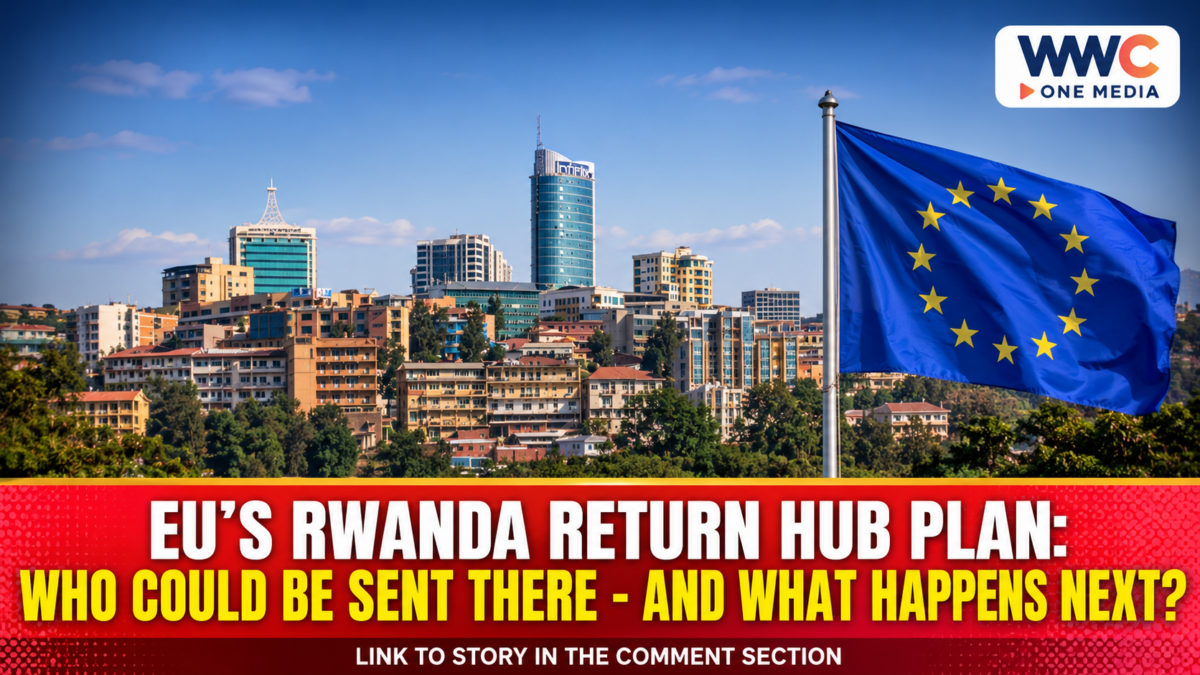
Five European Union countries are working with Rwanda to establish a migrant return hub outside Europe, with the first transfers targeted for 2027. The proposed arrangement involves Austria, Denmark, Germany, Greece and the Netherlands, which say the facility would provide an alternative destination for certain people who have no legal right to remain in their territories.
The plan marks a significant development in Europe’s migration policy. Instead of sending every person subject to an enforceable removal decision directly to their country of origin, participating governments want the option of transferring eligible individuals to Rwanda, where they could receive temporary accommodation, obtain the right to reside and potentially integrate into local society.
But the proposal is not a general relocation programme for everyone seeking asylum in Europe. Its eligibility rules, legal safeguards, financing and eventual operating arrangements will determine who can be transferred and what happens to them after arrival.
Who could be sent to the Rwanda return hub?
The five participating governments have set out a specific target group: migrants staying illegally in one of the participating EU countries who are subject to an enforceable return or removal decision.
Their joint statement says the arrangement is not intended for people who need international protection or who have another legal basis to remain in the participating countries. uim.dk
The Netherlands has provided an additional detail about the initial phase. Its government said the participating countries had decided to transfer only single men to Rwanda during the first stage of the project.
The Dutch government also said its own focus would be on people whose countries of origin are in the same region as Rwanda. Government.nl
These distinctions are important. A person with an unresolved asylum claim or a recognised need for international protection should not be treated as automatically eligible for transfer under the arrangement described by the governments.
The proposal concerns people who have no legal right to remain and are covered by an enforceable removal decision. The exact screening and transfer procedures will still need to be detailed in the final arrangement.
Why Rwanda is being considered
The participating governments describe the proposed hub as a partnership rather than simply a deportation destination.
Under the Dutch government’s published explanation, people transferred to Rwanda would be accommodated in an open, temporary facility. They would have the right to reside in Rwanda and access to education, the labour market, healthcare and the legal system.
They could also choose to return to their country of origin. The joint statement adds that people may have the option of moving to another country where they can legally enter and reside. Government.nl+1
Rwanda’s participation is also linked to its existing experience in receiving and assisting displaced people. The participating governments point to the country’s work with international organisations, including the UN refugee agency UNHCR and the International Organization for Migration.
Rwanda’s Interior Minister Vincent Biruta said the country was prepared to work with European partners on a solution that provides migrants with legal options while addressing the wider challenges associated with irregular migration. uim.dk
However, the final operating model remains under development. The governments have not yet published a complete account of the facility’s capacity, accommodation arrangements, individual case procedures or the duration of stays.
The EU has already created a legal route for return hubs
The Rwanda initiative is possible because the EU has changed its common rules on returning non-EU nationals who have no legal right to stay.
On Oct. 1, 2026, the Council of the European Union gave final approval to new return rules that allow member states to establish return hubs in countries outside the bloc, provided the required agreement or arrangement is concluded with the receiving country. Consilium
The legislation sets conditions that go beyond simply securing a host country’s consent.
Article 14 of the agreed regulation requires an arrangement to establish the procedures for transfers, the conditions governing a person’s stay and the respective responsibilities of the participating parties. It also requires provisions addressing violations of the arrangement or significant changes that could adversely affect the situation in the receiving country.
Where the arrangement includes onward returns to another country, it must also explain what happens if that return cannot take place and provide for an independent monitoring body or mechanism. Data Consilium
The regulation also requires respect for international human rights standards and the principle of non-refoulement. In practical terms, people must not be transferred to a place where they face a serious risk of persecution, torture or other prohibited harm.
Unaccompanied minors are excluded from return-hub arrangements under the rules. Consilium+1
The legal framework therefore creates an option for governments, not an automatic authorisation for every proposed transfer. The details of the Rwanda arrangement will matter.
UN agencies are involved, but the safeguards still need scrutiny
The participating governments say they are working with international organisations while developing the hub.
The European Commission participated as an observer in discussions about implementing the relevant EU rules. The International Organization for Migration is providing technical input and has indicated that it is prepared to provide assistance at the receiving government’s request, subject to necessary safeguards.
UNHCR is also engaged in discussions and providing advice on compliance with international human rights standards. Its stated role is to help preserve the integrity of asylum systems and protection for people who genuinely need international protection. uim.dk
That involvement should not be mistaken for an unconditional endorsement of every operational detail. The final procedures and safeguards have yet to be fully set out publicly.
UNHCR’s broader guidance on return hubs offers an important benchmark. It says such arrangements may be appropriate for people who do not need international protection, but should generally be considered when direct return to the country of origin is not feasible within a reasonable period.
The guidance also describes hubs as temporary locations intended to facilitate eventual return to the country of origin, with clear provisions for onward movement and for situations in which return cannot happen. UNHCR+1
This creates an important issue for the Rwanda proposal. The participating governments describe integration into Rwandan society as one possible outcome, while UNHCR’s general guidance emphasises temporary accommodation and onward return. The final agreement will need to explain how these options fit together, including the legal status and long-term prospects of people who remain in Rwanda.
Who will pay for the facility?
The Netherlands has confirmed that it and the other participating European countries will cover the costs, including expenses associated with temporary accommodation.
The European Commission has clarified that member states are generally responsible for financing return hubs. EU support for related measures may be considered separately, depending on specific requests and individual assessments. Government.nl+1
The governments have not published a complete budget or a detailed breakdown of how much each country will contribute.
That information will be important when assessing the long-term viability of the scheme. Costs may involve transportation, accommodation, case management, healthcare, legal support, integration services and coordination with international organisations.
A functioning return hub will require more than a facility and an agreement. It will need a system capable of handling individual cases while ensuring that legal protections remain available throughout the process.
Why the debate matters beyond Europe
The proposed arrangement highlights how governments are increasingly looking at international partnerships to manage migration and returns.
For the Philippines, the distinction between migration for employment and removal following an enforceable immigration decision is important. The Rwanda proposal is not a labour recruitment programme, and it should not be confused with the protections needed by overseas Filipino workers.
The Philippines has been advancing regional cooperation on migrant-worker protection through the ASEAN declaration on fair and ethical recruitment. That initiative addresses recruitment practices and worker safeguards, a different but related part of international migration governance.
Immigration enforcement also affects people who travel or work abroad. WWC previously reported on Singapore’s cases involving alleged harbouring and employment of overstayers, illustrating how countries apply their own laws when foreign nationals no longer have permission to remain.
For prospective overseas workers, the case of a Filipino intercepted at Mactan Airport over a questionable Russia-bound job offer is another reminder that immigration status, employment documentation and legal safeguards can have serious consequences.
The European proposal is different in purpose and legal context. Nevertheless, it raises a question relevant to migration systems everywhere: how can governments enforce immigration decisions while ensuring that people are treated lawfully and that protection needs are properly assessed?
What happens next?
The participating governments intend to continue negotiations with Rwanda and international partners to finalise the operating arrangements.
Their stated goal is to establish the hub and begin the first transfers in 2027. Until the details are completed, important questions remain about capacity, individual assessments, monitoring, accommodation and the options available to people who cannot return to their home countries.
The scheme’s success will depend not only on how many people can be transferred, but also on whether the arrangement meets the legal standards that the EU itself has established.
For now, Rwanda has emerged as a partner in a new European approach to returns. The real test will begin when the first cases are processed and the promised safeguards are put into practice.
Frequently Asked Questions
1. Which European countries are involved in the Rwanda return hub?
Austria, Denmark, Germany, Greece and the Netherlands are working with Rwanda on the proposed arrangement.
2. Who can be transferred to the Rwanda hub?
The plan concerns people staying illegally in one of the five participating EU countries who are subject to an enforceable return or removal decision and have no need for international protection or other legal right to remain.
3. Will asylum seekers be sent to Rwanda?
The governments say the arrangement is not intended for people who need international protection. Eligibility will depend on individual legal assessments and the enforceable return decision.
4. When will the first transfers begin?
The participating governments aim to begin the first transfers in 2027, after the operating arrangements have been developed.
5. Who will pay for the Rwanda return hub?
The five participating European countries have said they will cover the costs, including temporary accommodation. The complete budget and each country’s contribution have not yet been publicly detailed.