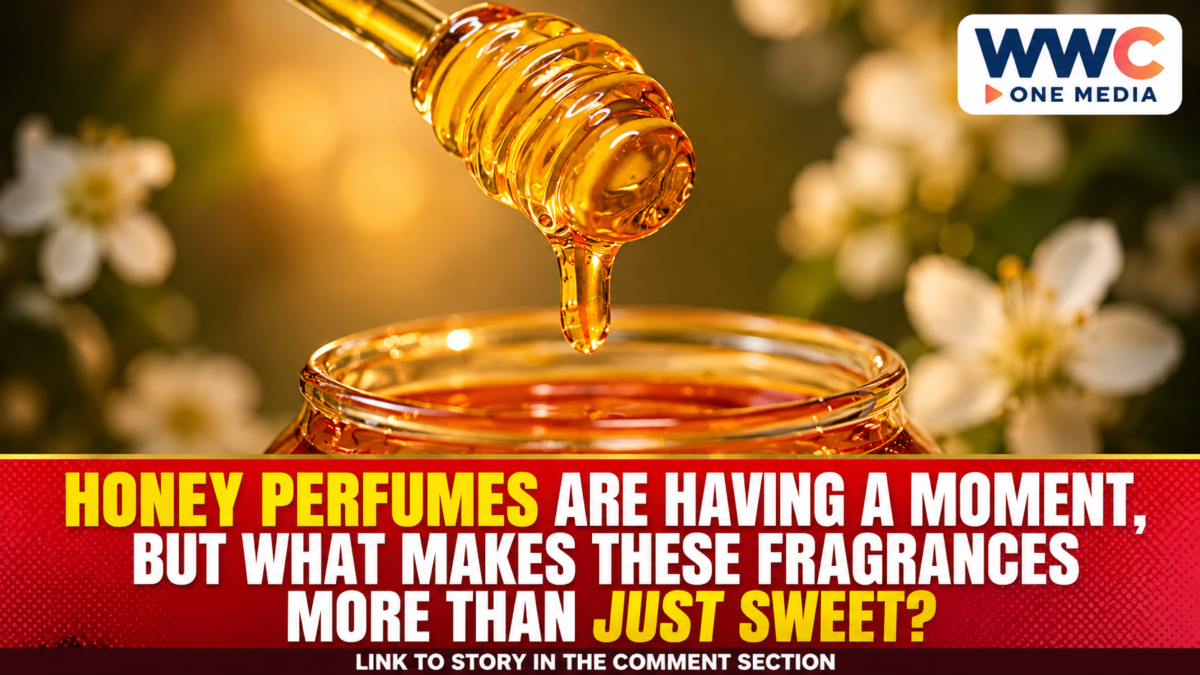
Honey has become an increasingly recognisable ingredient in modern perfumery, appearing in fragrances that combine floral, woody, amber and gourmand elements. From established British perfume houses to contemporary fragrance brands, honey-inspired compositions are demonstrating how a familiar natural ingredient can be transformed into sophisticated scent experiences.
The appeal is not simply about making a perfume smell sweet. Perfumers use honey accords to introduce warmth, depth and texture, often combining them with ingredients such as vanilla, rose, oud, tobacco and citrus.
For the fragrance industry, this creates an opportunity to develop products that appeal to consumers looking for something different from conventional floral and fruity perfumes.
Why honey has a place in modern perfumery
Honey has a distinctive scent profile that can be interpreted in several ways.
Depending on the composition, it can smell warm, floral, waxy, sugary, earthy or slightly smoky. This versatility makes it useful in both traditional perfumery and contemporary gourmand fragrances.
Unlike a straightforward vanilla or caramel accord, honey can introduce several dimensions to a fragrance. It can soften stronger ingredients, add richness to floral compositions or create contrast against darker woody notes.
Perfumers can also construct honey-like accords using fragrance materials rather than relying exclusively on honey itself as a raw ingredient.
This distinction is important because the scent described on a perfume’s marketing materials does not necessarily indicate that the finished product contains edible honey.
Honey-inspired fragrances are therefore best understood as olfactory interpretations rather than literal bottled versions of the ingredient.
How established perfume houses interpret honey
Floris London Honey Oud Eau De Parfum Spray 3.4 oz 100 ml For Men | MaxAroma.com
One example is Floris London and its Honey Oud Eau de Parfum.
The fragrance combines English honey and vanilla with oud, rose and patchouli. Its official product description identifies bergamot and honey among the top notes, followed by oud, patchouli and rose at the heart.
The base includes amber, labdanum, oud, musk and vanilla.
This composition demonstrates how honey can be used to soften a fragrance built around deeper ingredients. Rather than making sweetness the only defining characteristic, the combination creates a broader amber and woody profile.
The fragrance also draws inspiration from baklava, a dessert traditionally associated with layers of pastry, honey and nuts.
The result illustrates an approach increasingly relevant to gourmand perfumery: using familiar food-related references as creative starting points while developing compositions intended for everyday fragrance use. Floris London UK
Guerlain shows how honey can transform darker fragrance notes
Guerlain Launches TOBACCO HONEY for its L’ART & LA MATIÈRE ~ New Fragrances
Another interpretation comes from Guerlain through its Tobacco Honey Eau de Parfum.
The fragrance combines honey with a tobacco accord, vanilla, tonka bean, sesame, aniseed and clove. Its woody foundation includes sandalwood and oud.
The composition was developed by Delphine Jelk, Guerlain’s Perfume Creation Director and Perfumer.
Rather than presenting honey as a light, sugary ingredient, the fragrance uses it to create contrast with tobacco’s deeper character.
The product also received the Fragrance Foundation 2024 Perfume Extraordinaire Award, a recognition identified on Guerlain’s official product page.
This is an interesting direction for luxury perfumery because it challenges the assumption that honey-inspired fragrances must always be delicate, floral or conventionally feminine.
Honey can also be part of a more complex composition with substantial woody and tobacco characteristics. Eau De Parfum ⋅ GUERLAIN+1
Lush takes a different approach with The Bee’s Knees
British cosmetics company Lush offers another interpretation through The Bee’s Knees, a perfume introduced in 2024.
The product was created by Lush perfumer Alina, drawing inspiration from memories of her father tending to bees.
Its composition combines earthy and slightly smoky characteristics with tobacco, osmanthus, neroli and orange flower.
The combination gives the fragrance a different identity from the richer amber and oud compositions offered by Floris and Guerlain.
Lush also offers a solid perfume version, providing an alternative format for consumers who prefer a portable fragrance product.
The brand identifies organic ethanol made from regeneratively farmed sugar cane as part of its liquid perfume formulation.
This illustrates another development in the fragrance category: brands are competing through product format, ingredient positioning and creative storytelling, not just the scent itself. LUSH+1
Jo Malone explores a lighter interpretation of honey
Fragrance entrepreneur, perfumer Jo Malone
Not every honey fragrance needs to be rich or heavily sweet.
Jo Malone London has explored a lighter interpretation through Starlit Mandarin & Honey.
The brand describes the composition through the combination of honey, yellow mandarin, dried grass, hay and geranium.
The citrus element provides brightness, while honey introduces warmth. The floral and grassy components help create a composition that differs from heavier honey-and-oud fragrances.
This demonstrates why honey is a versatile fragrance ingredient. Its character can change significantly depending on the materials surrounding it.
A composition featuring citrus and green notes can communicate a different experience from one built around tobacco, vanilla and dark woods. Jo Malone London
What honey perfumes mean for the Philippine beauty market
The Philippines offers an interesting market for fragrances that balance sweetness with warmth and freshness.
Consumers regularly encounter hot and humid conditions, which can influence how perfumes develop and project after application.
A rich composition containing vanilla, oud and honey may feel very different from a lighter fragrance built around citrus, flowers and green notes.
This does not mean one fragrance category is automatically better suited to everyone. Personal preference, skin chemistry, application and the environment all influence the wearing experience.
The Philippine fragrance market also has an opportunity to develop its own interpretations of gourmand perfumery.
Local ingredients and familiar aromas could provide inspiration for compositions that appeal to consumers looking for something beyond imported international fragrance profiles.
WWC ONE MEDIA previously examined this opportunity in its report on Filipino perfume brands reaching international markets.
That development is relevant because the next stage of Philippine perfumery could involve more experimentation with locally recognisable ingredients and distinctive fragrance identities.
For readers interested in the science and history behind fragrance creation, WWC also explored books covering perfume, scent and the chemistry of smell.
What consumers should consider before buying a honey fragrance
The name of a perfume does not always tell the complete story of its scent.
A honey fragrance can be sweet, smoky, floral, woody, powdery or amber-based. Two products featuring the same headline ingredient can therefore produce very different experiences.
Consumers should examine the complete fragrance description rather than relying on the honey label alone.
Testing a fragrance on the skin is also useful because the opening impression may differ from the scent that develops after several hours.
Where possible, sampling a smaller size before purchasing a full bottle can help avoid spending on a fragrance that does not suit personal preferences.
Another consideration is the distinction between a perfume’s advertised scent notes and its ingredient declaration. A honey note does not automatically mean that natural honey is included in the formulation.
That distinction is particularly important for consumers who check ingredients because of allergies or personal preferences.
What happens next
Honey-inspired fragrances offer perfume houses room to experiment with different scent combinations while appealing to consumers interested in gourmand and unconventional compositions.
The examples from Floris, Guerlain, Lush and Jo Malone London demonstrate that honey can occupy several roles within perfumery, from a supporting sweet note to a central feature of a complex fragrance.
The commercial opportunity lies in giving consumers more than a familiar scent. Product identity, craftsmanship, packaging and a distinctive fragrance composition all contribute to how a perfume is positioned.
For the Philippine beauty market, the development of local fragrance houses creates another opportunity to explore ingredients and scent memories that can distinguish homegrown products internationally.
Honey may be an ancient natural ingredient, but its place in modern perfumery continues to evolve.
The bigger story is not simply that perfumes are becoming sweeter. It is how perfumers are transforming familiar ingredients into increasingly varied expressions of luxury, creativity and personal identity.
Frequently Asked Questions
1. What does honey perfume smell like?
Honey perfumes can smell sweet, warm, floral, waxy, woody or smoky. Their overall character depends on the other fragrance notes used in the composition.
2. Which luxury perfumes feature honey notes?
Examples include Floris Honey Oud, Guerlain Tobacco Honey and Jo Malone London’s Starlit Mandarin & Honey.
3. Are honey perfumes always sweet?
No. Some combine honey with tobacco, oud, woods and spices, creating deeper and less sugary fragrance profiles.
4. Is natural honey used in honey-inspired perfumes?
Not necessarily. Honey can be represented through fragrance accords, and a listed scent note does not establish that actual honey is present in the formula.
5. Are honey perfumes suitable for everyday use?
It depends on the fragrance’s composition and the wearer’s preferences. Lighter honey-and-citrus combinations may appeal to people seeking fresher scents, while stronger amber and oud compositions may suit those who prefer richer fragrances.