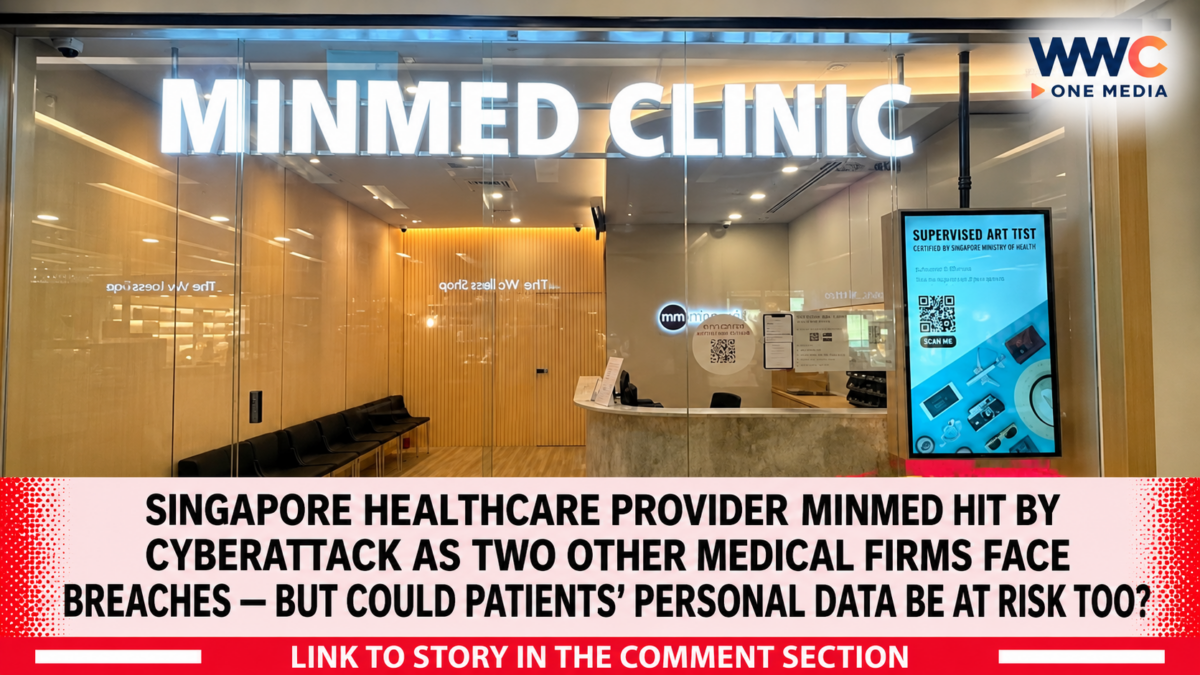
SINGAPORE — Another cybersecurity incident has hit Singapore’s healthcare sector, this time involving Minmed Group, a private healthcare and wellness provider whose system supports teleconsultation and health-screening services.
Minmed disclosed on November 11, 2026, that it had been affected by what it described as a “malicious cybersecurity incident.”
The company said its preliminary investigations indicated that the incident was confined to a specific standalone system supporting its teleconsultation and health-screening business. It stressed that clinical records had not been affected.
Minmed also confirmed that it had engaged cybersecurity and digital-forensics specialist Ensign InfoSecurity, reported the incident to Singapore’s Personal Data Protection Commission (PDPC), and filed a police report.
The company said all its healthcare services and clinics remained operational.
But the disclosure raises an important question: If clinical records were not affected, what information or systems were accessed during the incident?
Minmed has not publicly provided a complete account of the data involved, the number of people potentially affected or how the unauthorised party gained access.
The incident also comes amid a series of cybersecurity disclosures involving Singapore healthcare providers, including Doctor Anywhere and Fullerton Health.
For patients and customers who increasingly depend on digital healthcare services, the latest incident is another reminder that protecting medical information requires more than keeping clinical records secure.
Minmed Confirms Malicious Cybersecurity Incident
Minmed announced the incident on Wednesday, November 11, saying a standalone system supporting its teleconsultation and health-screening operations had been affected.
The company said it acted immediately after discovering the malicious threat and took steps to contain the incident.
It subsequently engaged Ensign InfoSecurity to support a formal investigation and strengthen its systems.
According to Minmed, Ensign independently validated the security fixes that had been deployed and confirmed that the identified system vulnerabilities had been secured as of November 5.
That date is significant because it means the security fixes had already undergone independent validation before Minmed publicly disclosed the incident on November 11.
However, confirmation that identified vulnerabilities have been secured does not, by itself, establish the full extent of any earlier unauthorised access.
The investigation must still establish what happened, what information may have been accessed and whether any additional security risks remain.
Minmed has not publicly disclosed the technical details of the intrusion or identified the party responsible.
Were Patients’ Medical Records Exposed?
One of the most important assurances in Minmed’s announcement is that clinical records were not affected.
The company said its investigations to date showed that the incident was limited to a specific standalone system supporting its teleconsultation and health-screening business.
This distinction matters because the affected system supports healthcare services, but that does not automatically mean the provider’s clinical-record systems were compromised.
However, the statement should not be interpreted as confirmation that no personal information of any kind was involved.
Minmed has not publicly provided a detailed breakdown of the information potentially accessed or confirmed whether any non-clinical customer information was exposed.
It has also not announced a verified number of affected customers.
Until the investigation provides those details, it would be premature to describe the incident as a confirmed exposure of patients’ medical records—or to conclude that no personal information was involved.
The distinction between clinical records and other personal information is important for customers trying to understand the actual risks.
Ensign InfoSecurity Brought In to Investigate and Secure Systems
Minmed engaged Ensign InfoSecurity, an independent cybersecurity and forensic specialist, after discovering the incident.
The company’s role includes supporting the formal investigation and helping Minmed strengthen its security measures.
Minmed said Ensign had independently validated the fixes deployed by its team and confirmed that the identified vulnerabilities had been secured by November 5.
The company also said it would continue working with the cybersecurity specialist to monitor its systems and maintain heightened vigilance.
However, cybersecurity remediation and forensic investigation are two different stages of incident response.
Securing an identified vulnerability can help prevent further exploitation, while a forensic investigation seeks to determine how an intrusion occurred, which systems were accessed and whether information was taken.
Minmed has not yet published a full technical account of those findings.
PDPC and Police Notified as Investigation Continues
Minmed confirmed that it had reported the cybersecurity incident to Singapore’s Personal Data Protection Commission and made a police report.
The company said it was cooperating fully with the relevant authorities.
These steps place the incident within Singapore’s wider data-protection and law-enforcement framework.
The PDPC oversees compliance with the Personal Data Protection Act, including organisations’ responsibilities when handling personal information.
However, notification of the regulator does not mean that the investigation has been completed or that a regulatory finding has already been made.
Minmed has not announced any final findings from the authorities.
The company also said it could not provide further details while investigations remained ongoing.
Minmed Clinics and Healthcare Services Remain Operational
Despite the cybersecurity incident, Minmed said all its healthcare services and clinics remained operational.
This means the company has not announced a general shutdown of its healthcare operations as a result of the incident.
Its services include general practice, dental care, health screenings, teleconsultations, vaccinations and counselling.
The group operates clinics at locations including Paragon, United Square, AMK Hub and JEM, according to its website and reporting by The Straits Times.
Customers who have questions about the incident can contact Minmed at support@minmed.sg.
The company apologised for the concern caused and said protecting customers’ personal and health-related information remained a priority.
Minmed Is Not the Only Healthcare Provider Facing a Cybersecurity Incident
The latest disclosure is particularly concerning because it follows two other cybersecurity incidents involving healthcare providers in Singapore.
Doctor Anywhere reported a malicious cyber incident on November 6, while Fullerton Health disclosed unauthorised access involving a server supporting its Migrant Worker Primary Care Plan programme.
These are separate incidents, and there is no established public evidence that the three organisations were targeted by the same attacker or that their breaches are connected.
Nevertheless, the close timing has intensified questions about cybersecurity safeguards across Singapore’s healthcare industry.
Doctor Anywhere Confirms Personal Data Leak
On November 6, healthcare provider Doctor Anywhere disclosed that an unknown third party had gained unauthorised access to its systems, resulting in the leak of users’ personal data.
The company did not initially disclose the number of affected customers or provide a complete list of the information involved.
It said clinical records were not affected and that affected users were being notified.
Doctor Anywhere also engaged Ensign InfoSecurity to support its investigation and strengthen its IT systems.
The company reported the incident to the PDPC and filed a police report.
Its services remained operational.
The incident is particularly relevant to Minmed because both providers offer digital healthcare services and have engaged the same cybersecurity specialist.
However, the use of the same specialist does not establish a connection between the incidents.
WWC ONE MEDIA previously examined the wider implications of the Doctor Anywhere cybersecurity incident and the separate M1 customer-data breach, highlighting the potential risks associated with personal information exposed through digital service providers.
Fullerton Health Reports Possible Exposure of Migrant Workers’ Personal Information
Fullerton Health separately disclosed a cybersecurity incident involving unauthorised access to a server supporting its Ministry of Manpower-administered Migrant Worker Primary Care Plan.
The provider said it became aware of the incident on October 31.
Its preliminary assessment indicated that the potentially affected information included migrant workers’ full names, Foreign Identification Numbers, dates of birth, mobile numbers, email addresses and residential addresses.
Fullerton Health said the affected information did not contain health or medical records or personal financial information.
The company also said there was no evidence at the time that systems supporting its other programmes, clients or patients had been affected.
It notified the PDPC, made a police report and contacted the Ministry of Manpower.
Importantly, the Fullerton Health incident involved a specific system supporting the Primary Care Plan. It should not be confused with Minmed’s separate teleconsultation and health-screening system incident.
The two cases nevertheless illustrate how different healthcare providers can face distinct security risks involving systems that handle personal information.
A Wider Pattern of Data Breaches Raises Questions About Singapore’s Digital Security
The healthcare incidents are part of a broader series of cybersecurity disclosures involving organisations in Singapore.
Recent reports have included incidents affecting telecommunications, financial services, media and travel-related systems.
For example, MoneySmart disclosed that an unauthorised third party had accessed its internal IT systems and copied customer information belonging to users in Singapore and Hong Kong.
The company said it had engaged cybersecurity and digital-forensics specialists and notified regulators in both markets.
WWC ONE MEDIA previously reported on the MoneySmart data breach affecting customers in Singapore and Hong Kong, including the unanswered questions surrounding the amount and type of information involved.
Separately, Singapore Airlines disclosed that approximately 46,000 booking records were affected by a cybersecurity incident involving Amadeus, its third-party travel technology provider.
The airline said the incident involved a third-party platform rather than a breach of its own IT systems.
WWC ONE MEDIA also examined the Singapore Airlines data incident involving 46,000 booking records, highlighting the security challenges organisations face when customer information is handled through external technology providers.
These incidents are separate and should not be treated as evidence of one coordinated cyberattack.
However, they demonstrate why organisations across different industries must maintain strong security controls over the systems and third-party services that process customer information.
Why Healthcare Data Security Is Particularly Important
Healthcare providers handle information that can be highly personal.
Depending on the service, their systems may process identity details, appointment information, contact numbers, insurance information, screening arrangements and medical records.
Not every system contains all these categories of information.
But when several services are connected through digital platforms, organisations must ensure that access to each system is properly controlled.
A cybersecurity incident affecting a standalone administrative or service platform can create risks even if clinical-record systems remain unaffected.
This is why the distinction made by Minmed matters.
The company’s statement that clinical records were not affected is reassuring, but the full assessment also depends on what other information was stored or processed in the affected system.
For patients, the key concern is whether their personal information was accessed and whether it could be misused.
For healthcare providers, the challenge is ensuring that systems supporting everyday services are protected to the same high standard as those holding clinical records.
What Should Minmed Customers Do?
Minmed has not publicly announced a confirmed list of affected customers or issued a detailed public breakdown of exposed information.
Customers should therefore avoid assuming that their personal information has been compromised unless they receive an official notification or other verified information.
Nevertheless, sensible precautions remain important.
Customers should:
- Be cautious of unexpected emails, calls or text messages claiming to represent Minmed.
- Avoid clicking suspicious links or opening unexpected attachments.
- Never disclose passwords, banking credentials or one-time passwords to unsolicited callers.
- Verify unusual requests through Minmed’s official contact channels.
- Monitor accounts and communications for suspicious activity.
- Contact Minmed directly if they receive a message claiming their information was affected.
Customers should also remember that scammers can exploit news of a cybersecurity incident by sending fake security notices.
An authentic-looking message mentioning a healthcare provider does not automatically mean it came from that provider.
The Questions Minmed Has Yet to Answer
Although Minmed has confirmed the incident and the security fixes, several important questions remain unresolved.
First, how many customers or individuals may have been affected?
The company has not disclosed a verified number.
Second, what information was accessed?
Minmed has confirmed that clinical records were not affected, but has not publicly provided a comprehensive breakdown of other potentially involved information.
Third, how did the unauthorised party gain access?
The technical cause and method of intrusion have not been publicly explained.
Fourth, was any information copied or taken out of the affected system?
The company’s public statement does not establish whether data was exfiltrated.
Finally, will the investigation lead to additional customer notifications or regulatory findings?
That will depend on the findings of the ongoing investigation and any subsequent action by the relevant authorities.
These questions matter because the seriousness of a cybersecurity incident cannot be measured solely by whether a company remains operational or whether clinical records were affected.
The nature of the information involved, the extent of unauthorised access and the possibility of misuse are equally important.
The Bigger Issue: Can Singapore’s Healthcare Sector Keep Digital Trust Secure?
Minmed’s cybersecurity incident highlights a challenge facing an increasingly digital healthcare industry.
Teleconsultations, online health screenings and connected healthcare platforms offer convenience, but they also require providers to protect the systems that make those services possible.
The recent incidents involving Minmed, Doctor Anywhere and Fullerton Health have placed fresh attention on how healthcare organisations manage cybersecurity risks.
They do not establish that Singapore’s healthcare systems are broadly compromised, nor do they prove that the incidents share a common attacker.
But they do underline the importance of strong access controls, independent security assessments, timely vulnerability fixes and transparent communication when incidents occur.
For Minmed, the immediate priority is to complete its investigation, maintain secure operations and provide further verified information when it becomes available.
For customers, the central question is more personal: whether their information was involved and what protections are in place to prevent it from being misused.
Minmed says clinical records were spared. But until investigators clarify what happened inside the affected system, the most important question remains unanswered: What exactly did the cyber intruder access—and could customers still face risks that have not yet been publicly disclosed?