A devastating morning rush-hour collision in South Korea’s Seongnam city left 57 people injured after a public bus slammed into a line of vehicles waiting at a traffic light, triggering a chain-reaction crash involving 32 vehicles.
The accident happened at approximately 7:34 a.m. on Wednesday, November 11, in Yatap-dong, within the city’s Bundang district, south of Seoul.
The latest reports from the Associated Press, Reuters and Yonhap News Agency put the number of injured at 57, including nine people who sustained serious injuries and 48 who suffered minor injuries. None of the injuries were reported to be life-threatening.
The collision involved four buses, one cargo truck and 27 passenger vehicles. After striking the vehicles, the city bus crashed into a central road barrier, bringing its destructive path to an end.
The bus driver was also injured and taken to hospital after being rescued from the damaged vehicle.
But as investigators work to reconstruct the accident, one question is attracting particular attention: Did the bus suffer a brake failure before ploughing into dozens of vehicles?
Bus Ploughs Into 32 Vehicles During Morning Rush Hour
The crash unfolded near a busy intersection in Yatap-dong as commuters were travelling through the Bundang district.
According to South Korean authorities, the city bus struck vehicles waiting at a traffic signal before continuing into other vehicles along the road.
The impact involved 32 vehicles in total, including the bus that initiated the collision.
Local reporting indicated that the vehicles were struck over a distance of approximately 100 to 150 metres before the bus hit the median barrier.
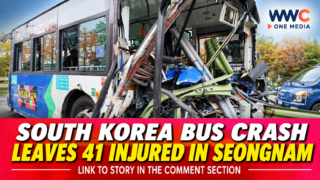
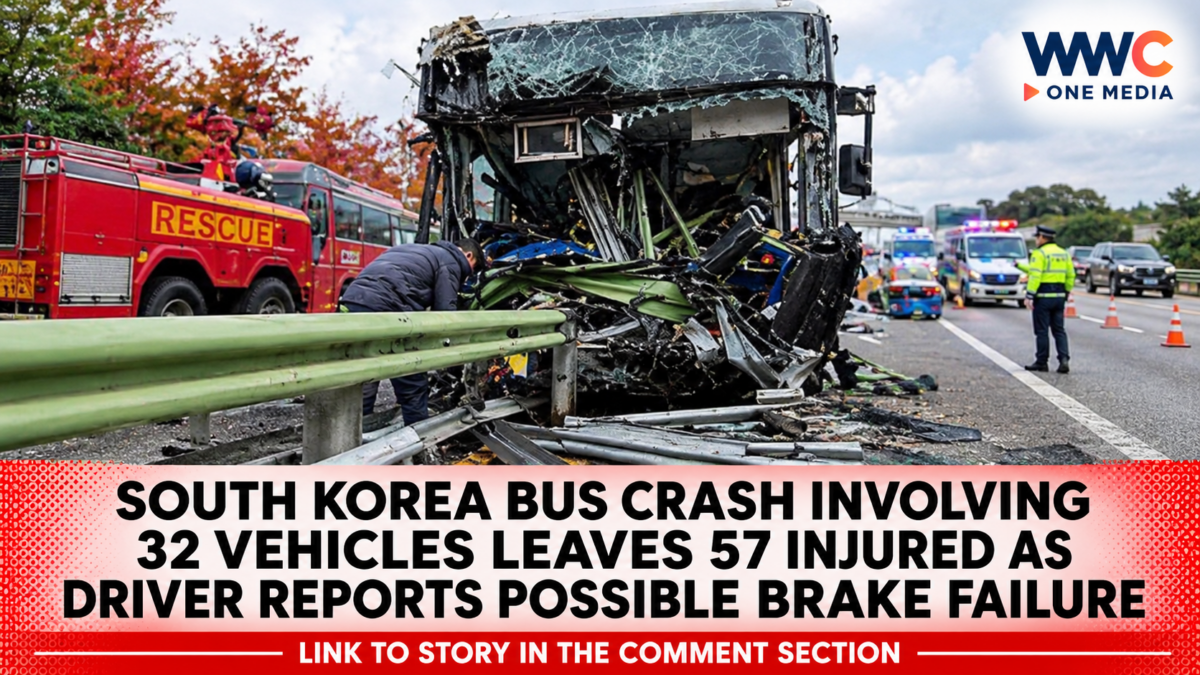
Photographs from the scene showed the front of the bus badly damaged, with its windshield shattered and the vehicle resting against the central barrier. Other damaged vehicles were scattered along the roadway.
The collision created a major emergency response during one of the busiest periods of the morning commute.
57 People Injured, Including Nine Seriously
South Korea’s emergency authorities initially reported 48 injured people in early updates. Subsequent reporting by the Associated Press and Reuters put the updated total at 57.
The latest breakdown was:
- Nine people seriously injured.
- 48 people suffering minor injuries.
- No life-threatening injuries reported in the latest accounts.
- The bus driver was among those injured and was hospitalised.
The presence of several buses among the vehicles involved meant passengers across multiple vehicles were affected.
Emergency personnel established a medical station near the crash site to assess victims and coordinate treatment.
The National Fire Agency said it deployed 88 personnel and 33 vehicles to the scene, underlining the scale of the response required to manage the collision.
Driver Claims the Brakes Failed
One of the most significant developments in the investigation is the bus driver’s reported statement to police.
According to Yonhap and other South Korean media reports, the driver, a man in his 60s, told investigators that the brakes had not worked.
However, authorities have not confirmed that mechanical failure caused the crash.
A preliminary alcohol test reportedly found no alcohol in the driver’s system. Police are also examining whether drugs or other factors may have played a role.
The driver’s account is an important part of the investigation, but it does not establish that the braking system malfunctioned. Investigators will need to examine the vehicle and other evidence before reaching a conclusion.
Black-Box Data and CCTV Could Reveal What Happened
Police are expected to examine the damaged bus’s recording data and CCTV footage from the surrounding area.
These records could help investigators reconstruct the vehicle’s movements before the first collision and establish how the crash unfolded.
The investigation will likely examine several questions:
- Did the bus experience a mechanical or braking-system failure?
- How fast was it travelling before striking the first vehicle?
- Did the driver attempt to brake or avoid the vehicles?
- Were there warning signs of a mechanical problem?
- Did road conditions or another factor contribute to the collision?
Investigators may also examine the vehicle’s mechanical condition and maintenance history.
Until those checks are completed, brake failure remains an unverified explanation reported from the driver’s statement.
Major Traffic Disruption Across Bundang
The accident caused significant disruption in the Bundang district as police and emergency crews closed both directions of the affected road to manage the scene and remove damaged vehicles.
The timing made the disruption particularly serious, with the collision occurring during the morning commute.
Traffic restrictions were necessary to allow rescue personnel to reach injured people, assess the wreckage and coordinate the removal of vehicles.
South Korean broadcaster SBS reported that the road closure caused severe congestion while emergency operations were underway. Traffic flow returned after the scene was cleared.
Why the Crash Raises Questions About Public Bus Safety
The Seongnam collision has renewed attention on the safety of public transportation, vehicle maintenance and mechanical inspections.
Buses are a major part of daily commuting in South Korea, particularly around Seoul and neighbouring cities. A serious collision involving a city bus can affect not only its passengers but also motorists and other commuters sharing the road.
If investigators confirm a braking-system defect, the findings could raise questions about vehicle inspections, maintenance schedules and the responsibilities of the bus operator.
If mechanical failure is ruled out, investigators will need to establish whether driver-related factors, road conditions or another circumstance contributed to the crash.
It is too early to assign responsibility or draw conclusions about the cause.
What Happens Next?
Police will continue examining the driver’s statement, the bus’s mechanical condition and available recording and surveillance footage.
The results should help establish the sequence of events and determine whether a mechanical malfunction or another factor caused the collision.
For the 57 injured people, the immediate concern is medical recovery. For investigators, the priority is determining how a single bus came to strike 31 other vehicles during an ordinary morning commute.
The incident is a stark reminder of how quickly a road accident can escalate into a large-scale emergency.
If the driver’s account of brake failure is supported by technical evidence, the investigation could have wider implications for public bus safety and vehicle maintenance standards in South Korea.
For now, authorities have yet to establish the final cause of the crash.