WASHINGTON / LONDON / SINGAPORE / MANILA — November 7, 2026 | WWC ONE MEDIA | Global Energy, Oil Markets, Shipping and Geopolitics
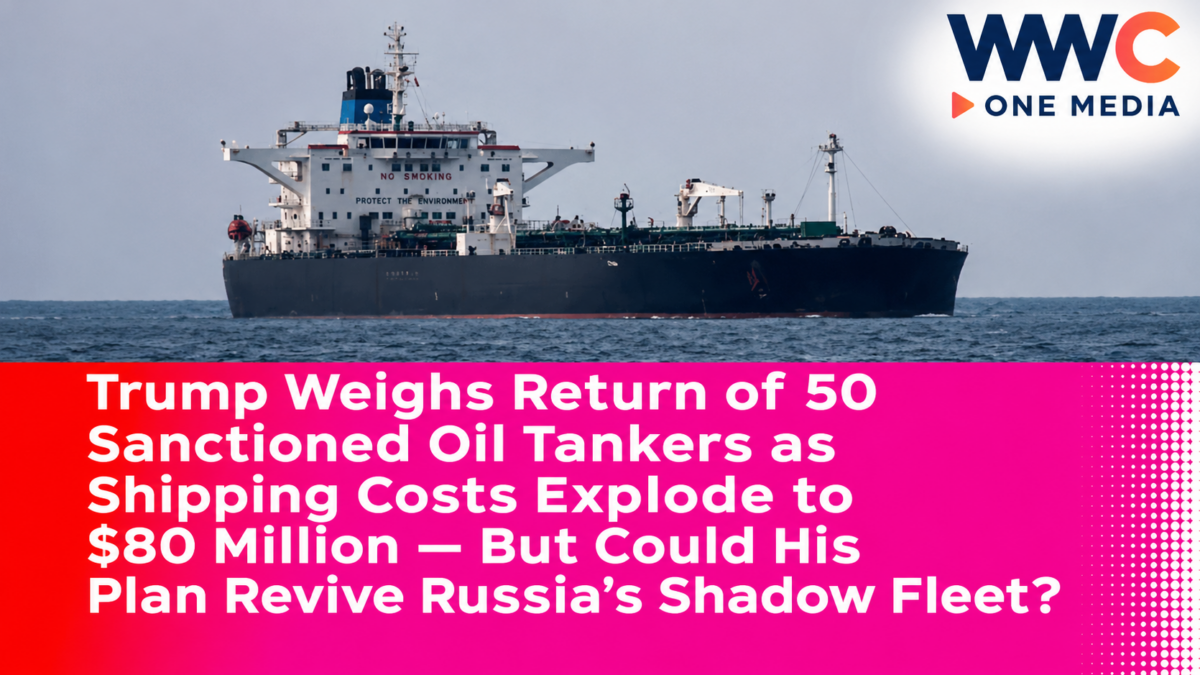
Some of the world’s most powerful oil trading companies are negotiating with the United States to bring approximately 50 blacklisted oil tankers back into legitimate commercial service, as a global shipping crisis sends transportation costs to extraordinary levels.
The negotiations involve industry giants Trafigura, Vitol, Mercuria Energy Group and Abu Dhabi National Oil Company, better known as ADNOC.
According to Bloomberg’s November 6 report, the companies are seeking permission from Washington to purchase or lease vessels previously sanctioned for involvement in restricted oil trade.
The proposal comes as the war involving Iran, continuing sanctions on Russian energy and disruptions around the Strait of Hormuz have created an increasingly severe shortage of commercially available tankers.
The cost of chartering a supertanker from the US Gulf Coast to China reached nearly $80 million in October, approximately ten times its average level before the conflict.
Those extraordinary shipping costs are threatening oil trade, pushing up transportation expenses and making American crude increasingly difficult for some Asian buyers to afford.
The Trump administration is now considering whether some vessels previously associated with sanctioned oil shipments could be repaired, inspected and returned to the legitimate commercial fleet.
But the initiative carries significant political and legal risks.
Many of the affected tankers have been connected to oil shipments from Russia, Iran and other sanctioned jurisdictions.
Allowing them to return to commercial operations could increase shipping capacity and reduce costs.
However, critics worry that relaxing restrictions could weaken the effectiveness of Western sanctions and create opportunities for companies connected to prohibited petroleum trade.
The question is whether Washington can transform blacklisted tankers into legitimate commercial vessels without undermining the sanctions intended to constrain Russia and Iran.
Four Major Oil Companies Seek Access to 50 Blacklisted Tankers
The latest negotiations involve some of the biggest names in international energy trading.
Trafigura, Vitol and Mercuria collectively handle enormous volumes of oil and petroleum products through global trading and logistics networks.
ADNOC is the national oil company of the United Arab Emirates and a major participant in international energy markets.
Bloomberg reported that the four companies are in discussions with US officials regarding licenses that could permit them to acquire or lease sanctioned tankers.
The discussions concern approximately 50 vessels.
US Treasury officials are considering applications individually rather than authorizing all blacklisted tankers to resume unrestricted operations.
As of November 6, no final decisions on the reported group of vessels had been announced.
The proposed licenses would allow approved ships to transport petroleum cargoes that comply with applicable US sanctions.
They would not automatically authorize the transportation of prohibited Russian or Iranian oil.
That distinction is central to the administration’s position.
Washington is trying to increase the number of commercially usable vessels while maintaining restrictions on sanctioned petroleum transactions.
The companies’ interest also reflects the extraordinary profitability of tanker transportation during the current supply disruption.
Shipping companies that can provide available, properly insured vessels are commanding historically elevated charter rates.
For oil traders, access to additional tankers could improve their ability to secure cargoes, meet delivery obligations and reduce transportation bottlenecks.
Supertanker Shipping Costs Hit Nearly $80 Million
The global tanker shortage has become a major financial problem for petroleum markets.
According to Bloomberg-derived reporting published by OilPrice.com, chartering a supertanker to carry crude oil from the US Gulf Coast to China cost nearly $80 million in October.
That was roughly ten times the average cost before the Iran conflict disrupted shipping patterns.
The increases have been driven by several factors.
First, the conflict has disrupted normal tanker movements through the Persian Gulf.
Second, vessels have been forced to take longer routes or wait for safer shipping conditions.
Third, higher security risks have increased insurance costs.
Fourth, some ships have been tied up in complicated transfers and logistical arrangements around the Strait of Hormuz.
Together, these disruptions have reduced the effective supply of available tanker capacity.
Even when ships remain physically operational, longer journeys and extended waiting periods mean they complete fewer voyages over a given period.
That reduces transportation availability without necessarily reducing the number of ships in existence.
The result has been a sharp increase in charter rates.
US refiner Valero estimated in October that shipping American crude oil to Asia had become significantly more expensive.
Transportation costs were approximately $30 to $35 per barrel, compared with about $5 per barrel a year earlier.
For a shipment involving millions of barrels, those differences translate into enormous additional costs.
And those costs can influence where refiners choose to purchase crude.
Asian Buyers Are Cutting Orders for American Oil
The shipping crisis is already affecting international trade.
According to the November 6 reporting, Asian orders for US crude oil scheduled for November delivery fell by approximately 50% in October.
The decline raised the possibility that US crude shipments to Asia could fall to their lowest level in seven years.
But reduced Asian orders do not necessarily mean that demand for petroleum has disappeared.
Instead, refiners may be reconsidering where to purchase oil because transportation costs have made certain shipments uneconomic.
If a buyer can secure an alternative crude grade with lower delivery expenses, it may become preferable to importing American oil.
That creates a problem for US producers and exporters.
American crude may remain competitive at the point of production, but extraordinarily high freight charges can erase its price advantage once the cargo reaches an overseas refinery.
The resulting trade disruptions can alter international oil flows.
Exporters may seek different markets.
Refiners may switch suppliers.
And trading companies may look for additional vessels capable of operating through difficult shipping routes.
For the Trump administration, restoring legitimate tanker capacity is one possible way to address the problem.
Washington Has Already Started Exploring a Shadow Fleet Conversion Plan
The current negotiations follow an initiative announced by US Energy Secretary Chris Wright in October.
Speaking at a Citadel Securities event in New York on October 19, Wright said the administration was working with investors interested in purchasing sanctioned oil tankers.
The idea involves acquiring vessels that have been blacklisted, refurbishing them where necessary and using them to transport oil that is not subject to sanctions.
Wright described the concept as moving vessels from the so-called bad-guy fleet into the legitimate commercial fleet.
The administration has emphasized that the initiative would not simply authorize sanctioned Russian or Iranian oil exports.
Instead, individual vessels could become eligible for legitimate commercial activity after satisfying applicable requirements.
Reuters separately reported on October 15 that the administration was considering transactions through the Treasury Department’s Office of Foreign Assets Control, commonly known as OFAC.
The approval process would involve reviewing prospective buyers, vessel ownership and the proposed commercial use.
Any authorization would have to comply with the terms established by the US government.
A license to buy or operate a vessel is not equivalent to unrestricted permission to transport sanctioned petroleum.
That distinction is especially important given the continuing economic sanctions targeting Russia and Iran.
What Is the Shadow Fleet, and Why Are Hundreds of Tankers Blacklisted?
The term shadow fleet, sometimes called the dark fleet, generally refers to vessels operating through opaque ownership, insurance and trading arrangements.
Some of these ships have been associated with efforts to circumvent international sanctions or restrictions on petroleum trade.
They may operate under complex corporate ownership structures or change vessel registrations and management arrangements.
Some have been accused of using irregular tracking practices or conducting ship-to-ship transfers that complicate efforts to determine cargo origins.
However, not every vessel described as part of the shadow fleet has the same legal status.
Some ships are directly designated under US sanctions.
Others face restrictions imposed by the European Union, Britain or other jurisdictions.
And some vessels attract scrutiny because of their ownership or operating practices without necessarily appearing on every sanctions list.
According to Treasury data compiled by Bloomberg, 1,568 vessels were subject to US sanctions as of November 4, 2026.
Of those, 462 were crude oil tankers.
These figures represent a broader pool than the approximately 50 vessels reportedly under discussion with major oil traders.
Not all sanctioned vessels are suitable for conventional commercial operations.
Some may be too old, require significant repairs or lack documentation acceptable to international insurers and port authorities.
Others may already be transporting cargoes through restricted trading networks.
Those differences will influence how much additional shipping capacity the initiative could actually create.
The Biggest Obstacle: Legalizing a Tanker Does Not Make It Immediately Usable
The US government’s proposed strategy appears relatively straightforward.
Allow legitimate investors to acquire sanctioned vessels, ensure they comply with applicable requirements and return them to commercial service.
But maritime specialists warn that the process could be much more difficult.
Many shadow fleet tankers are aging ships.
Some have operated under limited maintenance arrangements or outside conventional insurance and classification systems.
Before joining mainstream commercial fleets, such vessels may require repairs, technical inspections and updated documentation.
Shipowners must also obtain acceptable insurance.
That can be particularly complicated when a vessel remains affected by European or British restrictions.
Reuters reported that maritime industry sources questioned whether US sanctions relief would produce an immediate or substantial decline in freight rates.
Even if Washington authorizes a particular transaction, EU and UK sanctions may continue applying.
That could restrict access to insurance, financing, ports or other commercial services.
Moreover, allowing a vessel that is already trading to enter legitimate markets does not necessarily increase the total number of ships transporting oil.
The largest potential benefit would come from returning previously inactive vessels to operational service.
That is why the precise identity and condition of the proposed 50 tankers matter.
Could the Plan Reduce Global Shipping Costs?
In theory, increasing the supply of available tankers should help reduce transportation costs.
Oil trading companies compete for vessels to move crude and petroleum products.
When too many cargoes are chasing too few ships, charter rates rise.
Adding usable capacity could ease the imbalance.
However, the benefit would depend on the type and number of tankers entering service.
A handful of additional vessels may have limited impact on a globally disrupted market.
Dozens of properly refurbished tankers could provide more meaningful relief, particularly along routes experiencing acute shortages.
But the ships would also need access to safe operating routes.
If conflict continues disrupting the Strait of Hormuz, insurance costs, voyage delays and security risks may remain elevated.
That means additional tanker capacity alone may not restore freight rates to prewar levels.
Industry analysts have therefore urged caution about the possible impact of the administration’s proposal.
The initiative could help relieve specific transportation bottlenecks.
It cannot, by itself, eliminate the geopolitical conditions creating them.
Iran War Turns the Strait of Hormuz Into a Global Oil Bottleneck
The Strait of Hormuz remains central to the global shipping crisis.
The narrow maritime passage connects the Persian Gulf with the Gulf of Oman and international shipping routes.
Under normal conditions, roughly one-fifth of global petroleum liquids consumption passes through the strait.
The conflict involving Iran has disrupted commercial shipping, forcing oil producers and traders to adopt more complicated transportation arrangements.
Saudi Arabia and other exporters have explored alternative routes and ship-to-ship transfers to keep crude moving.
But those methods introduce additional costs and logistical requirements.
As WWC ONE MEDIA previously reported on Saudi Arabia’s emergency oil-shipping arrangements through Oman, moving cargoes through alternative transfer points does not necessarily eliminate exposure to the Strait of Hormuz.
Some vessels must still transit the dangerous waterway before transferring oil to ships waiting elsewhere.
That can consume additional tanker capacity and increase the time required to complete shipments.
For oil traders, the problem extends beyond the availability of crude.
They must also ensure that ships can transport it safely, legally and economically.
Russia Sanctions Complicate Trump’s Energy Strategy
The initiative also raises sensitive questions about the sanctions imposed on Russia following its invasion of Ukraine.
Western governments have sought to restrict Russian energy revenue while avoiding uncontrolled disruptions to global petroleum supplies.
But the combination of the Ukraine conflict and the Iran war has created difficult trade-offs.
Washington wants to keep pressure on Moscow.
At the same time, the administration is searching for ways to increase fuel availability and reduce transportation expenses.
Reuters reported that the US government’s tanker initiative emerged alongside controversial measures permitting certain transactions involving Russian diesel.
Those arrangements have drawn criticism from Ukrainian officials and some lawmakers who worry that renewed Russian petroleum exports could provide Moscow with additional revenue.
As WWC ONE MEDIA reported on the Russia-US diesel arrangement involving a planned 40,000-ton shipment, temporary trade authorizations can create a legal pathway for specified transactions without eliminating the entire sanctions regime.
The same principle applies to blacklisted tankers.
Washington could authorize particular vessels to carry legitimate cargoes while maintaining prohibitions on other transactions.
But the policy would require careful oversight to ensure that the arrangements do not facilitate prohibited oil sales.
Europe’s Sanctions Could Become a Major Roadblock
Even if the United States approves certain tankers, international restrictions could continue limiting their commercial use.
The European Union and United Kingdom maintain sanctions affecting vessels, shipping services and some petroleum transactions.
London also plays an important role in the international maritime insurance market.
Commercial shipowners rely on insurance arrangements covering liabilities such as pollution, collisions and cargo damage.
Without acceptable coverage, ships may struggle to obtain port access or enter mainstream trading arrangements.
Consequently, a vessel authorized to operate under US rules may still encounter restrictions elsewhere.
That could make the conversion process slower and more expensive than anticipated.
For oil trading companies, the commercial viability of acquiring a sanctioned tanker will depend partly on how many international jurisdictions recognize its new status.
The risk is that companies spend money acquiring and repairing vessels but remain unable to use them across important shipping routes.
That uncertainty may discourage some investors from participating.
Oil Markets Are Already Showing Signs of Change
The tanker discussions come as the global oil market experiences another period of extraordinary volatility.
On November 6, Bloomberg reported that Brent crude had traded below $98 per barrel as traders monitored diplomatic efforts to reduce tensions involving Iran.
Prices have moved sharply in response to speculation about negotiations, military developments and disruptions to oil supplies.
Reuters also reported on November 6 that some market indicators were beginning to point toward improved global supply conditions.
JPMorgan estimated that oil supply exceeded consumption by approximately 1.1 million barrels per day in September and 1.4 million barrels per day in October.
However, those estimates coexist with continued shipping disruptions and tight regional petroleum-product markets.
A market can have adequate crude oil in aggregate while still experiencing expensive transportation and shortages of specific refined fuels.
That distinction is especially important during the current crisis.
As WWC ONE MEDIA reported on Asia’s falling fuel-oil prices amid hopes of an Iran peace agreement, lower benchmark prices do not necessarily mean shipping costs or regional supply risks have returned to normal.
The shortage of commercially available tankers remains one reason petroleum trade can be expensive even when crude benchmarks decline.
Why Asia Could Benefit From More Tankers
Asian economies are particularly exposed to international shipping costs because many depend heavily on imported energy.
Major buyers include China, India, Japan and South Korea.
Their refineries purchase crude from multiple regions, including the Middle East, the United States, Africa and Latin America.
When freight rates rise, the delivered cost of crude increases.
That can affect refinery economics and influence which suppliers are most competitive.
Additional legitimate tankers could help restore flexibility to international oil transportation.
But the financial benefit would depend on whether charter rates actually decline.
The effects would also vary by market.
A refinery importing US crude across the Pacific may experience different costs from one receiving Middle Eastern oil.
Similarly, a shipping-cost reduction might not immediately translate into lower retail gasoline or diesel prices.
Refining margins, inventories, exchange rates, taxes and distribution expenses all influence the final price consumers pay.
What the Sanctioned Tanker Plan Means for the Philippines
The proposed policy could carry important implications for the Philippines, an economy exposed to international petroleum prices and shipping disruptions.
Higher transportation costs can make imported crude and refined products more expensive.
Those pressures may affect fuel suppliers, logistics companies, agricultural producers and public transportation operators.
As WWC ONE MEDIA previously examined in its coverage of the global diesel supply crisis, shortages of transportation fuel can spread through supply chains and influence the prices of everyday goods.
For Philippine motorists, sustained reductions in global freight rates could eventually help moderate import costs.
However, any benefits would depend on the type of petroleum products being shipped, regional prices and the peso-dollar exchange rate.
Domestic pump prices are not determined solely by the cost of hiring crude oil tankers.
A stronger US dollar could offset part of the savings from cheaper international oil transportation.
Likewise, disruptions to refinery output could keep diesel prices elevated even if crude shipping becomes less expensive.
The most important potential benefit would be improved stability in the international oil supply chain.
For an energy-importing country, reliable access to petroleum products can be as important as changes in headline crude prices.
Three Possible Outcomes for Trump’s Tanker Initiative
The next stage of negotiations could produce several different outcomes.
Scenario 1: Washington approves selected tankers and shipping costs ease.
If US authorities authorize commercially viable vessels, and buyers can obtain financing, repairs and insurance, additional tanker capacity could help reduce freight pressure.
The benefit would likely emerge gradually rather than immediately.
Scenario 2: Legal and technical problems limit the impact.
Even with US approvals, aging vessels may require substantial refurbishment.
International sanctions and insurance restrictions could also reduce the number of ships capable of entering mainstream operations.
Under this scenario, the initiative would produce only limited additional capacity.
Scenario 3: Political opposition complicates the plan.
Critics could argue that the policy weakens pressure on Russia and Iran.
Any evidence of sanctions circumvention could trigger additional scrutiny or tighter licensing requirements.
That might delay approvals or discourage companies from participating.
The outcome will depend on individual Treasury decisions, the condition of the vessels and developments in the Middle East conflict.
What Happens Next?
Several developments will determine whether the plan moves forward.
First, the US Treasury Department must decide whether to approve the proposed transactions involving the approximately 50 tankers.
Second, prospective buyers and charterers will need to establish that the vessels can legally and safely carry permitted cargoes.
Third, operators must resolve any technical, maintenance, classification and insurance issues.
Fourth, traders will assess whether the cost of purchasing or leasing the ships is justified by expected freight earnings.
Finally, the international oil market will continue responding to developments involving Iran, Russia and global petroleum demand.
The administration’s initiative could become one part of a wider effort to improve energy logistics.
But the number of additional ships that actually enter legitimate service will be more important than the number of licenses discussed.
The Bigger Question: Can Trump Rebuild the Oil Fleet Without Weakening Sanctions?
The global oil industry is confronting an extraordinary contradiction.
Hundreds of tankers have been blacklisted under sanctions intended to restrict prohibited petroleum trade.
At the same time, shipping companies are struggling to find enough commercially acceptable vessels to move oil around the world.
The resulting shortage has contributed to historically high freight costs and complicated energy supply chains.
Now, the Trump administration is considering whether some of those blacklisted ships can be brought into legitimate commercial service.
Major oil trading companies see a potential opportunity.
Additional tankers could help reduce transportation bottlenecks.
Oil exporters could gain access to more shipping capacity.
And energy-importing economies could eventually benefit from improved logistics and potentially lower delivered costs.
But the strategy also creates difficult questions about sanctions enforcement, vessel safety and international cooperation.
A ship that previously carried sanctioned petroleum cannot simply become a fully accepted commercial tanker through a political announcement.
It must satisfy legal, technical and insurance requirements.
And governments must ensure that any authorization does not facilitate prohibited trade.
For now, approximately 50 vessels are reportedly under discussion—not confirmed for unrestricted operation.
The next decisions by Washington could reveal whether the administration’s strategy represents a meaningful solution to the tanker shortage or a policy with limited practical results.
As the world’s biggest oil traders push to reopen access to blacklisted vessels, one question now hangs over global energy markets: Will Trump’s plan bring down the cost of moving oil—or could the attempt to revive sanctioned tankers create a new controversy over Russia, Iran and the future of Western sanctions?