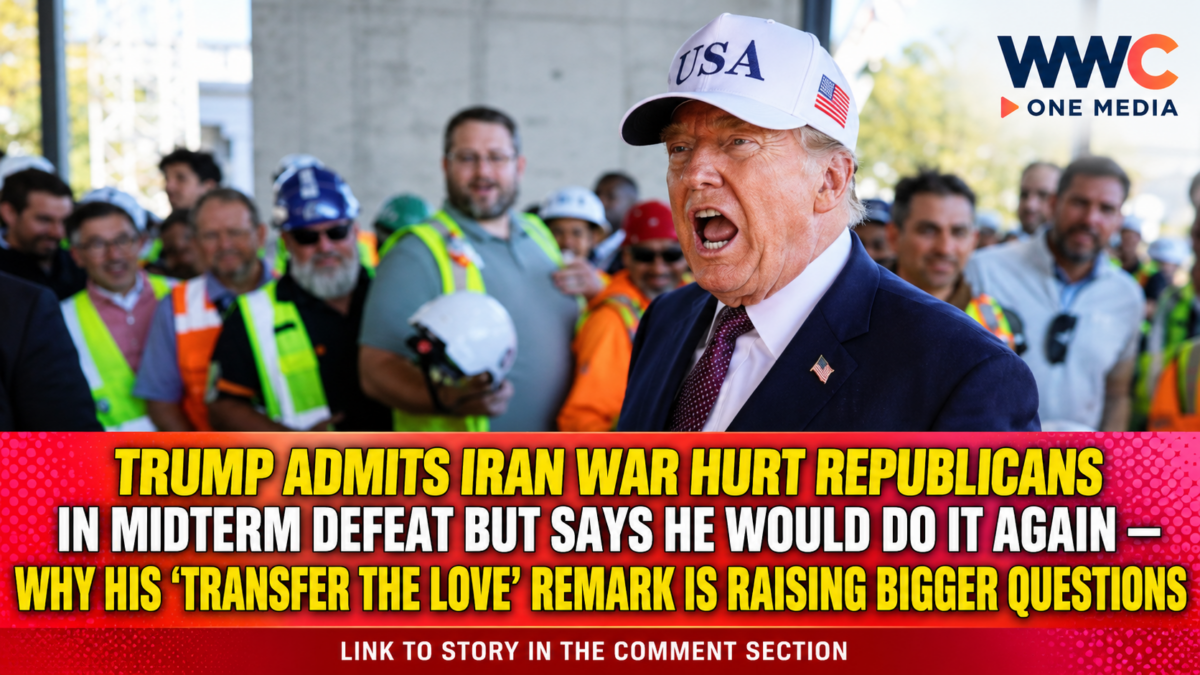
WASHINGTON, November 5, 2026 — US President Donald Trump has acknowledged that his administration’s war with Iran contributed to Republican losses in the November 3 midterm elections, but he remains unwilling to change course, insisting that preventing Tehran from acquiring nuclear weapons justified the military campaign.
In a White House appearance on November 4, Trump conceded that the conflict pushed gasoline prices higher and likely damaged Republican candidates at the ballot box. However, he maintained that the United States had no choice but to take military action and said he would make the same decision again.
His explanation for the party’s defeat included another revealing admission: the enthusiasm surrounding his campaign rallies did not translate into votes for Republican candidates.
“There was such love at those rallies,” Trump said, arguing that his personal popularity could not be transferred to other politicians running under the Republican banner.
The comments have intensified questions about Trump’s political influence, the future of the Iran conflict and whether the Republican Party can recover after losing control of Congress.
Trump acknowledges the political cost of the Iran war
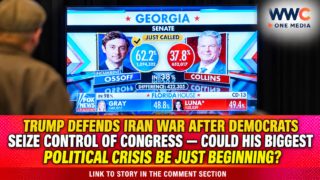
Trump’s remarks came after Democrats secured control of both the House of Representatives and the Senate in the November 3 midterm elections, dealing a major setback to his administration.
The president acknowledged that the Iran conflict played a role in the Republican losses, particularly because it contributed to higher gasoline prices.
He agreed that Vice President JD Vance’s assessment of the election result was largely correct, but rejected the suggestion that the political consequences should lead him to reconsider the military campaign.
Trump argued that the operation was necessary to prevent Iran from obtaining nuclear weapons.
He also claimed that the United States had no realistic alternative and said he would have made the same decision if given another opportunity.
His position highlights the tension at the centre of the administration’s response: Trump recognizes that the war damaged his party politically, yet continues to defend the strategic decision behind it.
The ‘couldn’t transfer the love’ remark exposes a Republican problem
Trump also suggested that Republican candidates suffered because voters who supported him personally did not necessarily extend that support to other members of his party.
He claimed that the crowds at his rallies demonstrated the strength of his political following, but that enthusiasm failed to translate into victories for Republican candidates.
The remark raises a broader question about the Republican Party’s dependence on Trump’s personal political appeal.
For years, Trump’s endorsement has been an influential force in Republican primaries and general elections. But the latest results suggest that his popularity among supporters does not automatically guarantee success for candidates associated with his administration.
That distinction could become increasingly important as Republicans consider their strategy for the remaining years of Trump’s presidency and the next presidential election cycle.
The party must now determine whether its losses were primarily driven by the Iran war, economic dissatisfaction, Trump’s broader political agenda or a combination of those factors.
JD Vance directly blames the Iran war for the defeat
The most significant political development may be the growing difference between Trump and Vance over how Republicans should interpret the election.
On November 4, Vance publicly blamed the Iran war for the party’s losses in a lengthy social media statement.
“The reason we lost is the war,” the vice president wrote, arguing that voters who supported Trump and Vance in 2024 had switched to Democratic candidates in 2026 because they were angry.
Vance said he had spoken with pollsters who indicated that many former Republican voters were dissatisfied with the conflict.
He also challenged Republicans to be honest about whether the political cost of the war was worth losing control of the Senate.
Trump, however, did not openly criticize Vance for the remarks. Instead, he described the vice president’s assessment as largely true while continuing to defend the military operation.
The exchange suggests that the disagreement is not necessarily about whether the war hurt Republicans. Both men have acknowledged its political consequences.
The deeper disagreement is whether those consequences should change Washington’s approach to Iran.
For more background on the vice president’s position, see WWC One Media’s coverage of Trump’s Iran conflict and JD Vance’s earlier comments about the fighting.
Voters were also worried about living costs and government corruption
Although the Iran war became a major issue after the election, polling suggests that it was not the only concern shaping voter decisions.
An ABC News Voter Poll found that 34% of House voters considered the Iran war crucial to their vote.
However, 49% said the cost of living was crucial, while 55% identified government corruption as a major factor in their decision.
The findings suggest that the conflict contributed to a wider environment of dissatisfaction rather than acting as the sole explanation for the Republican defeat.
Higher fuel prices were particularly damaging because they affected household budgets and reinforced concerns about affordability.
The war also added pressure to an economy already facing questions about inflation, healthcare expenses and the effects of Trump’s trade policies.
ABC News reported that many voters who had supported Trump in 2024 switched to Democrats in the midterms, according to Vance’s account of conversations with pollsters.
That potential movement among voters could be more troubling for Republicans than a simple turnout problem: it suggests that some previous supporters actively changed their political preference.
Iran war becomes an economic liability for the White House
The conflict has created consequences far beyond the battlefield.
Disruptions around the Strait of Hormuz, a critical route for international oil shipments, have increased concerns about energy supplies and transportation costs.
Higher oil prices can affect gasoline, diesel, shipping, manufacturing and food distribution. These pressures can eventually reach consumers through higher prices for everyday goods.
For an administration campaigning on economic performance, sustained fuel-price increases can become a serious political liability.
The issue is particularly important for countries that depend heavily on imported energy, including the Philippines and other Asian economies.
A prolonged disruption in Middle Eastern shipping routes could increase import costs and place additional pressure on domestic inflation.
WWC One Media previously examined the financial consequences of the conflict in its report on the US$47.1-billion cost of Trump’s Iran war.
That figure refers to the reported direct US military cost through October 16, 2026, not the complete economic cost of the conflict.
Republicans face pressure to change direction
Trump’s election setback has prompted calls from Republican allies and strategists for the administration to reconsider its priorities.
Reuters reported that some Republicans want changes in White House personnel, stronger internal discipline and a reassessment of policies they believe contributed to the losses, including the Iran war and tariffs.
The Democratic victories also give the opposition greater power to challenge Trump’s legislative agenda, investigate his administration and scrutinize government appointments.
That could make the next two years considerably more difficult for the president.
Even when Trump retains executive authority over foreign policy and military decisions, a Democratic-controlled Congress can create obstacles through oversight, legislation, funding debates and investigations.
The election has therefore changed the political environment surrounding the Iran conflict.
Trump may still be able to pursue his military strategy, but he will face a more challenging domestic political landscape.
What happens next in the US-Iran conflict?
Trump’s admission has raised a difficult question: will the election defeat push the administration toward negotiations, or will the president continue the military campaign despite the political cost?
There are several possible paths.
Washington could intensify diplomatic efforts and seek an agreement that allows both sides to claim progress. It could maintain economic and maritime pressure on Iran while avoiding another major military offensive. Alternatively, renewed attacks could deepen the confrontation and increase the risk of retaliation.
A November 5 report by Axios outlined the difficult choices facing Trump after the midterm defeat. The options include pursuing a negotiated settlement, maintaining the existing pressure campaign or resuming major military operations.
The report also described continuing diplomatic efforts involving Qatar and the possibility of renewed US-Iran talks.
However, no comprehensive peace agreement has been confirmed.
WWC One Media has also examined the continuing diplomatic divide in its report on the United States and Iran remaining far apart on a peace deal.
The unresolved situation means that Trump’s next decision could have consequences for both American politics and regional security.
Could another military escalation make the political situation worse?
A renewed offensive against Iran could create additional economic and political pressure on the White House.
Higher energy prices could further frustrate American households, while additional military spending and casualties could intensify questions about the conflict’s objectives.
There are also risks to international shipping and regional infrastructure.
Recent US strikes on Iran’s Qeshm Island, which American officials described as defensive, illustrate how military incidents can continue even while diplomatic contacts remain active.
WWC One Media reported on the operation and its implications for the Strait of Hormuz in its coverage of the US strikes on Qeshm Island.
The latest incident does not, by itself, establish that a new full-scale offensive has begun. But it underscores how fragile the situation remains.
For Trump, the challenge is no longer only how to manage Iran. He must also convince American voters that the costs of the conflict serve a clear national interest.
The bigger question: Can Trump still lead the Republican Party after the defeat?
The president’s comments about being unable to transfer his popularity to other candidates may become one of the defining statements of the midterm aftermath.
Trump remains a powerful figure in Republican politics, but the election results have exposed the limits of personal popularity when voters are dissatisfied with the administration’s policies.
Vance’s public criticism adds another layer of uncertainty. As a prominent Republican figure, the vice president now faces the challenge of balancing loyalty to Trump with the political concerns of voters and party members.
Republicans must also decide whether to defend the president’s current direction or distance themselves from policies that may have contributed to their losses.
The next major test will be whether the administration adjusts its approach to Iran and the economy—or continues with the same strategy despite the election result.
Trump says the war was worth the price. But his own admission that it helped hurt Republican candidates has made one thing clear: the conflict is no longer just a foreign-policy challenge.
It has become a defining test of his presidency, his party’s future and his ability to turn personal political support into lasting electoral victories.