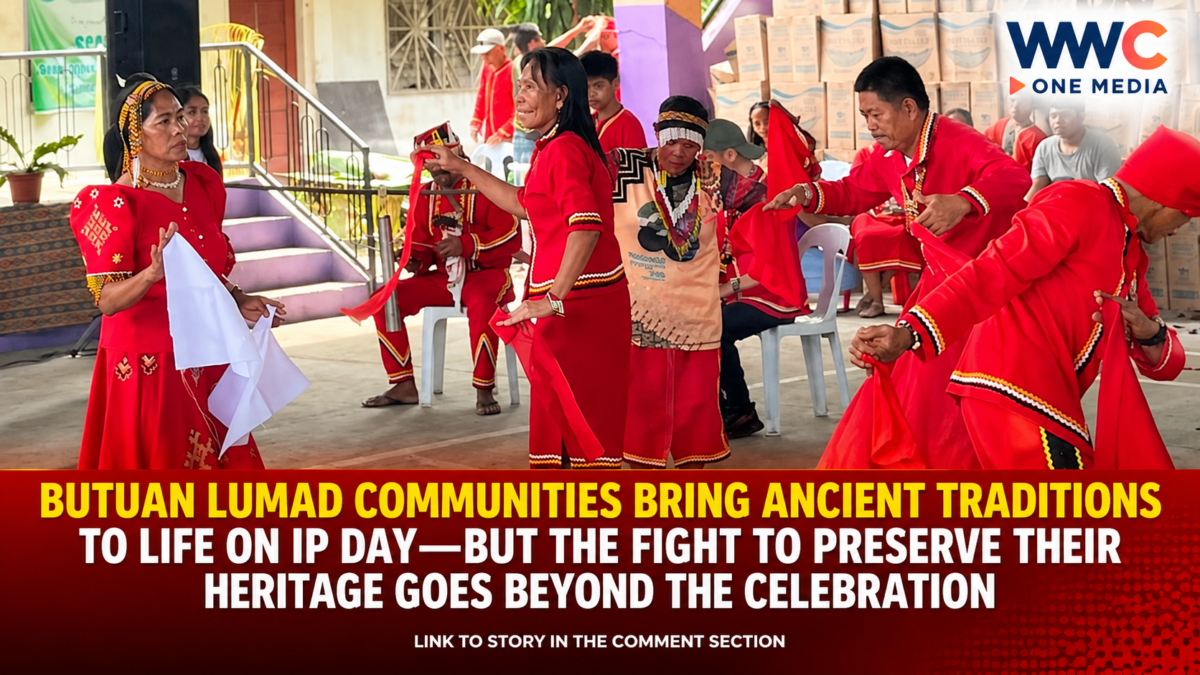
BUTUAN CITY, Philippines — Indigenous communities in Butuan marked Indigenous Peoples Day through traditional Lumad rites and cultural contests, highlighting the importance of keeping indigenous customs, cultural identity, and ancestral traditions alive for future generations.
The observance placed indigenous heritage in the spotlight, recognizing the traditions and cultural expressions that continue to shape communities across the Caraga region.
Beyond the ceremonies and competitions, the celebration serves as a reminder that indigenous culture is not simply a part of the Philippines’ history. It remains a living heritage sustained by community members, cultural practitioners, elders, and younger generations.
Cultural traditions take center stage
Traditional rites and cultural competitions provide opportunities for indigenous communities to express their identity, share their customs, and strengthen connections between generations.
For Lumad communities in Mindanao, cultural preservation can include traditional ceremonies, music, dance, oral histories, craftsmanship, indigenous knowledge, and community practices. These traditions help preserve collective memory and maintain a connection to ancestral roots.
Such activities also create opportunities for younger members of indigenous communities to learn about their heritage and understand the importance of passing it on.
A wider effort to preserve Caraga’s indigenous heritage
Butuan’s observance reflects a broader effort to recognize and preserve indigenous cultures across Caraga.
In October 2025, the Philippine Information Agency reported that the National Museum of the Philippines in Butuan and the National Commission on Indigenous Peoples in Caraga organized the inaugural Panagkitaay, bringing together representatives from five of the region’s six recognized indigenous tribes.
The gathering featured traditional dances, songs in native languages, cultural discussions, and efforts to strengthen cooperation between indigenous communities and cultural institutions. Organizers also emphasized the importance of preserving traditions and helping younger generations remain connected to their roots.
The event demonstrated how cultural gatherings can go beyond performances by creating opportunities for indigenous representatives to exchange knowledge and strengthen relationships. Read the Philippine Information Agency report.
Indigenous Peoples Month highlights culture and identity
The celebration also takes place within the wider context of National Indigenous Peoples Month, observed every October in the Philippines under Proclamation No. 1906, issued in 2009.
The monthlong observance recognizes the country’s indigenous cultural communities and encourages the preservation and promotion of their cultural heritage.
More recently, the Philippine Information Agency reported that Dayaw 2026 brought together more than 200 indigenous culture bearers, leaders, and youth delegates representing 41 community clusters in Intramuros, Manila. The festival featured performances, craft demonstrations, dialogues, and other activities celebrating indigenous creativity and traditions.
The national gathering reinforced an important message: indigenous cultures are not relics of the past but living traditions that continue to evolve while retaining their distinct identities. Read the PIA report on Dayaw 2026.
Why preserving indigenous heritage matters
Cultural celebrations can help strengthen public appreciation of indigenous communities, but lasting preservation requires more than a single event.
Passing traditional knowledge to younger generations, supporting indigenous-led cultural initiatives, documenting native languages and oral histories, and respecting ancestral lands are important parts of sustaining indigenous identity.
The Indigenous Peoples’ Rights Act of 1997, or Republic Act No. 8371, provides a legal framework recognizing the rights of indigenous cultural communities and indigenous peoples, including rights related to ancestral domains, cultural integrity, and self-governance.
For indigenous communities, preserving heritage is closely connected to maintaining their identity, transmitting knowledge, and ensuring that their traditions continue to have a place in modern Philippine society.
Keeping traditions alive for the next generation
The observance in Butuan highlights the role of community celebrations in keeping indigenous heritage visible and valued.
Traditional rites and cultural contests may last only a short time, but their significance extends beyond the event itself. They help create spaces where traditions can be shared, recognized, and passed on.
The broader challenge is ensuring that appreciation for indigenous culture continues long after the celebrations end—and that indigenous communities themselves remain central to decisions about how their heritage is preserved and represented.