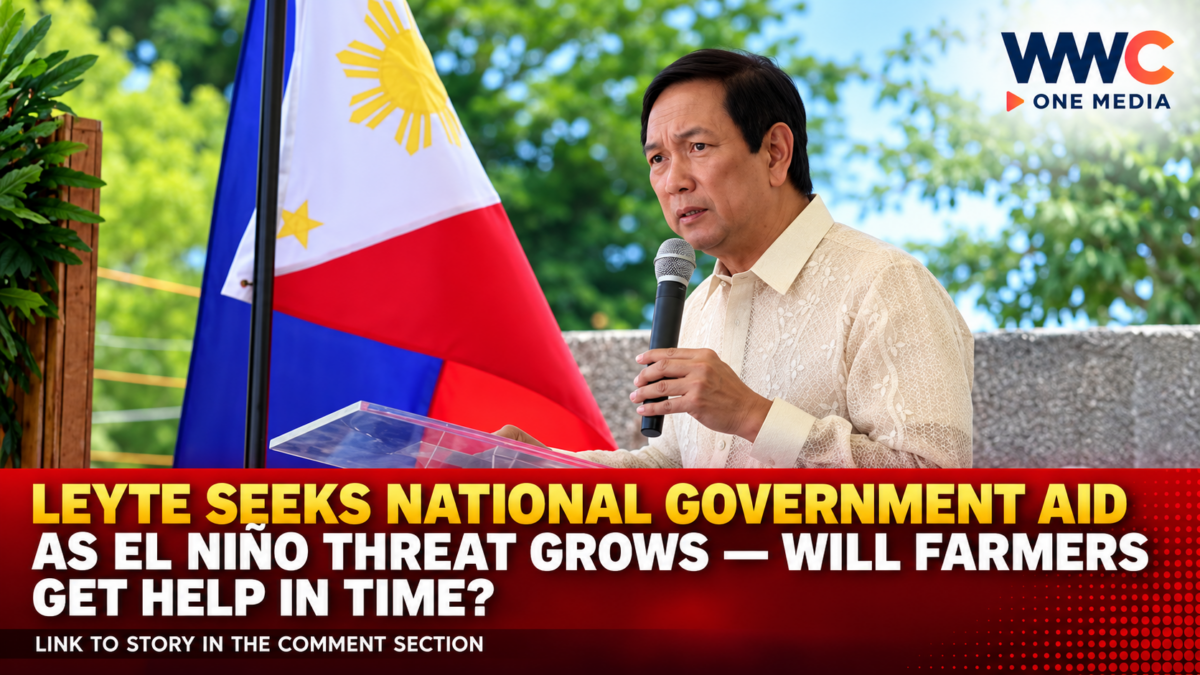
LEYTE, Philippines — Leyte is seeking national government assistance to strengthen preparations for the developing El Niño phenomenon, as concerns mount over declining water availability, agricultural losses, and the potential impact of prolonged dry conditions on farming communities.
The appeal comes as government agencies intensify preparations for a potentially very strong El Niño, which could bring below-normal rainfall, hotter temperatures, and drought in vulnerable parts of the country.
For Leyte, a key concern is whether farmers and communities will have enough water and resources to withstand an extended dry spell. The timing and availability of assistance could be critical for agricultural areas that depend on rainfall and irrigation to sustain crop production.
Why Leyte is raising the alarm
El Niño is a climate phenomenon associated with warmer-than-usual sea surface temperatures in the central and eastern tropical Pacific. In the Philippines, it often increases the likelihood of below-normal rainfall, dry spells, drought, and unusually hot conditions.
These effects can threaten rice and corn production, reduce water available for irrigation, and place additional pressure on household water supplies.
The risks are particularly concerning for farmers whose livelihoods depend on consistent rainfall or irrigation schedules. When water becomes scarce, crops can suffer moisture stress, planting schedules may need to change, and farm incomes can come under pressure.
The request for national assistance reflects the importance of coordinating local preparedness with resources and interventions available from national agencies.
Irrigation systems are already under pressure
The Philippine Information Agency reported on October 8 that the National Irrigation Administration in Eastern Visayas was monitoring water availability as preparations for a potentially very strong El Niño intensified.
According to the agency, six irrigation systems in Leyte were already experiencing below-normal water levels during the first week of October. These included systems in Pastrana, Macarthur, Mayorga, Alangalang, Barugo, and Kananga.
The development underscores why early intervention matters. If water levels continue to fall, irrigation-dependent farms could face difficulties maintaining adequate water supplies throughout the growing season.
The NIA has been coordinating with agricultural authorities on possible mitigation measures, including alternative crops, small livelihood projects, water-saving practices, and adjustments to irrigation management.
Farmers are also being encouraged to coordinate with irrigation officials, follow water-allocation schedules, keep canals clear, and consider crop varieties suited to shorter growing periods or drought-prone conditions.
National government steps up El Niño preparations
The Leyte appeal comes amid broader preparations by the national government.
On October 13, the Presidential Communications Office reported that President Ferdinand Marcos Jr. had reconvened key government agencies to discuss measures addressing the potential effects of El Niño on food supplies, water security, and energy.
The discussions involved agencies responsible for agriculture, social welfare, labor, environmental protection, and irrigation and water management.
The government has also outlined measures to support farmers, protect essential supplies, improve water management, and prepare public services for prolonged hot and dry conditions.
The Department of Agriculture said in an October 4 report that it was strengthening preparations to protect farm production and food supplies, including advance procurement of rice and agricultural inputs.
These national initiatives could complement local preparedness efforts, although the precise assistance available to Leyte will depend on the applicable programs, assessments, and government funding decisions.
What the El Niño threat could mean for ordinary families
The consequences of prolonged dry weather may extend well beyond farms.
Food prices: Lower crop production can put pressure on food availability and potentially contribute to higher prices, depending on harvest outcomes, inventories, imports, and distribution costs.
Water security: Communities dependent on vulnerable water sources may need stronger conservation measures and contingency plans if rainfall remains below normal.
Farm livelihoods: Reduced harvests can mean lower earnings for farmers and agricultural workers, with possible knock-on effects for rural businesses.
Health and electricity: Higher temperatures can increase the risk of heat-related illness and raise demand for cooling, placing additional pressure on electricity supplies.
These outcomes are risks rather than certainties. Their severity will depend on the strength and duration of El Niño, local rainfall patterns, water availability, and the effectiveness of mitigation measures.
What assistance could make a difference?
For Leyte and other vulnerable provinces, timely support could include irrigation rehabilitation, water pumps, access to drought-tolerant seeds, technical assistance, crop diversification, and targeted livelihood support for affected farmers.
Improved access to localized weather forecasts would also help farmers make better-informed decisions about planting, crop selection, and irrigation.
The Department of the Interior and Local Government has urged local government units to update their El Niño contingency plans, strengthen water and energy security, and prepare essential facilities for possible supply disruptions.
Coordination among provincial and municipal authorities, national agencies, irrigation officials, and farming communities will be essential to ensure that available resources reach the areas that need them most.
The bigger question: Will assistance arrive before losses worsen?
Leyte’s call for national assistance highlights a central challenge in disaster preparedness: responding before dry conditions translate into deeper agricultural and livelihood losses.
Early planning can help communities conserve water, protect crops, and prepare for possible disruptions. But the effectiveness of these efforts will depend on implementation, access to resources, and coordination between local and national authorities.
For now, farmers and households should monitor official advisories from PAGASA, the Department of Agriculture, and local disaster risk reduction offices, while following guidance on water conservation and agricultural preparedness.
The critical question is whether the support needed on the ground will be available in time to help Leyte’s farming communities withstand the coming months of dry weather.