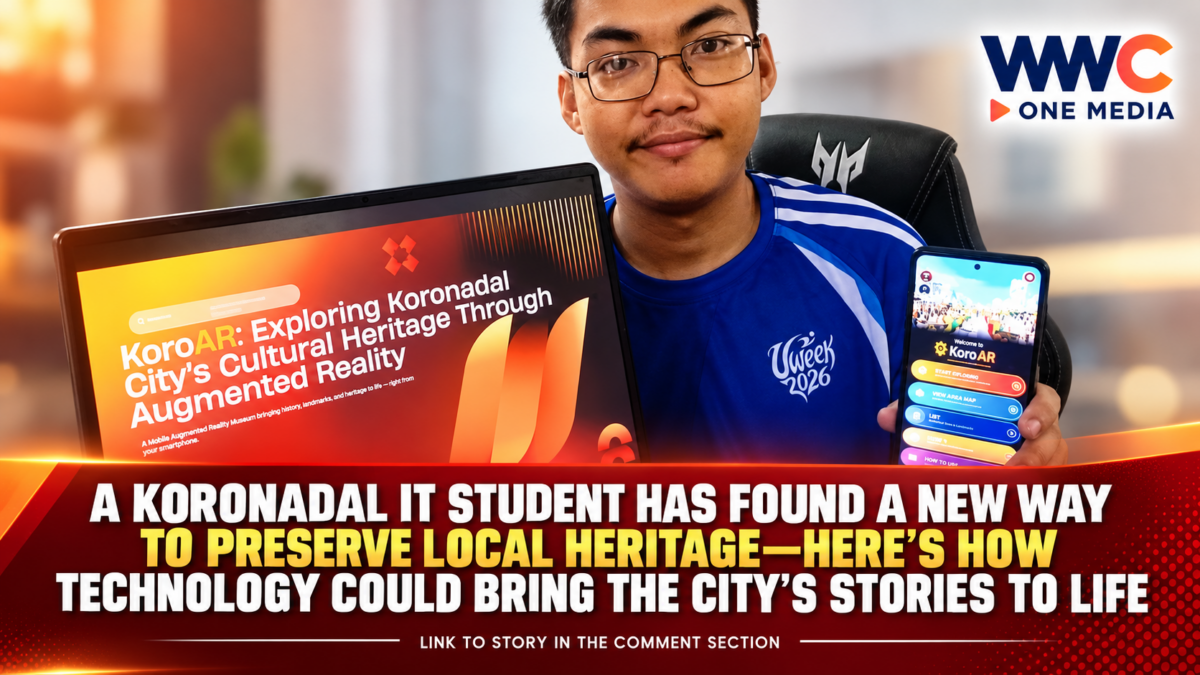
KORONADAL CITY, South Cotabato — Preserving a city’s history does not have to mean keeping its stories inside books, museums, or old photographs. A technology-driven initiative by an information technology student is bringing a fresh perspective to how Koronadal’s cultural heritage can be shared with a wider audience.
The student’s app, featured in a report by the Philippine Daily Inquirer, highlights the potential of digital technology to make local heritage more accessible and engaging, particularly for younger generations who increasingly rely on smartphones and digital platforms for information.
The initiative offers a timely reminder that technology can serve purposes beyond convenience and entertainment. When used to document and communicate a community’s identity, it can also help connect people with the history, traditions, and stories that shape their hometown.
Technology Meets Koronadal’s Cultural Identity
Koronadal, the capital of South Cotabato, has a cultural identity reflected in its festivals, community traditions, and the histories of the people who helped shape the city.
The city government identifies the Hinugyaw Festival as one of Koronadal’s major cultural celebrations. The event commemorates the city’s beginnings and brings together cultural performances and community activities. <Link url=”https://koronadal.gov.ph/culture/” title=”Read the city government’s cultural information”/>.
For initiatives such as the student-developed app, digital platforms offer a possible way to help residents and visitors discover these stories beyond traditional forms of cultural promotion.
Making heritage information available through digital tools could also encourage students to learn more about their communities and give visitors additional ways to understand the places they explore.
However, the app’s specific features, public availability, and coverage should be confirmed before making claims about its full capabilities.
Why Digital Heritage Preservation Matters
Local history can be overlooked when information is difficult to access or when stories are passed down without being adequately documented. Digital storytelling offers another way to record and share community knowledge, particularly with audiences who may not regularly visit museums or consult printed historical materials.
A similar approach was explored in May 2026, when the Philippine Information Agency reported on a local heritage digital storytelling workshop organized by Mindanao State University–Iligan Institute of Technology. The initiative highlighted how digital media can help document oral histories, map ancestral places, and share community narratives beyond geographical boundaries.
The workshop also emphasized the importance of cultural sensitivity and historical accuracy when presenting local stories online.
Read more: Philippine Information Agency — Students explore digital storytelling for local heritage.
These efforts demonstrate how technology and heritage preservation can complement each other when communities remain involved in documenting and presenting their own histories.
A Growing Role for Technology in Philippine Tourism
The use of digital platforms to promote cultural destinations is also gaining attention in other parts of the Philippines.
In March 2026, the Philippine Information Agency reported that Kalinga was preparing to introduce ALAPUAP, a tourism platform developed by students of Kalinga State University with support from the Department of Science and Technology. The planned platform was designed to provide information about tourist destinations, accommodations, restaurants, and other travel-related services.
Meanwhile, the Department of Science and Technology has highlighted the Intramuros App, developed through collaboration involving the Intramuros Administration, DOST, and CIIT College of Arts and Technology. The web-based platform provides visitors with information about historical attractions, do-it-yourself tours, tour guides, events, and other visitor services.
These projects illustrate how digital tools can help make cultural and tourism information easier to access.
Related reports:
- PIA — Kalinga to launch chatbot-powered tourism guide app
- DOST — Intramuros App launched as a digital gateway to the Walled City
More Than an App: An Opportunity to Keep Local Stories Alive
For Koronadal, the bigger opportunity lies in making sure its heritage remains meaningful to the next generation.
A well-maintained digital heritage platform could potentially help residents and visitors explore local history, learn about cultural traditions, and discover stories that might otherwise receive less attention. It could also complement the work of cultural educators, tourism personnel, historians, and community knowledge holders.
Still, digital preservation requires more than simply putting information online. Historical details must be checked, community perspectives respected, and cultural material presented responsibly. Updates and long-term maintenance would also be important if a platform is intended for continued public use.
The IT student’s initiative puts the spotlight on an important possibility: technology can help preserve a community’s identity while giving younger generations new ways to engage with the past.
As digital tools become increasingly integrated into education and tourism, the question is no longer simply whether local history can be placed online. It is how effectively those tools can help people understand, appreciate, and protect the stories that make their communities unique.
For Koronadal, that could be an important step toward ensuring that its cultural heritage remains visible—not only in the memories of older generations, but also in the digital world where future generations increasingly learn and connect.