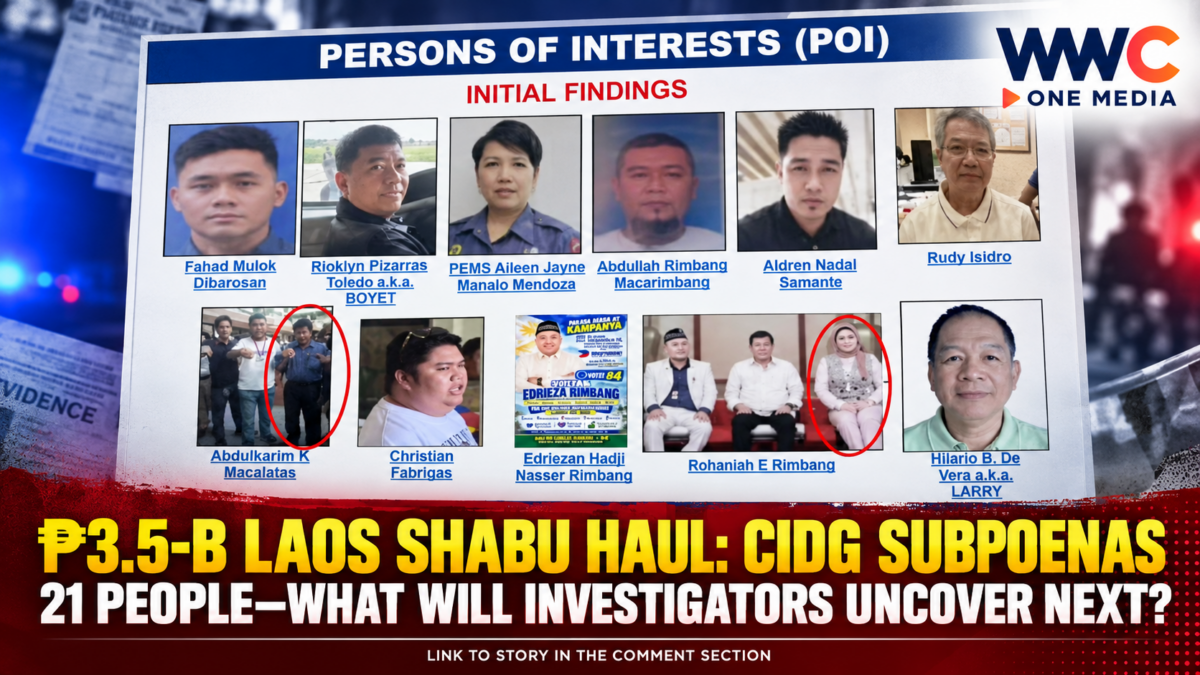
MANILA, Philippines — The Philippine National Police–Criminal Investigation and Detection Group (PNP-CIDG) has subpoenaed at least 21 individuals as investigators intensify their probe into a massive shipment of suspected methamphetamine, locally known as shabu, intercepted in Laos and reportedly intended for the Philippines.
The shipment involved 521 kilograms of suspected shabu valued at approximately ₱3.5 billion, raising fresh questions about the people who allegedly arranged the shipment, its intended destination, and possible links to local drug-trafficking networks.
According to reports published by Philstar.com, ABS-CBN News, and Radyo Pilipinas on October 19 and 20, PNP spokesperson Col. Allen Rae Co said the subpoenas were issued to allow the individuals to explain what they know about the incident. Most of those summoned had already appeared before the CIDG, while authorities encouraged the others to cooperate with investigators.
Co emphasized that being subpoenaed does not automatically mean an individual is involved in the alleged crime. The investigation remains focused on gathering information, checking leads, and determining whether sufficient evidence exists to establish criminal liability.
Why were 21 individuals summoned?
The subpoenas form part of the investigation into the suspected drug shipment seized at Luang Prabang International Airport in Laos on October 1.
Philippine authorities are examining the circumstances surrounding a chartered private jet that was reportedly scheduled to travel to Manila. Investigators are working to establish the roles, if any, of individuals who may have financed, arranged, facilitated, or expected to receive the cargo.
The PNP has directed its investigative and intelligence units, including the CIDG and the PNP Drug Enforcement Group, to coordinate with other government agencies and verify possible connections to domestic drug-trafficking networks.
The goal is to establish the facts behind the attempted shipment and identify anyone for whom evidence may support appropriate charges.
11 persons of interest previously identified
In a separate development, Interior and Local Government Secretary Jonvic Remulla previously identified 11 persons of interest during a Palace briefing on October 16.
As reported by Philstar.com and GMA News Online, the individuals included former Bangsamoro parliament member Edriezan Hadji Nasser Rimbang, also known as “Sultan”; Police Master Sergeant Aileen Jayne Manalo Mendoza of the PNP Aviation Security Group; and other people whom authorities said could have links to the planned shipment.
Remulla alleged that Rimbang was believed to have financed the operation. Authorities also identified individuals they alleged had roles in arranging the aircraft, coordinating airport arrangements, or receiving the shipment.
These are allegations made as part of an ongoing investigation, not judicial findings of guilt.
The PNP has confirmed that Mendoza was relieved from her post and placed under restrictive custody while the investigation proceeds. Authorities have also said they are checking information about other possible facilitators.
How the private jet became part of the investigation
According to reports from Philippine authorities, the suspected shabu was discovered aboard a chartered Learjet 55 at Luang Prabang International Airport.
The aircraft had reportedly been scheduled to fly to Manila, but the intended trip did not result in a landing in the Philippines. The Civil Aviation Authority of the Philippines has also been cited in reports concerning the flight-plan and permit arrangements.
Investigators are examining the proposed route, the arrangements for the aircraft, and the people who may have coordinated the flight.
The seizure in Laos prevented the suspected cargo from completing its reported journey. However, the precise roles of the individuals under investigation must still be established through evidence and the appropriate legal process.
Authorities face a wider regional drug-trafficking challenge
The Laos seizure comes amid reports of another major suspected shabu interception in Thailand. Philippine media reports said Thai authorities seized approximately 1,178 kilograms of suspected shabu, valued at about ₱8.01 billion, from a fishing vessel on October 7.
Authorities have been examining whether the reported shipments have any connections to Philippine drug-trafficking networks. A connection between the two incidents, however, should not be assumed without verified evidence.
The developments highlight the importance of intelligence-sharing and cooperation among law enforcement agencies across Southeast Asia, where transnational drug trafficking can involve multiple countries, transportation routes, and intermediaries.
What happens next?
The CIDG is expected to continue gathering statements and examining documents that could help establish the circumstances surrounding the Laos shipment. Investigators may also summon additional individuals if new information warrants further inquiries.
For those who received subpoenas, appearing before investigators provides an opportunity to respond to questions and present relevant information. Any criminal liability must ultimately be determined through the applicable legal process.
The central question remains whether investigators can establish, through admissible evidence, who organized the suspected shipment and whether anyone in the Philippines helped facilitate the operation.
For now, the subpoenas mark another stage in the investigation—not a declaration that the individuals summoned are guilty.