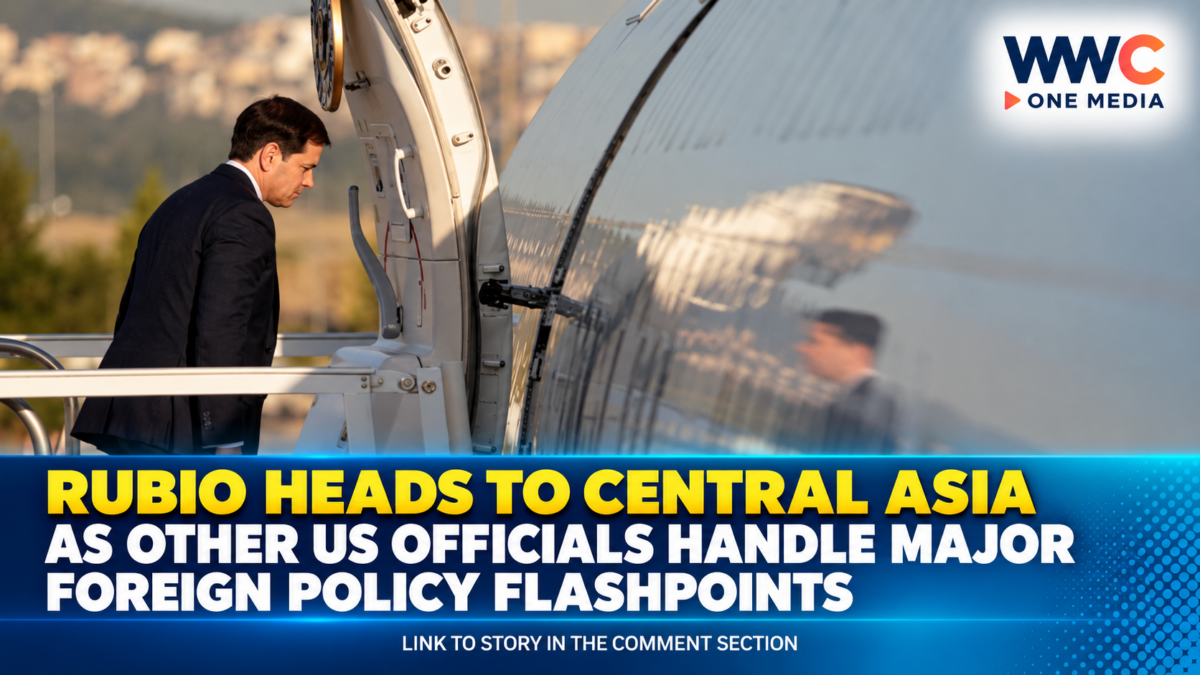
US Secretary of State Marco Rubio travelled to Uzbekistan on Sunday, October 18, for talks with leaders from five Central Asian countries, as the Trump administration continued to grapple with conflicts in the Middle East and growing tensions over the Russia-Ukraine war.
Rubio arrived in Samarkand for the C5+1 meeting, bringing together the United States and Uzbekistan, Kazakhstan, Kyrgyzstan, Tajikistan and Turkmenistan. The visit aims to strengthen diplomatic, economic and security ties with a resource-rich region situated between China, Russia and Iran.
The trip has drawn attention because Rubio’s recent overseas schedule has largely avoided the world’s most prominent geopolitical flashpoints. Other senior administration figures, including special envoys Steve Witkoff and Jared Kushner and Vice-President JD Vance, have taken leading roles in several sensitive negotiations.
Rubio has not visited Kyiv or Moscow since becoming secretary of state and was absent from recent US-Ukrainian discussions in Florida concerning Ukraine’s attacks on Russian oil refineries. Vance represented Washington during peace talks with Iran in Pakistan in April.
Rubio defended his travel plans before departing Washington, saying diplomacy should not focus exclusively on immediate crises. He argued that building long-term relationships with countries that do not regularly dominate international headlines is also an important part of US foreign policy.
The State Department has rejected suggestions that Rubio is avoiding difficult issues, saying he remains involved in discussions concerning Iran, Gaza, Lebanon, Ukraine, Russia and China. Officials have maintained that his responsibilities include helping President Donald Trump develop and implement a broader national security strategy, much of which takes place behind the scenes.
However, some former American diplomats have questioned the secretary’s travel priorities. Ivo Daalder, a former US ambassador to NATO, argued that Rubio’s visits have largely bypassed the capitals and negotiations central to major international crises. Administration officials have pushed back, saying the criticism reflects an outdated view of American diplomacy.
Russia’s Influence Remains a Key Issue
Relations with Russia are expected to feature prominently in discussions with Central Asian leaders. Although the five countries are strengthening ties with Washington, they maintain longstanding connections with Moscow. Western officials have also raised concerns that trade through the region has helped Russia obtain goods despite US and European sanctions.
The issue has become more complicated following Trump’s recent moves to facilitate Russian diesel imports and waive provisions that could have enabled tariffs on countries purchasing substantial amounts of Russian oil or helping Moscow evade sanctions. Kazakhstan and India have been identified as countries potentially affected by such measures.
India, Rubio’s next destination, remains one of the largest buyers of Russian crude oil, despite Trump previously saying New Delhi had agreed to stop purchasing it.
Rubio’s Central Asian visit could also provide an opportunity to discuss expanding the Abraham Accords, which established or deepened diplomatic ties between Israel and several Muslim-majority countries. Washington has previously explored whether additional Central Asian states might join the agreements.
More than 200 US business executives are accompanying Rubio to Uzbekistan, reflecting the administration’s interest in commercial opportunities, particularly access to rare-earth minerals and other resources.
India Visit to Focus on Trade and Business
After Uzbekistan, Rubio is scheduled to visit Mumbai and Jamnagar in India, where he will meet government officials and business leaders, including Reliance Industries chairman Mukesh Ambani.
The visit comes as Washington and New Delhi continue navigating trade negotiations, energy cooperation and broader strategic relations. Discussions are expected to cover economic and security interests, with a potential trade agreement among the issues attracting attention.
The five-day tour is scheduled to conclude on Thursday, as the Trump administration seeks to deepen partnerships across Central and South Asia while managing competing diplomatic priorities around the world.