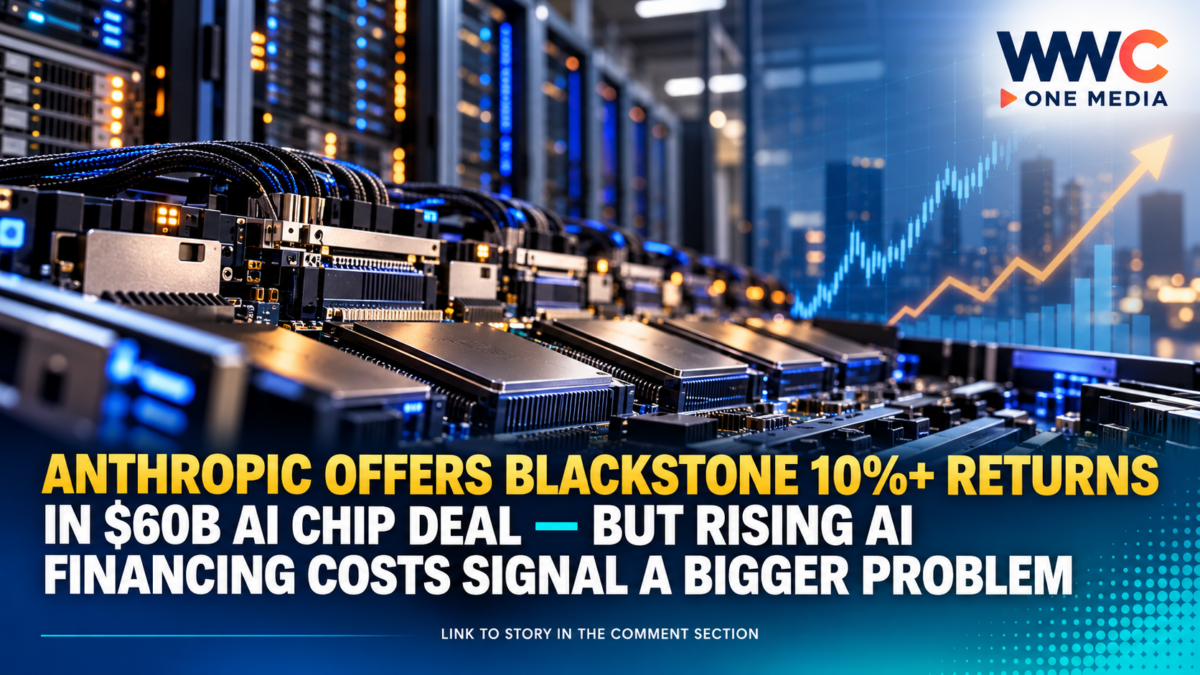
Anthropic is reportedly offering investment giant Blackstone an annual yield exceeding 10% to secure billions of dollars in financing for its rapidly expanding artificial intelligence infrastructure, highlighting just how expensive the global race for AI computing power is becoming.
The proposed arrangement forms part of a massive $60 billion debt package, known as Project North Star, designed to finance approximately 1.5 gigawatts of custom artificial intelligence semiconductors developed by Google. The chips, known as tensor processing units (TPUs), are expected to provide the computing capacity Anthropic needs to train and operate its increasingly sophisticated AI models.
According to people familiar with the negotiations cited in financial reports, Blackstone funds are expected to invest approximately $9 billion in the financing. The investment would account for roughly half of an $18 billion junior-debt tranche, with the remaining amount potentially offered to other institutional investors.
The financing is backed by Anthropic’s five-year lease payments on the chips, giving investors a structured stream of expected repayments tied to the company’s long-term computing requirements.
The proposed deal reportedly offers Blackstone a coupon of around 10%, with the overall investment return potentially climbing even higher after accounting for discounts and other financing fees.
That figure is particularly significant because borrowers with comparable credit profiles typically pay substantially lower yields in public bond markets. The difference reflects the additional risk investors are demanding before committing enormous sums to AI infrastructure projects.
Anthropic’s Borrowing Costs Are Rising
The latest financing arrangement also highlights how quickly the cost of funding artificial intelligence development is increasing.
Just four months earlier, Anthropic reportedly raised approximately $4.4 billion through another chip-financing transaction known as Project Big Sky, carrying an interest rate of around 8.5%.
The latest offer of more than 10% represents a notable increase in borrowing costs, suggesting that investors are becoming more cautious about the enormous amounts of money required to sustain the AI boom.
Despite growing demand for artificial intelligence services, lenders are increasingly examining whether technology companies can generate enough revenue to justify their unprecedented spending on chips, computing infrastructure and data centres.
For Anthropic, securing financing at higher rates may be necessary to maintain access to the computing resources needed to compete with major AI players.
Broadcom Supports the $42 Billion Senior Debt Portion
The $60 billion financing package also includes approximately $42 billion in senior debt supported by Broadcom, the semiconductor company working with Google on the development and supply of custom AI chips.
This arrangement gives Broadcom an important role in Anthropic’s infrastructure expansion, extending its involvement beyond semiconductor technology and into the financing structure supporting the AI industry’s growth.
The senior debt and junior debt carry different levels of risk. Senior lenders receive priority in repayment, while junior investors typically demand higher returns because they face greater exposure if the financing encounters difficulties.
The financing is expected to become eligible for institutional trading through the Rule 144A bond market after the capital is drawn down in 2027, potentially giving institutional investors another avenue to participate in the expanding AI debt market.
Anthropic Faces Credit Rating Challenges
Another important consideration is Anthropic’s credit standing.
The company received a credit rating from Kroll Bond Rating Agency in June that placed it one level below investment grade. The latest junior financing is also expected to receive a comparable rating.
An investment-grade rating could eventually help Anthropic access cheaper financing and attract a broader range of institutional investors.
The company is reportedly looking toward a potential public listing as one route to improving its financial position and lowering future borrowing costs.
However, until that happens, lenders and investors must assess the risks associated with financing a rapidly growing AI company whose infrastructure requirements are becoming increasingly expensive.
Wall Street Is Betting Big on the AI Infrastructure Boom
The Anthropic financing arrangement is part of a much broader transformation in how artificial intelligence infrastructure is funded.
Traditional technology investments are increasingly being supplemented by private credit, institutional debt, equipment leasing and complex financing arrangements involving semiconductor manufacturers and major technology companies.
In June, Apollo announced a $35 billion capital solution involving Broadcom and Blackstone to support Broadcom’s AI infrastructure platform, including computing capacity for Anthropic.
The arrangement demonstrated how private investment firms are becoming increasingly important in funding the hardware and facilities needed by leading AI developers.
Meanwhile, Google is expanding its position in the AI semiconductor market through its custom TPU technology, offering an alternative to Nvidia’s widely used graphics processing units.
These developments show that competition in artificial intelligence is no longer limited to developing better models and software. Access to chips, electricity, data centres and financing is becoming equally important.
The Bigger Question Is Whether AI Spending Can Deliver Enough Returns
Anthropic’s willingness to offer double-digit returns to secure financing underscores the financial pressure surrounding the artificial intelligence industry.
While AI companies continue attracting investment and expanding their computing capacity, the enormous cost of infrastructure raises questions about long-term profitability.
Investors must consider whether future demand for AI services will generate sufficient revenue to cover chip leases, debt payments, electricity costs and data-centre operations.
For Blackstone and other institutional lenders, the potential returns could be attractive. However, the risks are also substantial if AI adoption slows, technology spending declines or companies struggle to meet their financial commitments.
The proposed $60 billion financing package could therefore become an important test of whether Wall Street remains willing to fund the next stage of the AI revolution at increasingly expensive borrowing rates.
The stakes extend far beyond Anthropic. The outcome could influence how billions of dollars in future AI infrastructure investments are financed, and how much risk Wall Street is prepared to accept to keep the artificial intelligence boom alive.