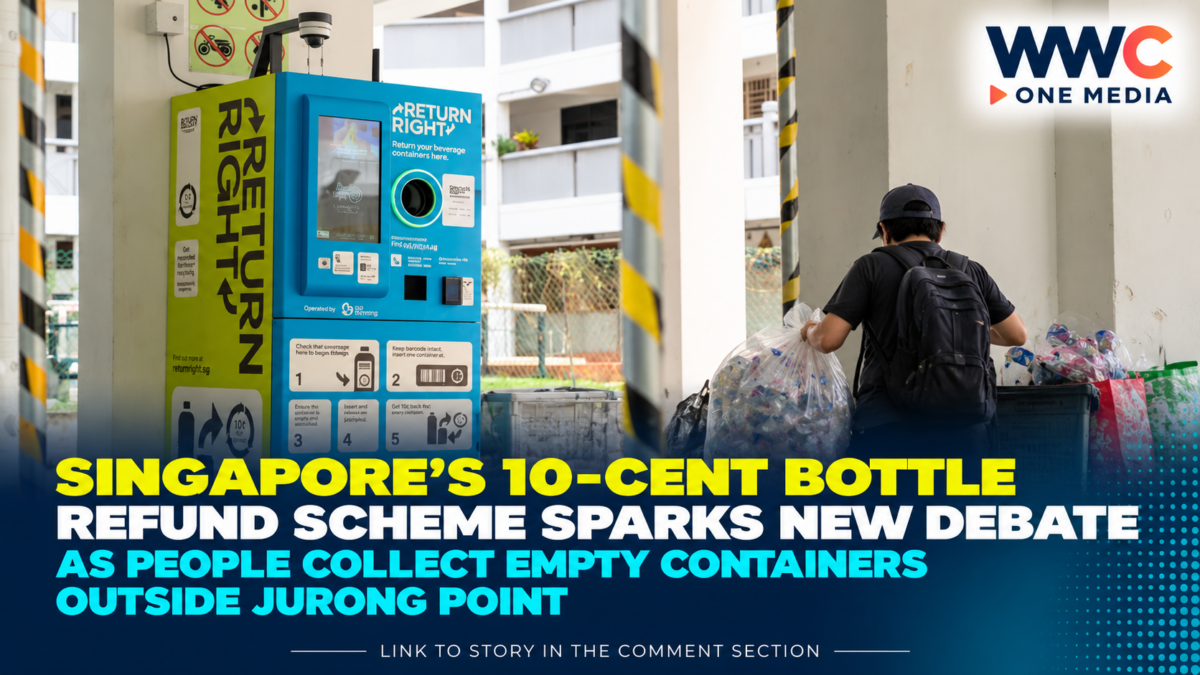
Singapore’s beverage container refund scheme is encouraging more people to return empty drink bottles and cans — but some residents are raising questions after individuals were spotted approaching shoppers outside Jurong Point to collect their containers.
The sightings come after Singapore’s Beverage Container Return Scheme (BCRS) entered full implementation on Oct 1, allowing consumers to reclaim a 10-cent deposit for eligible plastic drink bottles and metal cans.
A man surnamed Liang shared a video with Chinese-language broadcaster 8world showing people drinking beverages outside the shopping mall. At least two masked individuals carrying large red plastic bags were seen approaching them and asking for their empty containers.
After receiving the containers, the individuals placed them into their bags and continued collecting.
Liang suspected that they were gathering the bottles and cans to redeem the deposits through the national scheme. However, the footage did not establish how much money they collected or whether they subsequently returned the containers.
Why are people collecting empty bottles and cans?
Under the BCRS, consumers pay a 10-cent deposit on eligible beverage containers bearing the official deposit mark. They can recover the deposit by returning those containers at designated reverse vending machines.
That means collecting eligible containers can provide a small financial return, particularly when people gather them in larger quantities.
The scheme is designed to encourage recycling, reduce waste sent for incineration and improve the recovery of valuable materials. However, the growing number of people collecting containers has also raised questions about how the scheme is being used in public spaces.
The individuals seen outside Jurong Point were not confirmed to have broken any rules simply by asking people for their empty bottles and cans.
Reverse vending machines face complaints
The growing popularity of the scheme has also brought complaints about the condition of some collection points.
Members of the public have reported machines becoming full, unpleasant smells around collection areas and rubbish being left behind after containers are returned.
On Oct 1, the National Environment Agency (NEA) reminded users to empty and rinse containers before depositing them, explaining that leftover liquids can affect machine performance and cleanliness.
The agency also urged people not to leave unreturned containers, plastic bags or other rubbish around collection points.
These concerns highlight the importance of keeping recycling areas clean as participation increases.
How much can Singaporeans get back?
Consumers can receive a 10-cent refund for each eligible bottle or can bearing the required deposit mark.
For example, returning 20 eligible containers could yield S$2, while 100 could bring in S$10. Actual refunds depend on whether the containers qualify under the scheme and are accepted at designated return points.
The BCRS operator has also introduced improvements to the refund process and machine operations following feedback during the scheme’s transition period.
Recycling should not come at the expense of cleanliness
The scenes outside Jurong Point reflect a wider challenge facing Singapore’s recycling initiative: encouraging people to recover more materials while ensuring public spaces remain clean and accessible.
Collecting empty containers may offer a modest way to earn back deposits, but the scheme’s success also depends on responsible participation.
As more people take part, the key question is whether Singapore can increase recycling rates without creating new problems involving litter, hygiene or the use of shared public spaces.