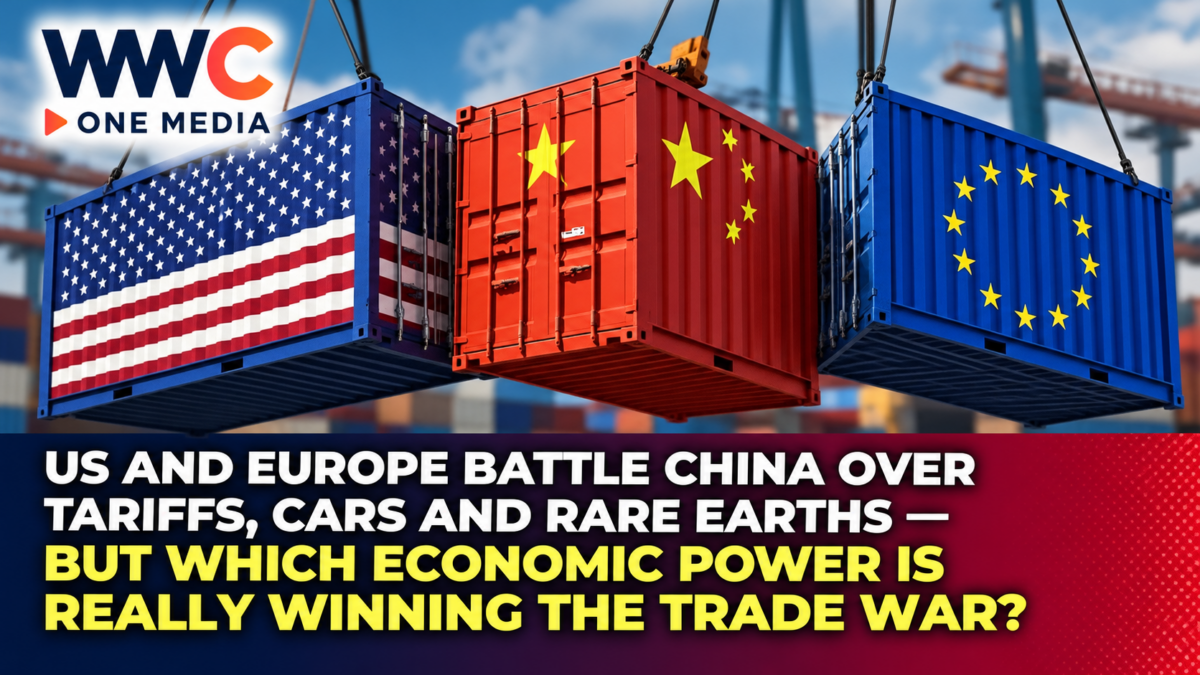
LONDON, United Kingdom — October 10, 2026 — The United States and the European Union are fighting two increasingly complicated economic battles against China, using tariffs, trade negotiations and industrial policies to protect domestic businesses from the growing dominance of Chinese manufacturing.
But as Washington and Brussels pursue different strategies, a fundamental question is emerging: Which economic power is actually making more progress against Beijing?
The issue has become important enough for the Financial Times to announce a live expert discussion examining how the United States and Europe are performing in their respective trade confrontations with China.
Scheduled for October 15, the discussion will feature senior trade writer Alan Beattie and economics columnist Soumaya Keynes.
It comes at a pivotal moment.
The European Union has just reached a preliminary agreement that could sharply reduce Chinese hybrid vehicle exports, while the United States continues negotiating with Beijing over tariffs, rare-earth supplies and technology restrictions.
Both Western economies are seeking to protect strategically important industries.
But neither has achieved a comprehensive resolution to its trade disputes with China.
The bigger question is whether tariffs and negotiated restrictions are genuinely strengthening Western economies — or simply changing where the costs of global trade competition fall.
Europe Scores a Breakthrough in Its Battle Against Chinese Cars
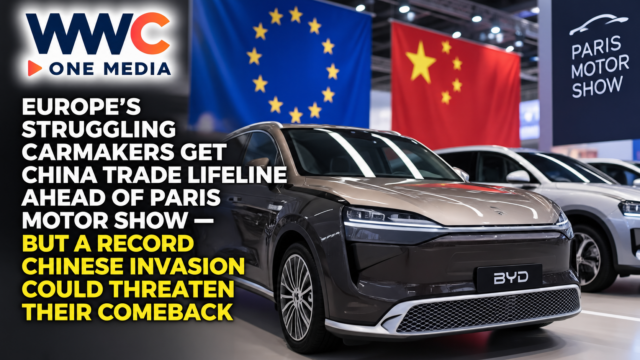
The European Union secured a potentially important diplomatic achievement on October 9, when trade officials announced a preliminary understanding with China over hybrid vehicle exports.
European Trade Commissioner Maroš Šefčovič said the agreement could reduce Chinese hybrid and plug-in hybrid vehicle shipments to Europe by more than half over four years.
The understanding followed two days of negotiations in Beijing with Chinese Commerce Minister Wang Wentao and other officials.
The European side said the proposed arrangement could prevent several million additional Chinese-made vehicles from entering the EU market compared with projected import levels.
For European automakers struggling with competition from lower-priced imports, the development could provide some relief.
However, the agreement remains preliminary.
The detailed enforcement mechanism, export baseline and implementation procedures have not been fully disclosed.
It is therefore too early to declare that Europe has permanently secured a 50% reduction in Chinese vehicle imports.
Why Chinese Cars Have Become Europe’s Biggest Trade Flashpoint
Automobiles are central to Europe’s industrial economy.
Major manufacturers such as Volkswagen, BMW, Mercedes-Benz, Renault and Stellantis support extensive networks of factories, suppliers and employees.
The rapid expansion of Chinese vehicle manufacturers has challenged these established businesses.
Companies including BYD and Chery have gained international attention through competitive pricing, electrified vehicles and rapid product development.
European policymakers argue that Chinese industrial subsidies and manufacturing overcapacity create unfair competitive pressure.
Beijing rejects accusations that its success is primarily driven by unfair practices, arguing that Chinese manufacturers have become competitive through investment, technology and efficient production.
The dispute intensified after the European Union imposed additional duties on certain Chinese battery-electric vehicles in 2024.
Those duties did not extend in the same way to conventional hybrids and plug-in hybrids.
Chinese manufacturers subsequently increased shipments in categories facing fewer additional trade barriers.
The latest EU–China understanding attempts to address that shift.
However, limiting imports is only one part of the challenge.
European manufacturers must still improve competitiveness, control production costs and offer vehicles consumers want to buy.
The EU’s Trade Deficit With China Remains Enormous
Europe’s automotive concerns form part of a much larger economic imbalance.
According to figures cited by Reuters, the European Union’s goods trade deficit with China reached approximately €360.6 billion in 2025.
European Commission President Ursula von der Leyen has described the imbalance as unsustainable.
The deficit reflects the difference between the value of goods the EU imports from China and the value it exports there.
European industries face strong competition from Chinese products across vehicles, chemicals, machinery and other manufactured goods.
Policymakers are concerned that persistent import growth, combined with weaker European exports, could undermine domestic industrial capacity.
But a trade deficit alone does not prove that every trading relationship is harmful.
Imports can provide consumers and businesses with lower-cost products and components.
The economic question is whether those benefits outweigh the risks to employment, strategic industries and supply-chain resilience.
Europe’s new trade strategy is increasingly focused on correcting perceived imbalances while maintaining access to China’s market.
China Offers Europe More Than an Automotive Agreement
The October 9 negotiations also produced understandings involving market access and critical materials.
European officials said China agreed to improve access for selected EU exports, including car parts, olive oil and footwear.
The affected products represent approximately €4 billion in existing annual trade.
China also indicated that it would facilitate export licensing for certain rare-earth materials and magnets used by European manufacturers.
These developments could offer practical benefits for companies operating across international supply chains.
However, the results depend on how the commitments are implemented.
Improved licensing procedures are not equivalent to a permanent guarantee of unrestricted supply.
Similarly, access concessions will matter most if they lead to measurable changes in trade volumes and commercial opportunities.
For Europe, the immediate breakthrough is meaningful, but it does not settle the larger economic relationship.
The United States Is Taking a Different Approach
Washington has pursued a more confrontational trade strategy involving tariffs, export restrictions and direct negotiations.
Under President Donald Trump, the United States has continued using market access as leverage in discussions with Beijing.
American officials have sought concessions involving agricultural purchases, critical minerals and industrial practices.
Technology restrictions have also become a major part of the relationship.
The United States is concerned about China’s access to advanced semiconductors and other technologies with commercial and potential military applications.
China, meanwhile, possesses significant influence over the processing and export of rare-earth materials needed by manufacturers worldwide.
These competing advantages make the trade relationship particularly difficult to manage.
Washington can restrict access to certain technologies and markets.
Beijing can respond through export controls, trade measures and adjustments to commercial relationships.
The result is a prolonged negotiation in which both countries possess important sources of leverage.
Trump and Xi Seek Stability Without Resolving Major Disputes
A high-level meeting between President Trump and Chinese President Xi Jinping has helped maintain diplomatic engagement.
The two governments have also extended aspects of their tariff truce, reducing the immediate risk of another major escalation.
But important disagreements remain.
The United States wants reliable supplies of critical minerals and greater access for American companies.
China seeks relief from tariffs and restrictions affecting its businesses and technology industries.
Other disputes involve Taiwan, industrial competition and broader national security concerns.
The temporary easing of trade tensions therefore should not be confused with a comprehensive settlement.
A truce can reduce immediate business uncertainty while leaving the underlying causes of disagreement unresolved.
For investors and multinational companies, those unresolved issues continue to affect supply-chain planning and investment decisions.
Rare Earths Give China a Powerful Advantage
Rare-earth materials have become one of the most important bargaining tools in global trade negotiations.
These elements are used in electric vehicles, industrial motors, wind turbines, electronics and advanced technologies.
China holds a particularly important position in rare-earth processing and magnet production.
That gives Beijing influence over supply chains extending well beyond its domestic economy.
European and American manufacturers both depend on these materials for important industrial applications.
Export licensing restrictions can create uncertainty, increase administrative costs or delay shipments.
Western governments have responded by promoting alternative suppliers, domestic processing capabilities and international partnerships.
However, building new supply chains requires substantial capital, technical expertise and time.
This means that even countries with significant economic power cannot immediately eliminate their dependence on China.
America Has Technology Leverage, but China Has Manufacturing Scale
The United States retains important strengths in advanced computing, software, semiconductor design and other high-value technologies.
American technology companies hold influential positions across global digital markets.
Those advantages provide Washington with leverage in negotiations involving access to advanced products and technologies.
China, however, remains a major manufacturing center with extensive supplier networks and industrial capabilities.
Its companies have expanded internationally across electric vehicles, batteries, consumer electronics and other sectors.
This creates an interdependent relationship.
Restrictions imposed by one side can generate economic consequences for the other.
American companies may lose sales opportunities or face higher supply-chain costs.
Chinese businesses may experience barriers to accessing technology and important export markets.
Neither side can easily absorb every consequence of a prolonged economic confrontation.
Is Europe Negotiating More Effectively Than the United States?
Europe’s preliminary hybrid vehicle agreement gives Brussels a tangible negotiating achievement.
It suggests that targeted pressure, combined with direct engagement, can produce concessions from Beijing.
But the EU’s broader trade deficit remains substantial.
European companies continue confronting difficult competitive conditions.
The United States has greater leverage in some technology-related areas and a large consumer market.
Its tariffs and export restrictions can influence Chinese commercial decisions.
However, American policy has also generated uncertainty for businesses and consumers.
A fair comparison therefore requires several measures.
These include actual changes in trade flows, improved market access, industrial investment, consumer costs and the durability of negotiated commitments.
The country or bloc imposing the highest tariffs is not necessarily achieving the strongest economic outcome.
Similarly, obtaining a concession in one sector does not mean the wider trade dispute has been won.
European Governments Are Becoming More Assertive
France and Germany have supported stronger trade-defense measures as concerns grow about industrial competition.
Proposals discussed in Europe include faster responses to unfair trading practices and new mechanisms to reduce vulnerability to economic retaliation.
The pressure reflects increasing concern about the future of European manufacturing.
However, EU member states do not always agree about how aggressively to confront China.
Some countries remain interested in Chinese investment and manufacturing partnerships.
Others prioritize the protection of existing domestic industries.
These differences can make it harder for Brussels to develop a unified negotiating position.
Europe’s challenge is balancing the collective interests of its 27 member states while maintaining sufficient leverage in discussions with Beijing.
The October 15 European Council meeting is expected to provide another opportunity to review the bloc’s approach.
What the Trade Battles Mean for Global Consumers
Tariffs and import restrictions can influence the prices and availability of goods.
When imported products face additional duties, some of those costs may be absorbed by manufacturers or distributors.
Others may be passed to buyers.
Restrictions can also reduce competition, depending on the products and markets involved.
On the other hand, policymakers argue that targeted trade defenses can help preserve domestic manufacturing and protect important industries from unfair competition.
The economic effects therefore involve trade-offs.
Protecting one group of producers may create costs elsewhere in the economy.
The consequences vary by industry, supply chain and consumer market.
For businesses, uncertainty over trade policy can also complicate investment planning.
Companies may delay projects, diversify production or hold additional inventory when they cannot predict future regulations.
Why the Philippines and Southeast Asia Should Pay Attention
The competition between China, the United States and Europe can influence economic conditions across Asia.
Southeast Asian countries trade extensively with all three markets.
Businesses in the region participate in supply chains involving electronics, machinery, consumer goods and automotive components.
Changes in tariffs or restrictions can encourage companies to reconsider where products are assembled, sourced or sold.
For the Philippines, this may create both opportunities and risks.
Businesses could benefit if global companies diversify production or invest in alternative locations.
However, increased competition from redirected exports could also place pressure on local industries.
The actual effects will depend on investment policies, infrastructure, workforce capabilities and trade arrangements.
There is no guarantee that tensions among major economies will automatically produce new investments or lower prices in Southeast Asia.
Countries must still compete to attract projects and develop the capacity to benefit from shifting supply chains.
The Financial Times Will Put the Big Question to Its Trade Experts
Against this backdrop, the Financial Times has scheduled a live question-and-answer session for October 15.
Senior trade writer Alan Beattie and economics columnist Soumaya Keynes will examine which side — the European Union or the United States — is performing better in its trade disputes with China.
Readers have been invited to submit questions for the discussion.
As of October 10, the session has not yet taken place.
Its conclusions should therefore not be reported as established findings or attributed to the participating journalists in advance.
The event reflects the growing importance of assessing trade policy through real-world economic results rather than political declarations.
It also comes shortly after the EU’s latest breakthrough with China, giving participants a timely development to examine.
The Bigger Picture: China Is Challenging Two Different Western Trade Strategies
Europe and the United States are responding to many of the same competitive pressures, but their political systems, industrial strengths and strategic priorities differ.
Brussels is attempting to rebalance trade while maintaining economic engagement.
Washington is using a combination of direct negotiations, tariffs and technology-related restrictions.
Both approaches have produced limited progress alongside continuing disputes.
China, meanwhile, is using its manufacturing capabilities and influence over important supply chains to protect its own economic interests.
The outcome cannot be reduced to a simple scoreboard.
A successful policy must create lasting advantages without imposing disproportionate costs on businesses, workers and consumers.
Whether either Western economy can achieve that balance remains uncertain.
THE BOTTOM LINE
The United States and European Union are pursuing different strategies in their trade confrontations with China.
Europe has secured a preliminary agreement that could sharply reduce Chinese hybrid vehicle exports, while Washington continues negotiating over tariffs, market access and critical materials.
Both have important economic advantages, but neither has resolved its underlying disputes with Beijing.
The Financial Times will examine the comparison in a live expert discussion scheduled for October 15, 2026.
The biggest question is not whether America or Europe can announce tougher restrictions on China — but which can turn trade pressure into lasting economic benefits without damaging its own industries and consumers.
Europe has secured a fresh negotiating breakthrough, and Washington continues using its technological and market power. But when the costs and benefits are finally counted, the real winner of the trade war may be harder to identify than either side expects.