
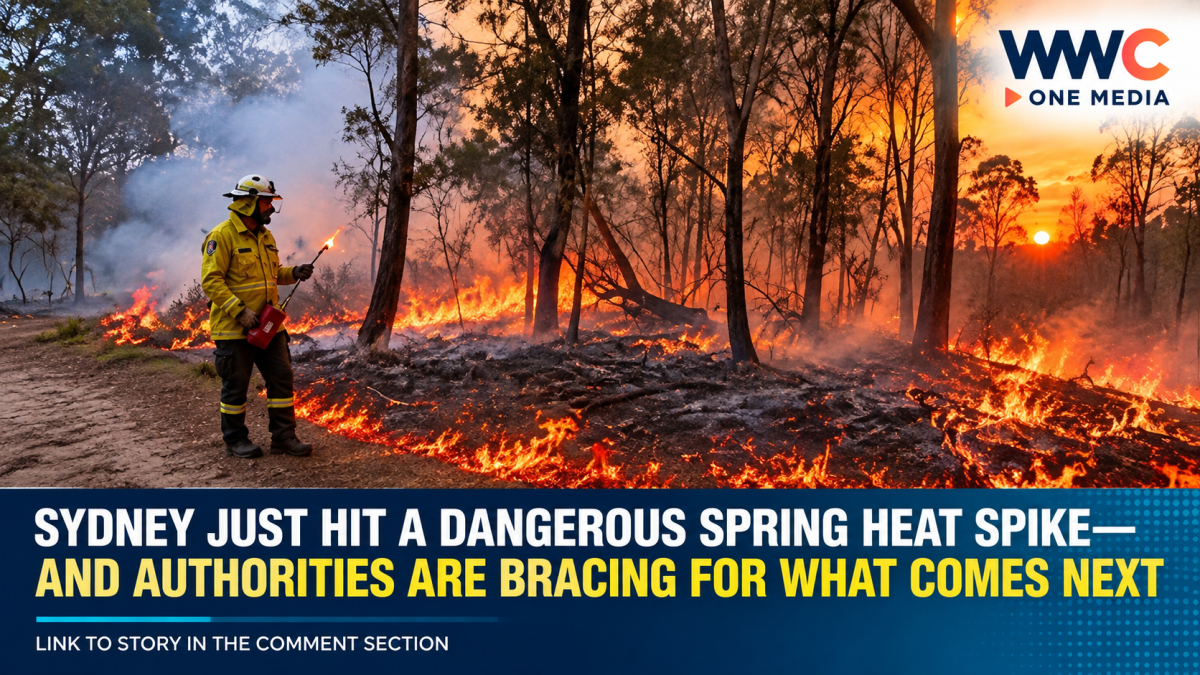
SYDNEY — Australia’s largest city is facing an unusually dangerous start to spring, with temperatures soaring far above normal and authorities imposing a total fire ban as hot, dry and windy conditions push bushfire danger in Greater Sydney to “extreme.”
Sydney was forecast to reach 33°C (91.4°F) on Saturday, September 5, almost 13°C above the September average, according to weather authorities. Temperatures at Sydney Airport had already climbed to 28.6°C by 11:30 a.m., highlighting how quickly the heat was building.
The timing is particularly striking: it is only the beginning of Australia’s spring.
Extreme fire danger puts Sydney on alert
The combination of unseasonably high temperatures, dry conditions and strengthening northwesterly winds is creating conditions in which fires can spread rapidly.
The NSW Rural Fire Service classified the Greater Sydney Region at “Extreme” fire danger for Saturday and imposed a Total Fire Ban. Under Australia’s current fire-danger system, an Extreme rating means people should take action to protect their lives and property.
The Bureau of Meteorology forecast north to northwesterly winds of 25–40 km/h, increasing to around 50 km/h before changing direction later in the day in parts of the Sydney area.
ABC meteorologist Tom Saunders reported that the hot winds, following a dry winter along the NSW coast and low soil moisture, were expected to drive fire danger sharply higher, with Saturday predicted to be Greater Sydney’s first Extreme fire-danger day of the season.
It is not just Sydney
The dangerous conditions extend beyond the city.
Parts of New South Wales are also facing elevated fire danger, while other parts of eastern Australia are experiencing a volatile mix of extreme heat, damaging winds, thunderstorms, flooding rain and even snow in alpine areas.
Nine reported that the Greater Sydney total fire ban came as the region prepared for exceptionally hot and windy conditions.
The NSW Rural Fire Service’s official information showed Extreme fire danger and a Total Fire Ban for Greater Sydney on September 5, while the Illawarra/Shoalhaven, Greater Hunter and North Coast areas were rated High.
Why this spring heat is raising eyebrows
The extreme conditions arrive after an exceptionally warm Australian winter.
The Sydney region recorded its warmest winter on record in 2026, with an average winter temperature of 15.3°C, according to reporting based on Bureau of Meteorology data. NSW, Victoria and Tasmania also recorded their warmest winters on record.
That means the latest burst of heat is not happening in isolation.
Australia is also entering a period influenced by a strengthening El Niño climate pattern. The World Meteorological Organization said on September 3 that El Niño was firmly established and expected to intensify into a very strong event, increasing the likelihood of significant changes in rainfall and temperature patterns and associated risks such as drought and extreme heat.
Reuters reported that the current El Niño could become one of the strongest on record, while hotter and drier conditions associated with the phenomenon are increasing concerns about fire weather across southern Australia.
Authorities are warning people not to underestimate the conditions
The Total Fire Ban is more than a warning about existing fires—it is designed to reduce the chance of new fires starting during dangerous weather.
The NSW Rural Fire Service says fire-danger ratings indicate the potential consequences if a fire starts, with Extreme meaning people should take action immediately to protect life and property.
National parks around Sydney have also introduced closures because of the ban and elevated fire danger. NSW National Parks said tracks and trails in several parks were closed on Saturday, September 5, with additional closures affecting areas including Royal National Park, Garigal National Park and Ku-ring-gai Chase National Park.
A dangerous reminder as Australia heads deeper into fire season
The latest heat blast is arriving after devastating bushfires earlier this year, when fires in southeastern Australia destroyed homes, disrupted electricity supplies and burned large areas of bushland.
Scientists and climate experts have increasingly warned that climate change is contributing to more frequent and severe extreme heat and fire-weather conditions in Australia.
For Sydney, the immediate threat is the combination of heat + dryness + wind—three ingredients that can rapidly transform a small ignition into a dangerous bushfire.
And while temperatures are expected to ease after Saturday, the bigger concern may be what the unusually hot start to spring signals for the months ahead.
Australia has only just entered spring. The real test may be how often these extreme fire-weather conditions return before summer even arrives.
WWC ONE MEDIA M.J.E




Leave a Reply