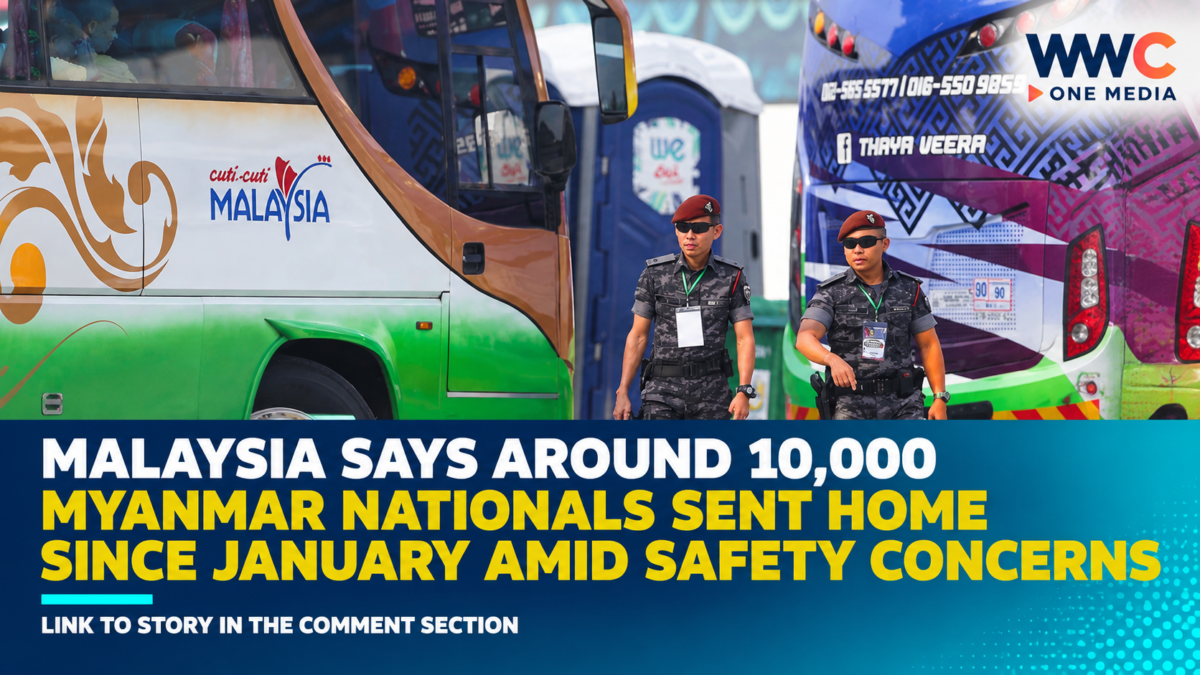
Malaysia has sent around 10,000 Myanmar nationals back to their home country since January, Prime Minister Anwar Ibrahim told Parliament on Oct. 6, as Kuala Lumpur faces growing scrutiny over the safety of people being returned to conflict-hit Myanmar.
Anwar said some of the returnees were transported on planes arranged by the Myanmar government, while nearly 1,500 people were repatriated by sea last week under a bilateral arrangement between Malaysia and Myanmar.
The repatriations come as Myanmar remains embroiled in a civil war that began after the military seized power in February 2021, triggering widespread conflict and forcing hundreds of thousands of people to flee the country.
Malaysia hosts a large Myanmar population, including refugees and asylum seekers, but the country is not a signatory to the UN Refugee Convention and generally treats undocumented migrants and asylum seekers under its immigration laws.
Nearly 1,500 Returned by Sea
The latest large-scale repatriation took place on Sept. 29, when Malaysia sent 1,476 Myanmar nationals from immigration detention centres back to Myanmar.
The group consisted of 1,370 men, 79 women, 20 boys and seven girls, ranging in age from eight to 60, according to Malaysia’s national news agency Bernama. They were transported aboard two Myanmar naval vessels and a hospital ship.
The returnees had been held at 14 immigration depots across Malaysia.
Malaysian authorities said the operation was carried out voluntarily and according to procedures agreed with Myanmar. The country’s Immigration Department led the operation, with the navy, police, Foreign Ministry, National Security Council and other agencies involved.
The first phase is part of a broader arrangement under which up to 5,000 Myanmar nationals could eventually be repatriated from Malaysia.
The 1,476 people were taken to Lumut naval facilities after health checks, identity verification and documentation. Around 850 Malaysian officials and personnel were involved in the operation.
Anwar Says Myanmar Must Protect Returnees
Anwar acknowledged concerns about whether people sent back to Myanmar would be safe, particularly given the country’s ongoing conflict.
He said Malaysia had obtained assurances from Myanmar that returnees would be treated fairly and would not face abuse, coercion or violations of their rights.
“The conditions that we placed on Myanmar is that they must bring home their citizens,” Anwar said. “Secondly, it is that they treat their people fairly so that there are no abuses, coercion or rights violations.”
Anwar said he would continue discussing the issue with Myanmar’s leader Min Aung Hlaing, who is expected to visit Kuala Lumpur in the coming days.
The visit comes as the two governments continue discussions over migration, repatriation and the large number of Myanmar nationals living in Malaysia.
UN Raises Concerns Over Safety
The repatriations have drawn concern from the United Nations refugee agency, which warned that some people being returned could face serious risks in Myanmar.
UNHCR said it was particularly concerned because those sent back had been taken from immigration detention centres, meaning it was difficult for the agency to independently determine whether everyone had genuinely chosen to return.
The agency said some returnees could require international protection and stressed that people should not be returned to countries where they could face persecution, torture or other serious threats to their lives or freedom.
Human rights organisations have similarly questioned the safety of the repatriations, given the continuing fighting and humanitarian crisis across Myanmar.
The concerns are especially significant for people from vulnerable communities who may face persecution or other dangers if they return.
Malaysia Hosts About 193,000 Myanmar Refugees
Malaysia has become an important destination for people fleeing Myanmar over the years.
According to UN data cited by Reuters and The Straits Times, Malaysia hosts around 193,000 refugees from Myanmar. The figure includes a large Rohingya population, many of whom fled violence and persecution in Myanmar.
However, Malaysia has not signed the 1951 UN Refugee Convention.
As a result, refugees and asylum seekers do not have a formal legal status under Malaysian law and can be treated as undocumented migrants.
The Malaysian government has increasingly expressed concerns about the financial, social and security pressures associated with hosting large numbers of undocumented foreigners and refugees.
Broader Repatriation Plan
The latest returns form part of a larger plan agreed between Malaysia and Myanmar.
In July, Anwar said Myanmar had agreed to take back about 5,000 of its nationals being held in Malaysia.
Malaysia subsequently began identifying, documenting and screening detainees before their return. Officials said the process was intended to ensure that the identities of those being repatriated were verified and that the operation could be carried out safely and in an orderly manner.
The government has not yet announced the exact timetable for subsequent phases.
Malaysia’s Home Ministry said future repatriations would depend on factors including identity verification, operational readiness and coordination with Myanmar.
Myanmar’s Continuing Conflict Complicates Returns
The repatriations are taking place against the backdrop of one of the world’s most serious ongoing humanitarian crises.
Myanmar has remained unstable since the military’s 2021 coup, which removed the elected government and triggered widespread armed resistance.
Fighting has spread across large parts of the country, involving the military, ethnic armed organisations and resistance groups.
Millions of people have been displaced internally, while others have fled across borders to neighbouring countries including Thailand, India, Bangladesh and Malaysia.
That situation has made the question of whether returnees can safely go home particularly contentious.
For Malaysia, the issue is also complicated by its desire to manage immigration detention and reduce the number of undocumented migrants while maintaining diplomatic relations with Myanmar.
Anwar to Discuss Issue With Myanmar Leader
Anwar’s upcoming meeting with Min Aung Hlaing could therefore become an important opportunity for Malaysia to seek assurances about the treatment of those being returned.
The Malaysian prime minister has said that returning Myanmar nationals is not simply a matter of sending people across the border.
He stressed that Myanmar must accept responsibility for its citizens and ensure they are treated fairly after returning.
Meanwhile, UN agencies and rights groups are expected to continue monitoring the situation, particularly where returnees may have legitimate protection concerns.
For now, Malaysia says the repatriation programme will continue in stages, with about 5,000 detainees covered by the current bilateral arrangement and roughly 10,000 Myanmar nationals already sent home since January.
The government’s challenge will be balancing immigration enforcement and its bilateral arrangements with Myanmar against its obligation to ensure that people are not returned to circumstances where they could face serious harm.