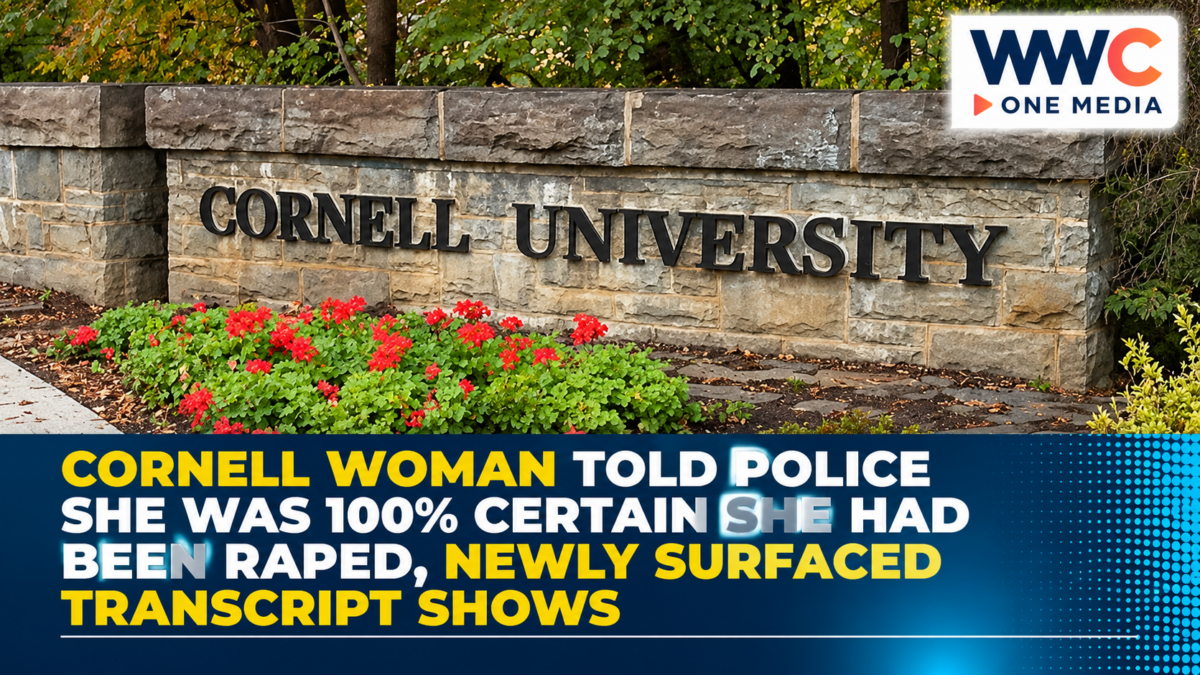
A woman who has accused seven former Cornell University fraternity members of sexually assaulting her told campus police in 2024 that she was “100 percent” certain she had been raped, according to a newly surfaced interview transcript that has renewed scrutiny of how the case was handled.
The woman, identified in court documents as Jane Doe, filed a civil lawsuit in September 2026 alleging that she was sexually assaulted at the Chi Phi fraternity house in October 2024. She alleges that she was pressured to consume ketamine, alcohol and marijuana before multiple men sexually assaulted her while she was incapacitated. The allegations have not resulted in criminal charges, and the defendants have disputed aspects of the claims.
The newly reported transcript comes from an interview with Cornell campus police several weeks after the alleged incident. During the interview, Doe reportedly distinguished between sexual activity she initially considered consensual and what she said happened later, when she alleged she was unable to consent.
At one point, she told investigators: “I can say with 100 percent confidence I was raped.” The statement is significant because Tompkins County District Attorney Matthew Van Houten previously said his office did not pursue criminal charges in 2024 based on the information available to prosecutors at the time.
Van Houten has said he was not provided with the full transcript containing that statement. According to his account, prosecutors relied on a six-page written statement prepared after the police interview when making the initial decision not to bring charges.
Cornell officials, however, have said that campus police provided the results of their investigation to the district attorney’s office. The differing accounts have raised questions about what investigative material was transmitted to prosecutors and when.
The case has now been reopened. Van Houten said his office intends to obtain the transcript and examine the additional information as investigators reconsider whether criminal charges should be pursued. The matter is expected to be presented to a grand jury.
The civil lawsuit provides a more detailed account of Doe’s allegations. She says she went to the Chi Phi fraternity house on October 19, 2024, and was already intoxicated. She alleges that she was encouraged or pressured to take additional drugs and alcohol before the sexual encounters became non-consensual.
According to the lawsuit, multiple fraternity members subsequently entered the room and engaged in sexual acts with her. Doe alleges that she became increasingly incapacitated and eventually lost consciousness. The complaint also references communications among fraternity members that she says are relevant to the allegations.
The newly surfaced transcript also indicates that Doe’s account contained distinctions about different parts of the night. She told investigators that she had been comfortable with some of the earlier sexual activity but described later events as rape. She also acknowledged drinking and drug use and said there were portions of the night she could not remember clearly.
That distinction has become an important part of the legal discussion surrounding the case. Experts cited in recent coverage have noted that voluntary consumption of alcohol or drugs does not automatically determine whether a person legally consented to sexual activity. The circumstances surrounding a person’s ability to consent depend on the specific facts and applicable law.
Cornell previously conducted its own Title IX investigation into the allegations. The university suspended the Chi Phi chapter, and disciplinary proceedings involving students followed. Recent reports say two of the students involved were expelled, while other disciplinary measures were also imposed.
The renewed criminal investigation comes after Doe filed her lawsuit in September. The case has since drawn broader attention to how allegations of sexual assault are investigated, how evidence is communicated between campus police and prosecutors, and how questions surrounding intoxication and consent are evaluated under New York law.
New York Governor Kathy Hochul has also called for additional scrutiny of the circumstances surrounding the case. Cornell has agreed to bring in outside counsel to conduct a further review.
For now, no criminal finding has been made against the seven men named in the lawsuit. The reopened investigation and any eventual grand-jury proceedings will determine whether prosecutors believe the available evidence supports criminal charges.
The emergence of the police interview transcript has nevertheless added a significant piece of evidence to a case that had previously stalled, while authorities continue to examine what information was available during the original investigation and how it was handled.